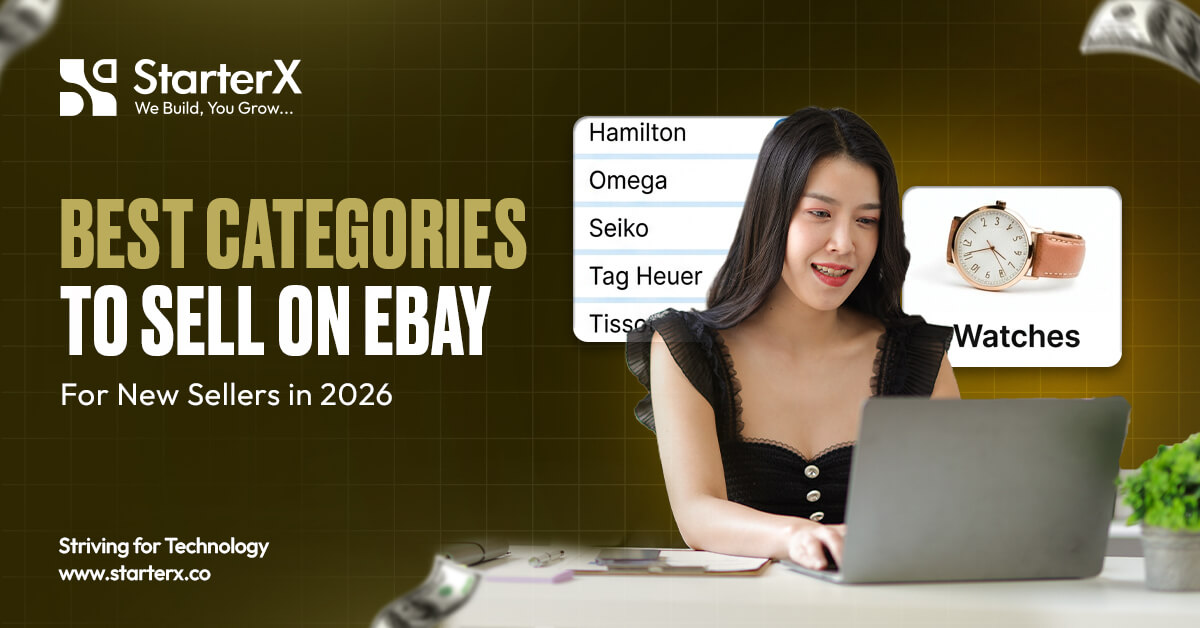
The best categories to sell on eBay for new sellers are pre-owned clothing, shoes, collectibles, toys and hobbies, small electronics accessories, auto parts and accessories, home and garden products, books and media, and sealed health and beauty items. These categories are good for beginners because they are easier to source, easier to test, and often easier to ship than high-ticket or restricted products.
A good eBay category is not just the one with the most demand. New sellers should choose categories with low starting cost, clear buyer demand, simple product details, manageable shipping, and lower return risk. This helps you learn how eBay selling works without putting too much money or account health at risk.
According to eBay’s 2026 high-demand items guide, eBay gives sellers access to 134 million active buyers worldwide. The same guide lists electronics, fashion, auto parts and accessories, health and beauty, home and garden, and toys and hobbies among major high-demand selling areas. This matters for new sellers because these categories already have buyer interest, but the safer starting point is usually smaller, lower-risk products inside those categories, such as clothing, accessories, toys, books, home goods, and small replacement parts.
Source: eBay 2026 High Demand Items Guide
In this guide, you will learn which eBay categories are best for beginners, what products to sell first, which categories carry more risk, and how to check demand before buying inventory. You will also learn how to compare categories by sourcing cost, shipping difficulty, profit margin, fees, return risk, and product knowledge.
Key Takeaways
- The best beginner-friendly eBay categories are clothing, shoes, collectibles, toys, small electronics accessories, auto parts, home goods, books, and sealed beauty products.
- Used clothing is one of the easiest categories to start with because it is affordable to source, simple to photograph, and easy to ship.
- Collectibles, trading cards, and toys can be profitable, but sellers must understand condition, rarity, authenticity, and recent sold prices.
- Electronics accessories are safer for beginners than phones, laptops, or tablets because they usually have lower defect risk and lower return pressure.
- Auto parts can be a strong long-term category, especially when sellers understand part numbers, fitment, model years, and buyer search intent.
- New sellers should avoid expensive electronics, luxury goods, fragile products, oversized items, and restricted products at the start unless they understand the risks.
- Before buying inventory, check sold listings, Product Research, average selling price, shipping cost, final value fees, and sell-through rate.
- The best category for you depends on your budget, sourcing method, product knowledge, shipping comfort, and risk level.
What Makes a Category Good for New eBay Sellers?
A good eBay category for new sellers is one that is easy to source, simple to list, affordable to test, and low-risk for returns. New sellers should not choose a category only because it has high demand. The better choice is a category that helps you learn eBay selling without putting too much money or account health at risk.
The best beginner-friendly categories usually have clear buyer demand, low starting cost, and simple shipping. They also have product details that are easy to describe, such as brand, size, model, color, condition, material, part number, or item specifics.
Low Starting Cost
New sellers should start with products they can buy or source at a low cost. This makes it easier to test listings, learn pricing, and understand buyer behavior.
Good low-cost sourcing options include items from home, thrift stores, garage sales, clearance racks, local marketplaces, and small test lots. Avoid buying bulk inventory before checking sold listings and profit after fees.
Easy Sourcing
A beginner category should have products you can find again and again. If you can only find one random item once, it may be hard to build a steady eBay store around that category.
Clothing, shoes, books, toys, home goods, and small accessories are easier to source for many new sellers because they are common in local resale channels.
Simple Shipping
Small, light, and durable products are better for beginners. Shipping is one of the biggest parts of eBay selling. If an item is heavy, fragile, oversized, or hard to pack, it can reduce your profit and increase delivery issues.
Beginner-friendly products are usually easy to measure, pack, label, and ship without special handling.
Clear Buyer Demand
A category should have real sold listings, not just many active listings. Active listings show what sellers are trying to sell. Sold listings show what buyers actually paid for.
Before choosing a category, check eBay Product Research, sold listings, average selling price, sell-through rate, and recent sales trends.
Low Return Risk
New sellers should avoid categories with high return pressure at the start. Returns can happen in any category, but some products create more problems because of size, condition, defects, fitment, or buyer expectations.
Clothing can have size returns, auto parts can have compatibility returns, and electronics can have defect claims. That does not mean you should avoid them fully. It means you must list them carefully.
Clear Product Details
The best beginner products are easy to describe accurately. Good listings include clear item specifics, product condition, photos, and shipping details.
For example, a clothing listing should include brand, size, measurements, color, material, and condition. An auto part listing should include part number, model year, compatibility, and clear photos.
Quick Comparison of the Best eBay Categories for Beginners
The best eBay categories for beginners are clothing, shoes, collectibles, toys, small electronics accessories, auto parts, home goods, books, and sealed beauty products. These categories give new sellers a good balance of demand, sourcing options, and manageable risk.
| Category | Beginner Difficulty | Sourcing Cost | Shipping Difficulty | Return Risk | Best Product Examples | Best For |
| Pre-owned clothing | Easy | Low | Easy | Medium | Shirts, jeans, jackets, activewear | Low-budget sellers |
| Shoes and sneakers | Medium | Low to medium | Medium | Medium | Running shoes, boots, casual sneakers | Thrift resellers |
| Collectibles | Medium | Low to high | Easy to medium | Medium | Trading cards, comics, figures, memorabilia | Niche sellers |
| Toys and hobbies | Easy to medium | Low to medium | Easy to medium | Low to medium | LEGO sets, board games, action figures | Seasonal sellers |
| Electronics accessories | Easy to medium | Low to medium | Easy | Medium | Cables, chargers, cases, adapters | Small-item sellers |
| Auto parts and accessories | Medium | Low to medium | Medium | Medium | Mirrors, lights, switches, trim parts | Sellers with car knowledge |
| Home and garden | Easy to medium | Low | Medium | Medium | Kitchen tools, décor, hardware, small parts | Local sourcing sellers |
| Books and media | Easy | Low | Easy | Low to medium | Textbooks, rare books, box sets, vinyl | Beginners learning eBay |
| Health and beauty | Medium | Low to medium | Easy | Medium to high | Sealed skincare, fragrances, grooming tools | Sellers with trusted sourcing |
This table helps new sellers compare categories by real selling factors, not just popularity. The best starting category is the one you can source cheaply, describe clearly, ship safely, and sell with enough margin after fees.
For most beginners, pre-owned clothing, books, toys, and home goods are easier starting points. Collectibles, auto parts, shoes, and beauty products can also work well, but they need more care with condition, authenticity, compatibility, or product rules.
1. Pre-Owned Clothing and Fashion Accessories
Pre-owned clothing is one of the easiest eBay categories for new sellers because it is affordable to source, simple to photograph, and easy to ship. It is also a good category for learning how eBay titles, item specifics, condition notes, offers, and buyer search behavior work.
Clothing buyers often search by brand, size, color, style, fabric, fit, and condition. This gives new sellers many useful details to include in a listing. A clear listing can help the right buyer find the item faster.
Why Clothing Is Good for New Sellers
Clothing works well for beginners because you can start with items you already own or find low-cost inventory locally. Thrift stores, clearance racks, garage sales, and closet cleanouts can all be useful sourcing options.
This category also teaches important eBay skills. You learn how to take clear photos, write condition notes, add measurements, price used items, and handle buyer questions.
Best Clothing Items to Sell First
Good clothing items for beginners include:
- Branded shirts
- Jeans
- Jackets
- Dresses
- Activewear
- Vintage clothing
- Workwear
- Hats
- Belts
- Bags
- Lightweight outerwear
Branded and condition-clean items are usually easier to sell than generic clothing. Buyers often search for known brands, specific styles, and exact sizes.
Beginner Tips for Selling Clothing
Always include measurements and clear condition details. Size tags are helpful, but used clothing can shrink, stretch, or fit differently by brand.
Take photos from the front, back, tag, label, fabric, and any flaw areas. Mention stains, holes, fading, missing buttons, or wear. This builds buyer trust and lowers return risk.
New sellers should be careful with luxury fashion at the start. If the item is high-value or designer-branded, authenticity matters. Do not list branded fashion unless you are confident it is genuine.
2. Shoes and Sneakers
Shoes and sneakers can sell well on eBay because buyers search by brand, model, size, color, and condition. This category can be a good step after clothing because many shoes are easy to source and have clear resale value.
Shoes are not as simple as basic clothing, but they are still beginner-friendly if you describe condition clearly. Buyers want to see soles, insoles, heels, toe boxes, labels, and wear marks before they buy.
Why Shoes Can Sell Well on eBay
Shoes work because buyer intent is often specific. A buyer may search for a brand, model name, size, width, colorway, or use case, such as running, work, hiking, school, or casual wear.
Used shoes can still sell if they are clean and priced correctly. Popular brands, work boots, athletic shoes, and special styles often have better resale potential than unknown brands.
Best Shoes to Sell First
Good shoe products for new sellers include:
- Running shoes
- Casual sneakers
- Work boots
- Dress shoes
- Kids’ shoes
- Hiking shoes
- Athletic shoes
- Sandals in good condition
Start with clean, lower-cost shoes before testing expensive sneakers. This helps you learn photos, condition grading, and shipping without high risk.
Risks New Sellers Should Know
The main risks in shoes are sizing issues, condition complaints, and fake branded sneakers. Buyers may return shoes if the fit is not right, even when the size is listed correctly.
To reduce problems, show the size tag, sole wear, heel wear, inside lining, and any defects. Use accurate words like pre-owned, new without box, or new with box only when true.
Be extra careful with high-value sneakers. Some sneaker listings may involve authentication expectations, and counterfeit products are not allowed on eBay.
3. Collectibles and Trading Cards
Collectibles and trading cards are strong eBay categories because buyers often search for exact items, editions, years, characters, teams, and conditions. This category can be profitable for sellers who understand the product niche.
Collectibles are not always beginner-simple, but they can be very good for sellers with knowledge of cards, comics, figures, coins, sports memorabilia, games, or vintage items.
Why Collectibles Are Strong on eBay
Collectibles work well because eBay has buyers who search for specific items they already want. A buyer may search for one card, one action figure, one comic issue, one character, or one rare version.
Many collectibles are small and easy to store. Trading cards, comics, pins, coins, stamps, and small figures can be easier to ship than large products. Still, condition and packaging matter a lot.
Best Collectibles for Beginners
Good collectible items to test include:
- Trading cards
- Action figures
- Comics
- Sports memorabilia
- Coins
- Stamps
- Vintage toys
- Gaming collectibles
- Movie collectibles
- Character merchandise
Start with collectibles you understand. If you do not know the difference between a common item and a rare version, it is easy to price incorrectly.
What Beginners Must Check
Condition is one of the most important details in collectibles. Small flaws can change the value. Corners, scratches, dents, stains, missing parts, packaging damage, and fading can all affect price.
Check recent sold listings before buying or listing. Do not price only by active listings, because active listings can be too high and may not show real buyer demand.
For signed items, rare cards, luxury collectibles, or branded items, authenticity matters. Use clear photos and avoid any item that may be fake, altered, or hard to prove.
4. Toys and Hobbies
Toys and hobbies are good eBay categories for new sellers because they attract parents, collectors, gift buyers, and hobby buyers. This category can work with both new and used items if the product is clean, complete, and described clearly.
Toys often have strong brand, character, set, and series-based searches. Hobby products can also sell well when buyers need parts, sets, tools, or specific models.
Why Toys Are Good for New Sellers
Toys are beginner-friendly because many products are easy to source and easy to understand. You can find toys at thrift stores, garage sales, clearance sections, local marketplaces, and home cleanouts.
Some toys sell because children want them. Others sell because collectors want older, rare, or complete items. This gives sellers different ways to test the category.
Best Toys and Hobby Products to Sell
Good toy and hobby products include:
- LEGO sets
- Board games
- Action figures
- Model kits
- Puzzles
- Dolls
- Educational toys
- Remote control parts
- Vintage toys
- Hobby tools and accessories
Complete items usually sell better than incomplete items. If pieces are missing, say that clearly in the listing.
Listing Tips for Toys
Show all parts in the photos and mention missing pieces clearly. Buyers want to know exactly what they are getting.
Clean used toys before listing. Test electronic toys, lights, sounds, remotes, and moving parts. If a toy does not work, say that clearly.
Use item specifics like brand, character, age level, year, series, set number, material, and condition. These details help buyers find the item and reduce confusion.
5. Small Electronics Accessories
Small electronics accessories are better for new sellers than expensive electronics because they are lower-cost, easier to ship, and usually carry less defect risk. This category can include simple products that buyers search for by device model, size, connection type, or use.
Electronics is a major eBay category, but beginners should be careful. High-ticket items like phones, laptops, tablets, and gaming consoles can bring higher returns, defect claims, and fraud risk. Accessories are often a safer starting point.
Why Accessories Are Better Than High-Ticket Electronics
Accessories let new sellers enter the electronics category without taking on the same risk as expensive devices. A phone case, cable, adapter, remote, or camera strap is usually easier to test than a used laptop.
Accessories also have clear listing details. Buyers search by model number, brand, connector type, color, size, and compatibility. These details should be included in the title and item specifics.
Best Electronics Accessories to Sell
Good electronics accessories include:
- Phone cases
- Chargers
- Cables
- Adapters
- Camera accessories
- Laptop sleeves
- Mounts
- Replacement remotes
- Screen protectors
- Headphone cases
Compatibility is the most important detail in this category. If a product fits only certain models, list those models clearly.
What to Avoid at the Start
New sellers should avoid untested electronics, locked phones, damaged tablets, and high-ticket laptops at the start. These products can create returns, disputes, and account issues if the condition is unclear.
Also avoid counterfeit chargers, fake branded accessories, and products with safety concerns. If you are not sure an item is genuine or safe, do not list it.
6. Auto Parts and Accessories
Auto parts and accessories can be a strong long-term eBay category because buyers often search with exact part numbers, model years, and compatibility details. This category is best for new sellers who understand vehicles or are willing to list details carefully.
Auto parts can have strong buyer intent. Many buyers are not browsing for fun. They need a replacement part that fits their car, truck, motorcycle, or equipment.
Why Auto Parts Can Be a Good Long-Term Category
Auto parts work well because replacement needs are clear and search behavior is specific. Buyers may search by part number, make, model, year, trim, engine size, or fitment.
Small auto parts are easier to store and ship than large body panels or heavy parts. This makes small parts a better starting point for beginners.
Best Auto Parts for New Sellers
Good auto parts and accessories to test include:
- Mirrors
- Lights
- Switches
- Interior trim
- Floor mats
- Emblems
- Owner manuals
- Small motorcycle parts
- Car accessories
- Small replacement parts
Start with parts that are small, clean, and easy to identify. If you cannot confirm what the part fits, it is safer not to list it.
What Makes Auto Parts Harder
The biggest challenge in auto parts is compatibility. A part may look correct but still fit only certain years, trims, or models.
Use part numbers, model years, brand names, measurements, and clear photos from multiple angles. If the item is used, show wear, cracks, broken tabs, scratches, or missing pieces.
Wrong fitment can lead to returns. New sellers should avoid complex parts until they understand how buyers search and how eBay item specifics work in this category.
7. Home and Garden Products
Home and garden products are good for new eBay sellers because they are easy to source locally and can include useful, vintage, decorative, and replacement items. This category is broad, so beginners should start with small, durable products.
Home goods can be found in thrift stores, garage sales, estate sales, clearance shelves, and local marketplaces. Some buyers look for décor. Others need replacement parts, kitchen tools, hardware, or practical household items.
Why Home Goods Work on eBay
Home goods work because buyers search for both style and function. A buyer may want a vintage décor piece, a replacement knob, a kitchen tool, or a part for a small appliance.
This category also gives new sellers many low-cost products to test. The key is to avoid items that are too fragile, too heavy, or too expensive to ship.
Best Home and Garden Items to Sell
Good home and garden items include:
- Kitchen tools
- Small décor
- Replacement parts
- Storage items
- Hardware
- Lamps
- Vintage home décor
- Garden tools
- Small appliance parts
- Cabinet pulls and knobs
Replacement parts can be strong because buyers often search for a specific item they cannot easily find locally. This can include lids, trays, knobs, blades, handles, filters, and small hardware.
Beginner Tips
Check shipping cost before listing any home or garden product. A product can look profitable until packaging and shipping reduce the margin.
Add dimensions, weight, material, color, brand, and condition. For used items, show scratches, chips, stains, missing parts, or wear.
New sellers should avoid glassware, large lamps, heavy garden tools, and fragile décor at the start unless they know how to pack them safely.
8. Books, DVDs, Music, and Media
Books, DVDs, music, and media are simple eBay categories for beginners because they are easy to list, easy to store, and easy to ship. This category is useful for learning eBay basics, but sellers must check demand because common items can have low profit.
Media is not always a high-margin category, but it can be a good learning category. It helps new sellers practice pricing, condition notes, shipping, and sold listing research.
Why Media Can Work for Beginners
Media products are beginner-friendly because most listings need clear but simple details. Buyers usually care about title, edition, format, condition, author, artist, year, and completeness.
Books and media can also be sourced from home, thrift stores, library sales, estate sales, and local bundles.
Best Media Items to Sell
Good media products include:
- Textbooks
- Rare books
- Niche nonfiction
- Box sets
- Out-of-print DVDs
- Vinyl records
- Collectible music
- Manuals
- Vintage magazines
- Special editions
Niche and harder-to-find media usually performs better than common mass-market items. A rare manual, out-of-print DVD, or collectible vinyl record may have better buyer interest than a common paperback.
Important Limits
Common books and DVDs can be very competitive and may have low margins. Do not buy large media lots without checking sold listings first.
Condition matters. Mention writing, torn pages, disc scratches, missing inserts, damaged covers, and worn cases. For vinyl records, describe the record and sleeve condition clearly.
Also check fees, shipping cost, and packaging before listing. Low-price items can lose profit quickly if costs are not planned.
9. Health and Beauty Products
Health and beauty products can sell well on eBay, but new sellers should only start with sealed, genuine, and policy-safe items. This category has repeat demand, small product size, and brand-based searches, but it also has more risk than basic used goods.
Beauty buyers often search by brand, product name, shade, scent, size, skin type, and condition. Clear details matter because buyers want to know the product is safe, unused, and authentic.
Why Health and Beauty Can Sell
Health and beauty works because many buyers already know the product they want. They may search for a specific skincare item, fragrance, makeup shade, grooming tool, or haircare product.
Many products are small and easy to ship. This makes the category attractive for sellers with trusted sourcing and strong attention to condition.
Best Health and Beauty Products to Consider
Beginner-friendly options may include:
- Sealed skincare
- Fragrances
- Haircare
- Grooming tools
- Makeup
- Beauty accessories
- Sealed personal care items
Only list products that are unused, genuine, and safe to sell. If the product is opened, expired, damaged, or unclear, it is not a good beginner item.
Why Beginners Must Be Careful
The main risks in health and beauty are expiration dates, opened products, counterfeit items, and restricted product rules. New sellers must be careful with anything that touches skin, hair, or the body.
Check expiration dates, batch codes when available, packaging condition, and product safety. Do not make medical claims in the listing. Do not sell products if you are not sure they are allowed on eBay.
This category can work, but it is not the safest first choice for every beginner. It is better for sellers who can source sealed, authentic products from reliable places.
Best eBay Categories Based on Seller Type
The best eBay category for a new seller depends on budget, sourcing access, shipping comfort, and product knowledge. A category that works well for one seller may not be the best starting point for another seller.
New sellers should choose a category they can understand, source at a fair cost, list with clear item specifics, and ship without losing profit. This makes category selection more practical than only chasing high-demand products.
| Seller Type | Best Category | Why It Fits | Beginner Tip |
| Low-budget seller | Used clothing, books, toys, home goods | Easy to source at low cost | Start with items from home before buying inventory |
| Thrift reseller | Clothing, shoes, vintage home goods, collectibles | Many items are available in local resale shops | Check sold listings before buying |
| Seller with car knowledge | Auto parts and accessories | Buyers search by part number, fitment, and model year | List compatibility details clearly |
| Pop culture seller | Collectibles, toys, comics, games | Buyers search by character, edition, year, and condition | Start with niches you understand |
| Easy-shipping seller | Trading cards, books, small accessories, lightweight clothing | Small items are easier to store, pack, and ship | Check packaging cost before pricing |
| Long-term store builder | Auto parts, fashion, home replacement parts, niche collectibles | These categories can support repeat sourcing | Track sell-through rate and profit margin |
Best Category If You Have a Low Budget
Used clothing, books, toys, and small home goods are better for low-budget sellers because they are easy to test with limited money. You can often start with items you already own or find low-cost products locally.
This is a smart way to learn eBay listing titles, photos, condition notes, shipping labels, buyer messages, and final value fees before investing in more inventory.
Best Category If You Like Thrifting
Clothing, shoes, vintage home goods, and collectibles are strong options for sellers who enjoy thrift sourcing. These products are often available in thrift stores, garage sales, estate sales, and local marketplaces.
The main skill is knowing what has resale value. Check sold listings before buying, and avoid items with damage, missing parts, unclear authenticity, or high shipping cost.
Best Category If You Know Cars
Auto parts and accessories are a good fit for sellers who understand vehicles, part numbers, model years, and fitment. Buyers in this category often search with clear intent because they need a part that solves a real problem.
Start with small parts like switches, lights, trim pieces, manuals, mirrors, emblems, and accessories. Avoid complex or heavy parts until you understand returns and compatibility issues.
Best Category If You Understand Pop Culture
Collectibles, toys, comics, trading cards, and games are good for sellers who understand characters, editions, rarity, and condition. Product knowledge matters a lot in these categories.
A small difference in year, version, packaging, or condition can change the selling price. Use sold listings and Product Research before pricing any collectible item.
Best Category If You Want Easy Shipping
Trading cards, books, small accessories, and lightweight clothing are better for sellers who want simple shipping. These items are easier to store, pack, weigh, and mail.
Still, small items need proper packaging. Trading cards need protection from bending. Books need corner protection. Clothing should be packed cleanly and safely.
Best Category If You Want Long-Term Scaling
Auto parts, fashion, niche collectibles, and home replacement parts can support long-term eBay growth when sellers build repeat sourcing systems. These categories can work beyond random one-time items.
To scale, track your sell-through rate, average selling price, shipping cost, return rate, and profit after fees. Build around products that sell often and are easy to replace.
Categories New eBay Sellers Should Avoid at the Start
New eBay sellers should avoid expensive electronics, luxury goods, fragile products, oversized items, restricted products, and products with unclear authenticity at the start. These items can create more returns, shipping issues, policy problems, and buyer disputes.
This does not mean these categories can never work. It means beginners should build experience first with safer products before moving into higher-risk inventory.
High-Ticket Electronics
Expensive electronics are risky for beginners because defects, locked devices, missing parts, and buyer complaints can quickly lead to returns. Phones, laptops, tablets, cameras, gaming consoles, and smart devices need careful testing.
If you sell electronics later, test the item fully, show serial or model details when allowed, describe battery health if relevant, and mention accessories included. At the start, small electronics accessories are usually safer than expensive devices.
Luxury Watches, Designer Bags, and High-End Fashion
Luxury products are risky for new sellers because authenticity and buyer trust matter a lot. A fake or unclear branded item can damage seller account health and create serious disputes.
New sellers should not list luxury watches, designer bags, premium sneakers, or high-end fashion unless they can confirm authenticity and describe condition with confidence.
Fragile Products
Fragile products are harder for beginners because breakage can lead to refunds, claims, and unhappy buyers. Glassware, ceramics, mirrors, lamps, delicate décor, and framed items need careful packing.
If packaging cost is high, the product may not be profitable. Start with durable home goods before testing fragile products.
Oversized Products
Oversized products can reduce profit because shipping and storage costs are harder to manage. Large décor, heavy tools, big appliances, furniture, and bulky equipment can be difficult for new sellers.
Before listing any large item, calculate shipping, packaging, handling time, and return cost. Many beginners do better with smaller products first.
Restricted or Policy-Sensitive Products
Restricted products are not a good starting point because sellers must follow eBay rules before listing them. Some products are not allowed, and some need seller eligibility or pre-approval.
Be careful with health products, supplements, medical items, branded goods, safety products, certain automotive parts, and products with legal limits. Always check the product policy before listing.
Products With Unclear Authenticity
Any product with unclear authenticity should be avoided because counterfeit items are not allowed on eBay. This applies to branded clothing, sneakers, handbags, watches, beauty products, collectibles, electronics accessories, and signed items.
If you cannot prove the item is genuine, do not list it. New sellers should protect account health first.
How to Choose the Right eBay Category Before Buying Inventory
The right eBay category is the one that has real sold demand, clear profit after fees and shipping, low listing risk, and products you can describe accurately. New sellers should research before buying inventory, not after.
A simple research process can help you avoid slow-moving products, low-margin items, and categories that are too hard to manage at the start.
Step 1: Check Sold Listings
Sold listings show what buyers actually paid for, so they are more useful than active listings alone. Active listings only show what sellers hope to sell.
Search the product name, brand, model, size, condition, and category. Look at recent sold prices and check how often similar items sell.
Step 2: Use eBay Product Research
eBay Product Research helps sellers study sales trends, average sales price, sold price range, item condition, and category data. This gives a clearer view of real market demand.
Use filters like category, condition, brand, color, buyer location, and seller location. This helps you compare similar products instead of relying on random prices.
Step 3: Compare Active Competition
Active competition shows how many sellers are already listing similar products. A product with many active listings and few sold listings may be hard to sell.
Look at pricing, photos, shipping cost, titles, item specifics, seller feedback, and product condition. If many sellers are racing to the lowest price, the category may have weak profit.
Step 4: Estimate Fees and Shipping
Profit should be calculated after product cost, eBay fees, shipping, packaging, returns, and any optional promotion cost. A product can have demand and still be a poor choice if the margin is too small.
Check insertion fees, final value fees, category fee differences, shipping labels, packaging supplies, and return cost before buying inventory.
Step 5: Check Return Risk
Return risk depends on size, condition, defects, compatibility, shipping damage, and buyer expectations. New sellers should choose products that are easy to describe and less likely to cause confusion.
Clothing needs measurements. Auto parts need compatibility. Electronics need testing. Collectibles need condition details. Beauty products need sealed packaging and product safety checks.
Step 6: Start With 10 to 20 Test Listings
New sellers should test a category with 10 to 20 listings before buying bulk inventory. This gives real feedback from eBay buyers.
Track views, watchers, offers, sold prices, shipping cost, questions, returns, and time to sell. If products sell with clean profit, you can slowly add more inventory.
Beginner Category Scoring Framework
A beginner category should score well in buyer demand, sourcing ease, shipping ease, profit margin, low return risk, low policy risk, and seller knowledge. This framework helps new sellers compare categories before spending money.
Use a simple 1 to 5 score. A score of 1 means weak or risky. A score of 5 means strong or beginner-friendly.
| Category | Buyer Demand | Sourcing Ease | Shipping Ease | Return Risk | Policy Risk | Beginner Score |
| Pre-owned clothing | 4 | 5 | 4 | 3 | 4 | 20 |
| Shoes and sneakers | 4 | 4 | 3 | 3 | 3 | 17 |
| Collectibles | 4 | 3 | 4 | 3 | 3 | 17 |
| Toys and hobbies | 4 | 4 | 3 | 4 | 4 | 19 |
| Electronics accessories | 4 | 3 | 5 | 3 | 3 | 18 |
| Auto parts and accessories | 4 | 3 | 3 | 3 | 4 | 17 |
| Home and garden | 3 | 4 | 3 | 3 | 4 | 17 |
| Books and media | 3 | 4 | 5 | 4 | 4 | 20 |
| Health and beauty | 4 | 3 | 5 | 3 | 2 | 17 |
This table is a beginner guide, not a fixed rule. The best category is the one that matches your sourcing access and product knowledge.
For example, auto parts may score higher for someone who understands cars. Collectibles may score higher for someone who understands trading cards, comics, or vintage toys. Health and beauty may score lower for a seller without trusted sourcing.
How to Use This Framework
Choose 1 to 3 categories with strong demand, easy sourcing, simple shipping, and lower risk. Then test listings before buying more inventory.
Do not choose a category only because it looks profitable. Choose a category you can list accurately and manage with confidence.
Common Mistakes New Sellers Make When Choosing eBay Categories
The biggest mistake new sellers make is choosing products based on popularity without checking profit, shipping, demand, fees, returns, and policy risk. A product can look good at first but fail after real costs are added.
Avoiding these mistakes can help protect your money and seller account health.
Choosing Demand Without Checking Profit
High demand does not always mean high profit. Some products sell often but have low margins because too many sellers compete on price.
Always calculate product cost, shipping, packaging, fees, and return risk. Profit after all costs matters more than sale price.
Ignoring Shipping Cost
Shipping can turn a good product into a poor listing if the item is heavy, fragile, or oversized. New sellers often focus on sale price and forget packing cost.
Before buying an item, estimate weight, box size, shipping zone, and packing materials. If shipping is too high, buyers may choose another seller.
Selling Products They Do Not Understand
Product knowledge helps sellers price items correctly and avoid listing mistakes. This matters most in auto parts, collectibles, electronics, luxury goods, and health and beauty.
If you do not understand an item, research it before listing. Check model numbers, part numbers, edition details, condition terms, and recent sold prices.
Copying Active Listings Instead of Checking Sold Data
Active listings do not prove buyer demand. They only show what other sellers listed.
Use sold listings and Product Research to see what actually sold, how often it sold, and what buyers paid. This gives a more realistic price range.
Starting With Too Many Categories
New sellers should start with 1 to 3 categories so they can learn pricing, photos, item specifics, and shipping clearly. Too many categories can make sourcing and listing harder.
A focused start helps you understand buyer questions, returns, and product details faster.
Ignoring eBay Policies
Ignoring eBay policies can lead to removed listings, buyer disputes, or account problems. This is especially important for restricted products, branded goods, counterfeit-risk items, health products, and safety-related products.
Check product rules before listing anything that may be restricted, unsafe, branded, regulated, or hard to verify.
Final Recommendation: What Should a New eBay Seller Start With?
Most new eBay sellers should start with pre-owned clothing, books, toys, home goods, small electronics accessories, and simple collectibles. These categories are easier to source, easier to test, and better for learning how eBay selling works.
Sellers with specific knowledge can also test shoes, auto parts, trading cards, or sealed health and beauty products. The key is to choose a category you can describe clearly and manage without high return or policy risk.
The safest starting plan is simple:
- Pick 1 to 3 beginner-friendly categories.
- List 10 to 20 test items.
- Check sold listings and Product Research.
- Calculate profit after fees and shipping.
- Improve photos, titles, item specifics, and pricing.
- Add more inventory only after real sales prove demand.
The best eBay category for a new seller is not just the one with the most buyers. It is the category that gives you steady demand, clear product details, simple shipping, and enough profit after all costs.
Start small, learn the platform, protect your seller account, and grow into higher-risk categories only after you understand demand, pricing, shipping, returns, and eBay policies.
Ready to Start Selling on eBay With the Right Category?
The right eBay category can help new sellers start with less risk, better product focus, and clearer profit planning. But choosing the category is only the first step. Your listings still need strong titles, clear photos, correct item specifics, fair pricing, and shipping that protects your margin.
If you want to grow faster, start with a simple plan. Pick 1 to 3 beginner-friendly categories, test 10 to 20 listings, check sold listings, calculate fees and shipping, and improve your listings based on real buyer response.
Need help choosing the right eBay category, creating optimized listings, or managing your seller account? StarterX can help you build a clear eBay selling strategy, improve product listings, and grow your store with less trial and error.
Need help choosing the right eBay category, creating optimized listings, or managing your seller account? StarterX, an experienced ebay agency, can help you build a clear eBay selling strategy, improve product listings, and grow your store with less trial and error.
👉 Book a free consultation with StarterX: https://starterx.co/appointment/
FAQs
What is the easiest category to sell on eBay for beginners?
Pre-owned clothing, books, toys, and small home goods are usually the easiest eBay categories for beginners. They are low-cost to source, simple to list, and easier to ship than heavy or high-risk products.
What sells fastest on eBay for new sellers?
Branded clothing, popular toys, collectibles, electronics accessories, and small replacement parts can sell faster when demand is proven. Always check sold listings before buying inventory.
What is the most profitable category on eBay?
The most profitable eBay category depends on sourcing cost, selling price, fees, shipping, and return risk. Collectibles, auto parts, sneakers, and niche used goods can be profitable when sellers understand the product.
Is clothing a good category for new eBay sellers?
Yes, clothing is one of the best beginner categories on eBay. It is easy to source, simple to photograph, and affordable to test, but sellers must add measurements and clear condition notes.
Are electronics good for new eBay sellers?
Electronics accessories are better for beginners than expensive electronics. Cables, cases, adapters, remotes, and chargers are usually easier to ship and carry less risk than phones, laptops, or tablets.
Can new sellers sell auto parts on eBay?
Yes, new sellers can sell auto parts on eBay, but accuracy matters. Use part numbers, model years, fitment details, and clear photos to reduce compatibility-related returns.
Should new eBay sellers sell luxury items?
New sellers should avoid luxury items at the start unless they can prove authenticity. Designer bags, watches, premium sneakers, and high-end fashion can create trust and counterfeit-risk issues.
How many categories should a beginner start with?
A beginner should start with 1 to 3 eBay categories. This makes it easier to learn pricing, shipping, photos, item specifics, and buyer behavior without spreading inventory too thin.
How do I know if a category has demand on eBay?
A category has demand when similar items have recently sold listings, fair selling prices, and regular buyer activity. Use sold listings and eBay Product Research to check sales trends, sell-through rate, and average selling price.
What categories should beginners avoid on eBay?
Beginners should avoid expensive electronics, fragile items, oversized products, restricted products, and items with unclear authenticity. These products can create higher return, shipping, or policy risk.
Is it better to sell new or used items on eBay?
Both new and used items can sell on eBay, but used items are often easier for beginners to test. Used products can have lower sourcing costs, while new products need stronger margin control.
Do eBay selling fees change by category?
Yes, eBay selling fees can change by category. New sellers should check final value fees, insertion fees, shipping cost, and optional promotion cost before choosing products to sell.

The StarterX Team is a group of e-commerce experts with years of hands-on experience in launching, managing, and scaling online businesses. As trusted authorities in the e-commerce space, we’ve helped entrepreneurs grow successful stores on Amazon, Shopify, TikTok, and Walmart. Backed by real-world results and a data-driven approach, we deliver proven strategies and insights you can trust to succeed in the digital marketplace.