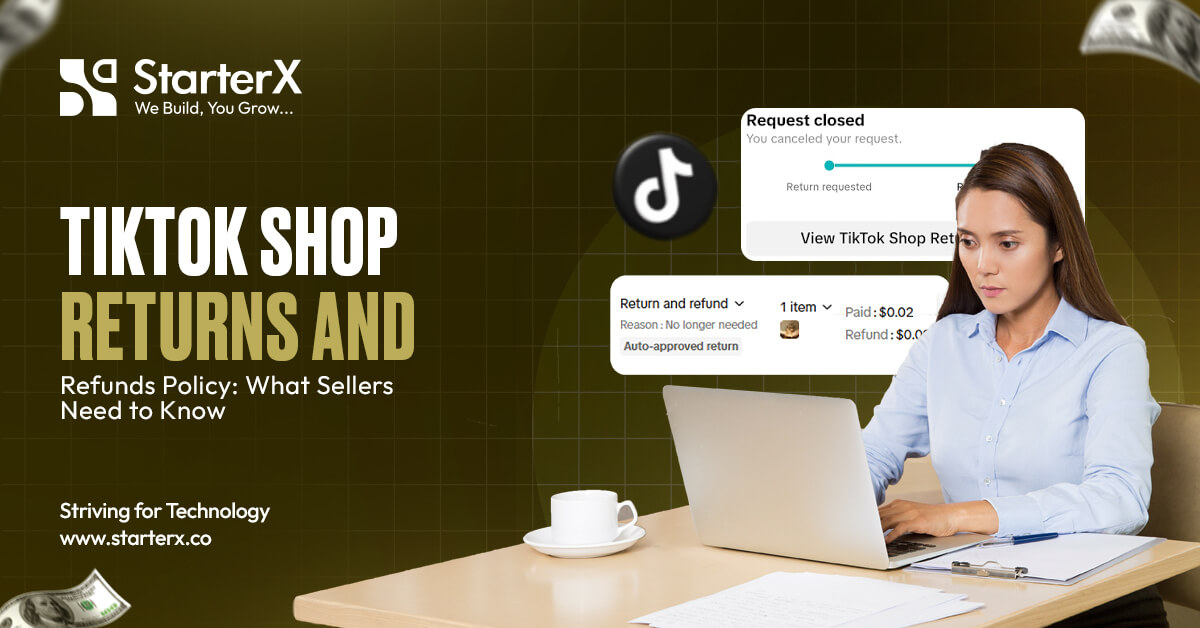
The TikTok Shop Returns and Refunds Policy explains how return requests, refunds, seller responsibilities, and dispute handling work after an order is delivered. Understanding this policy helps sellers respond to customer requests correctly, meet platform deadlines, reduce unnecessary losses, and protect their shop’s performance. If you sell on TikTok Shop, knowing how the return and refund process works is just as important as creating good product listings or shipping orders on time.
Returns are a normal part of ecommerce, but handling them poorly can lead to customer complaints, delayed refunds, avoidable disputes, and weaker seller performance. Following TikTok Shop’s return and refund rules helps you resolve issues fairly while protecting both your business and your customers’ shopping experience. This guide explains the complete process, including return eligibility, refund rules, seller responsibilities, important timelines, return shipping, dispute resolution, and practical ways to reduce return requests.
The importance of having a clear return strategy extends beyond TikTok Shop. According to the National Retail Federation (NRF) and Happy Returns, retailers estimated that 16.9% of their annual sales would be returned in 2024, representing approximately $890 billion in returned merchandise. These figures show why every ecommerce seller needs a well-managed return and refund process to control costs, maintain customer trust, and support long-term business growth. Source: National Retail Federation (NRF) and Happy Returns, 2024 Consumer Returns in the Retail Industry.
Key Takeaways
- Understand how the complete TikTok Shop return and refund process works, from a buyer’s request to the final refund decision.
- Learn which products are generally eligible for returns and refunds and the common reasons customers submit requests.
- Know the important return windows and seller response deadlines to avoid unnecessary disputes or policy issues.
- Understand who is responsible for return shipping costs in different return situations.
- Learn how refunds are processed, including full refunds, partial refunds, and eligible refund scenarios.
- See how to manage return requests in TikTok Shop Seller Center and handle disputes using proper supporting evidence.
- Understand how returns and refunds can affect seller performance, customer satisfaction, and overall shop health.
- Discover practical ways to reduce return requests by improving product listings, order accuracy, packaging, and customer communication.
What Is the TikTok Shop Returns and Refunds Policy?
The TikTok Shop Returns and Refunds Policy explains when a customer can request after-sales support, how returned products and refunds are handled, and what actions sellers must complete. It applies to sellers operating on TikTok Shop in the United States and covers returnable products, non-returnable products, refund-only requests, shipping issues, seller responsibilities, and customer disputes.
The policy is designed to give customers a clear way to resolve order problems while giving sellers a process for reviewing evidence, inspecting returned products, and appealing certain decisions. Sellers must manage all return and refund activity through TikTok Shop. They must not move the transaction off the platform or offer an off-platform refund.
Why TikTok Shop Has a Returns and Refunds Policy
TikTok Shop uses the policy to create a consistent after-sales process for customers and sellers. Without a standard process, sellers and buyers could disagree about return eligibility, item condition, delivery status, refund amounts, and shipping costs.
The policy sets rules for:
- when a customer can open a return or refund request
- how long each party has to act
- which products can be physically returned
- when a refund may be issued without a return
- what evidence sellers can submit
- when TikTok Shop may review or decide a case
- how sellers can appeal eligible decisions
TikTok Shop may also make decisions on behalf of a seller when a request is not handled within the required time. Ignoring a request does not stop the case. It may lead to automatic approval.
Returns vs. Refunds: What’s the Difference?
A return is the physical movement of a product back to the seller, while a refund is the repayment of some or all of the customer’s purchase amount.
A return and a refund often happen together. For example, a customer may send back a jacket that does not fit and receive a refund after the return is accepted.
However, a refund does not always require a physical return. TikTok Shop or the seller may approve a refund without return when:
- the product is non-returnable because of its nature
- returning the item would be unsafe
- the item falls under a platform refund-without-return rule
- the seller has created a seller-preferred returnless refund rule
- a partial refund resolves a minor product issue
Sellers who create their own refund-without-return rules normally carry the cost and risk of those refunds. TikTok Shop may not reimburse losses caused by seller-defined rules.
When Buyers Can Request a Return or Refund
For most delivered orders in the US, customers can submit a return or refund request within the return window shown for the product. The default return window is 30 calendar days from the delivered date, although eligible sellers can set certain products to a 14, 30, 45, or 90-day window. Some categories, products, promotional periods, and special order types may follow different rules.
Common reasons include:
- the wrong product was delivered
- the item arrived damaged
- the product is defective or does not work
- parts or accessories are missing
- the item is materially different from the product listing
- the size is unsuitable for an eligible fashion product
- the customer no longer wants an eligible returnable product
- the package was not received
- the shipment was delayed or lost
A product listed as non-returnable may still qualify for a refund when it is damaged, defective, incorrect, or not as described. Non-returnable does not mean the seller can avoid responsibility for a valid product problem.
How the TikTok Shop Return and Refund Process Works
The TikTok Shop return and refund process begins when a customer submits a request and ends when the request is approved, rejected, closed, refunded, or escalated for review. The exact workflow depends on the product category, return reason, product price, shipping method, and request type.
Return requests for returnable products may be automatically approved by TikTok Shop. In those cases, the customer receives return instructions without waiting for the seller to approve the initial request. Refund-only requests and some special cases may still require seller review.
Buyer Submits a Return Request
The customer opens the order in TikTok Shop, selects a return or refund option, gives a reason, and may upload photos, videos, or other supporting details.
The request should identify the problem clearly, such as:
- item damaged
- product not working
- wrong item received
- missing parts
- product not as described
- delivery issue
- change of mind for an eligible item
The reason selected by the customer affects the available resolution, shipping responsibility, and evidence the seller may need.
Seller Reviews the Request
Sellers should review every request shown as requiring action in Seller Center before its deadline.
The seller should check:
- the order ID and SKU
- the customer’s stated reason
- product photos or videos
- tracking and proof of delivery
- the product listing
- previous customer messages
- the item price
- the shipping method
- the response deadline shown in Seller Center
Return requests for returnable categories may already be auto-approved. In that situation, the seller’s main review may happen after the item is returned or when TikTok Shop requests a second review.
Return Approval or Rejection
TikTok Shop may automatically approve the initial return for a returnable product, while refund-only and non-returnable product requests may require a seller decision.
A seller can approve an eligible request when the customer’s claim is supported by the order information or evidence.
A seller should reject a request only when there is a valid policy-based reason and supporting proof. A rejection may lead to a Customer Service review or after-sale dispute. TikTok Shop can then review evidence from both parties and make the final platform decision.
Buyer Ships the Item Back
After a return is approved, the customer receives return instructions, which may include a prepaid label or QR code for an approved drop-off location.
Under the general US return process, the customer must normally send the original product back within 30 calendar days after the return request is approved. The request may be closed if the product is not returned within the required period. Certain claims and special processes may use a shorter return period, so sellers should follow the deadline displayed for that case.
The customer should return:
- the correct product
- the original purchased item
- all included parts and accessories
- the item in the condition required by the policy
- the product using the provided return method
Seller Inspects the Returned Product
The seller should inspect the returned item as soon as it arrives and record its condition.
The inspection should confirm:
- it is the correct product
- the quantity matches the order
- essential parts are present
- the item has not been switched
- the product condition matches the return reason
- the item is unused or within the allowed condition
- package seals, labels, tags, and accessories are present where required
Photos and an unpacking video can help support a second review or appeal if the returned product is used, damaged, incomplete, or different from the item sold.
TikTok Shop may allow a partial refund after return when the item has customer-caused damage, missing components, or a quantity difference. Available deductions depend on the evidence and the condition of the returned product.
Refund Is Processed
Once a refund is approved, TikTok Shop sends the refund through the platform’s payment process. The refund may cover the full item amount or an approved partial amount.
For some eligible lower-value returns, TikTok Shop may issue the refund after the logistics provider scans the package at the drop-off point. Items priced at $100 or more do not qualify for the same immediate drop-off refund treatment described in the current US policy. Refunds may take up to five business days to process after approval, although the customer’s bank or payment provider may take additional time to post the funds.
When TikTok Shop Steps In
TikTok Shop may review or decide a case when:
- the seller misses the response deadline
- the seller rejects a request
- the customer opens a dispute
- tracking information is invalid
- the return is lost in reverse logistics
- the package shows no tracking movement
- the shop has been deactivated
- the product cannot be returned safely
- available evidence does not support a direct agreement
- TikTok Shop suspects that valid requests are being rejected improperly
TikTok Shop’s decision is based on the evidence available in the case. Sellers should submit complete, authentic, and relevant records within the deadline shown.
| Stage | Customer action | Seller action | Possible outcome |
| Request opened | Selects a reason and submits evidence | Reviews the case when action is required | Return, refund, replacement, or rejection |
| Initial review | Waits for the decision or return instructions | Responds before the deadline | Approval, rejection, or auto-approval |
| Return shipment | Sends the item using the approved method | Tracks the return | Package moves through reverse logistics |
| Inspection | May respond to requests for more details | Checks the product and records its condition | Full refund, partial refund, or second review |
| Dispute | Submits further evidence if eligible | Uploads evidence within the dispute deadline | TikTok Shop makes a decision |
| Resolution | Receives refund or other approved resolution | Completes the required action | Case is closed or appealed |
Which Products Are Eligible for Returns and Refunds?
Most physical products sold in returnable TikTok Shop categories can be returned within the applicable return window, but some products cannot be physically returned because of safety, hygiene, perishability, customization, or product-type restrictions. Even a non-returnable product may still qualify for a refund when it arrives damaged, defective, incorrect, or materially different from its listing.
Eligibility depends on:
- the product category
- the reason for the request
- the item’s condition
- the delivery status
- the return window
- the listing description
- the seller’s return settings
- applicable laws
- special TikTok Shop rules for the product type
Common Reasons Buyers Request Returns
Wrong Item Received
A customer may request a return when the delivered item does not match the ordered SKU, model, color, size, quantity, or variation.
The seller should compare the order record, packing proof, SKU information, and customer photos before responding.
Damaged Item
A return or refund may apply when the product or packaging arrives damaged.
Useful evidence can include:
- customer photos of the item
- photos of the outer package
- packing records
- carrier tracking
- warehouse inspection images
- video showing the product before dispatch
Defective Product
A product may qualify when it does not turn on, does not function as described, breaks during normal first use, or has a clear manufacturing fault.
The seller should not reject a valid defect claim simply because the category is normally non-returnable. A non-returnable item can still qualify for a refund when there is a genuine product problem.
Missing Parts or Accessories
The customer may seek a refund, partial refund, replacement, or return when the package does not include an advertised part, manual, cable, accessory, or product quantity.
The best resolution depends on the missing item’s importance and the options available for that case.
Product Not as Described
A request may be valid when the delivered product is materially different from the product detail page.
Examples include:
- different material
- incorrect dimensions
- misleading product function
- false compatibility claim
- important feature missing
- inaccurate condition
- incorrect pack size
Sellers are responsible for keeping product titles, images, descriptions, variations, and specifications accurate.
Size or Fit Issue
Eligible fashion products may be returned when the item is too large or too small. This reason does not apply to every category and may not apply to non-returnable products.
Change of Mind
Customers may return some eligible returnable products because they no longer want them. This option depends on the category, item condition, return window, and return rules shown for the product.
Products That May Have Return Restrictions
Products may be marked non-returnable when sending them back creates a health, safety, legal, transport, hygiene, or product-integrity concern.
Examples may include:
- certain food and beverage products
- perishable goods
- some personal-care or hygiene products
- customized or personalized items
- hazardous or unsafe damaged items
- some pre-owned products
- virtual goods
- products restricted by applicable law or platform rules
Virtual goods, such as certain digital coupons or in-app credits, are generally non-returnable and non-refundable under the current US policy. Other non-returnable products may still qualify for a refund if the item is defective, incorrect, damaged, or not as described.
Sellers should verify each SKU’s return status in Seller Center instead of relying only on a general category assumption.
TikTok Shop Return Windows and Important Seller Deadlines
The standard US return window is 30 calendar days from the delivered date, but the exact deadline can change based on the product, request type, price, category, seller settings, promotional period, or dispute stage. Sellers must follow the date displayed for each case in Seller Center.
TikTok Shop allows eligible sellers to select return windows of 14, 30, 45, or 90 days for certain products. If the seller does not select another available option, the default is 30 calendar days from delivery. TikTok Shop may also extend minimum return periods during holidays or promotional events after giving sellers notice.
Return Request Deadline
Customers can generally open a return or refund request within 30 calendar days of delivery under the default US policy.
A different period may apply when:
- the seller has enabled an eligible extended return window
- a category allows a 14-day option
- TikTok Shop announces a holiday extension
- the product follows a special-category rule
- the customer uses Buyer Protection or another eligible claim process
The product detail page and order record should show the applicable after-sales terms.
Seller Response Deadline
Sellers normally have four business days to review a standard request that requires seller action. However, TikTok Shop uses price-based deadlines for many refund-only and non-returnable product requests:
- Items priced at $100 or less: two business days
- Items priced above $100: four business days
If the seller does not respond, TikTok Shop may automatically approve the request.
Requests raised after an order reaches Ready to Ship but before Transit to Ship may require action within 24 hours. Requests raised after the order changes to Transit to Ship may be automatically approved.
Return Shipping Deadline
After approval, customers generally have up to 30 calendar days to return an eligible product under the standard return process. If they do not hand the product to the approved carrier within the required period, TikTok Shop may close the request.
Some claim-based processes may require the item to be returned within 14 days. The seller should use the deadline attached to the specific request instead of applying one deadline to every case.
Refund Processing Timeline
Approved refunds may take up to five business days to process through TikTok Shop. The customer’s card issuer, bank, or payment provider may need more time to display the funds.
In some eligible cases, TikTok Shop may refund the customer as soon as the logistics provider scans and processes the return at an approved drop-off point. This immediate refund treatment does not apply to returned items priced at $100 or more under the current policy.
What Happens If Deadlines Are Missed
Missing a seller response deadline may cause TikTok Shop to approve the customer’s request automatically.
Other possible results include:
- the refund is charged to the seller
- the seller loses the chance to reject the initial request
- the case moves to Customer Service
- a dispute is decided using only the available evidence
- the customer’s return request closes if the item is not sent back
- the seller loses appeal rights for seller-defined automatic rules
For an active after-sale dispute, sellers may have only 24 hours to submit evidence after receiving the dispute notice. Missing that deadline can lead to an automatic refund at the seller’s expense.
| Action | Standard US timeline | What sellers should know |
| Customer opens a standard request | Usually within 30 calendar days of delivery | Product and case-specific rules may differ |
| Seller reviews a standard request | Usually within 4 business days | No response may cause auto-approval |
| Seller reviews refund-only request worth $100 or less | 2 business days | Applies to many refund-only and non-returnable cases |
| Seller reviews refund-only request over $100 | 4 business days | TikTok Shop may review some higher-value cases |
| Customer sends approved return | Generally within 30 calendar days of approval | Certain claim processes may use 14 days |
| Seller submits dispute evidence | Within 24 hours of the dispute notice | Missing the deadline may lead to an automatic refund |
| Refund processing | Up to 5 business days after approval | Bank processing can add more time |
Who Pays for Return Shipping?
Under the current TikTok Shop US return program, sellers are generally responsible for return-related shipping costs for both buyer-fault and seller-fault return reasons. TikTok Shop may cover or manage certain return costs under specific shipping programs, exchanges, delivery-failure cases, protection programs, or platform-funded promotions.
This is an important point because policies used on other marketplaces may make the buyer pay for change-of-mind returns. Sellers should not assume that the same rule applies on TikTok Shop.
Seller-Paid Returns
The seller may bear the return cost when the request is caused by:
- defective merchandise
- damaged products
- inaccurate product descriptions
- the wrong item or variation
- missing components
- poor packaging
- an eligible fit or size issue
- the customer no longer needing an eligible product
TikTok Shop’s current US guidance states that sellers are responsible for return-related costs for buyer-fault reasons, such as “no longer needed” or “doesn’t fit,” as well as seller-fault reasons, such as quality issues or packaging damage.
Sellers should include expected return shipping expense when calculating product margins.
Buyer-Paid Returns
Buyer-paid return shipping is not the standard rule described in TikTok Shop’s current US return guidance.
A customer may still face a cost or loss when:
- they do not use the approved return method
- the return falls outside platform policy
- they send the wrong product
- they fail to meet the required return conditions
- applicable law or a special product program assigns responsibility differently
Sellers should not ask customers to pay return shipping outside TikTok Shop or send money through another payment method. All approved return and refund steps must remain on the platform.
Platform-Covered Return Shipping
TikTok Shop may cover or manage return shipping in limited situations, such as:
- eligible exchanges, where TikTok Shop covers return shipping for the original item
- logistics-related delivery failures under an applicable TikTok Shipping process
- eligible Fulfilled by TikTok logistics cases
- a return shipping protection program
- specific platform promotions or policy exceptions
For an eligible free size exchange, TikTok Shop covers the original item’s return shipping, while the seller pays to ship the replacement item to the customer.
The shipping method matters. TikTok Shipping, Seller Shipping, and Fulfilled by TikTok can assign different operational responsibilities. Sellers should check the cost breakdown attached to the order rather than assuming that TikTok Shop will cover every prepaid return label.
How Refunds Are Processed on TikTok Shop
TikTok Shop processes approved refunds through the original platform order, and the refund may be full, partial, automatic, or issued without requiring the item to be returned. The available option depends on the reason, item value, product category, seller settings, product condition, and shipping status.
Sellers should never send the customer an off-platform refund. Refunds linked to a TikTok Shop order must be managed through Seller Center and the official after-sales process.
Full Refunds
A full refund returns the approved purchase amount for the affected product or order to the customer.
A full refund may be used when:
- the customer returns an eligible item in acceptable condition
- the wrong product was delivered
- the product is materially not as described
- a serious defect makes the product unusable
- the order is confirmed lost or undelivered
- the product cannot be returned safely
- TikTok Shop decides a dispute in the customer’s favor
The seller usually carries the cost when the refund is caused by the seller, the listing, product quality, invalid tracking, or another seller-controlled issue.
Partial Refunds
A partial refund returns part of the item price while allowing the customer to keep the product or accounting for damage found after a return.
TikTok Shop currently supports several partial refund options for US sellers.
Seller-defined automatic partial refund rules may apply to:
- returnable products
- items priced from $10 to $100
- wrong-item claims
- damaged or defective products
- missing parts
- products not as described
Under these rules, the refund must generally be at least 10% or $5, whichever is higher, and no more than 50% or $50, whichever is lower. The seller covers the refund cost.
A seller may also offer a partial refund directly in response to an eligible request. This can resolve a minor problem without requiring the full product to be returned.
After a product is returned, the seller may seek a partial deduction when inspection shows:
- customer-caused damage
- missing components
- missing quantity
- heavy use
- loss of resale value
The seller should provide clear photos, videos, and written inspection notes.
Refunds Without a Return
A refund without return allows the customer to keep the product while receiving an approved refund.
TikTok Shop may mandate this outcome for:
- certain returnable products priced at $10 or less
- some non-returnable products
- products that are unsafe to ship back
- specific dispute or customer-service resolutions
Sellers can also create their own refund-without-return rules by product category, return reason, and price range. However, seller-defined returnless refunds are paid by the seller and generally cannot be appealed when the refund was triggered by the seller’s own rule.
Before enabling an automatic rule, sellers should compare:
- product value
- return label cost
- processing cost
- resale value
- fraud risk
- refund rate
- product margin
Refund Processing Status
Sellers can track refund status in Seller Center under the return and refund order details.
Common statuses may show that the request is:
- awaiting seller action
- approved
- awaiting customer return
- in return transit
- refunded
- rejected
- appealed or disputed
- closed
For eligible drop-off returns, TikTok Shop may approve the refund after the logistics partner scans the parcel. Sellers can appeal if the returned item later arrives damaged, used, incomplete, or different from the sold product, subject to the available second-review process.
Managing Returns and Refund Requests in TikTok Shop Seller Center
Sellers manage after-sales cases in Seller Center by opening Orders, selecting Manage Returns, reviewing requests that need action, submitting evidence, and tracking each case until it is closed. Return settings and automated rules are also available within the Orders area.
A simple daily review routine helps sellers avoid missed deadlines and automatic decisions.
Reviewing Return Requests
To review cases:
- Sign in to TikTok Shop Seller Center.
- Open Orders.
- Select Manage Returns.
- Open the tab showing requests that need action.
- Select the relevant order.
- Review the reason, timeline, amount, evidence, tracking, and available response options.
Depending on the Seller Center layout, automated return and refund settings may appear under:
- Orders > Manage Returns > Return settings
- Orders > Return settings > Returns and refunds
TikTok Shop may update navigation labels, so sellers should use the Orders area or Seller Center Help Center if the exact menu changes.
Responding Within Required Timelines
Sellers should respond according to the deadline shown on the individual case, not a general office schedule.
A useful internal process is:
- check requests at least once each business day
- assign one person to own after-sales cases
- flag requests with less than 24 hours remaining
- review high-value orders separately
- record every approval, rejection, and appeal
- keep customer communication inside TikTok Shop
Standard cases may provide four business days, while many refund-only requests allow two business days for items priced at $100 or less and four business days for items above $100. Active disputes may require evidence within 24 hours.
Uploading Supporting Evidence
Good evidence should directly prove what happened with the product, package, shipment, or customer communication.
Useful evidence includes:
- order ID
- SKU and variation details
- tracking events
- carrier receipt
- proof of delivery
- shipping label
- package weight
- packing photos
- packing video
- product serial number
- product photos before shipment
- return unboxing video
- photos of the returned item
- screenshots of customer messages
- product listing details shown at the time of sale
Evidence should be:
- authentic
- clear
- relevant
- dated where possible
- connected to the correct order
- submitted before the deadline
For after-sale disputes, sellers upload evidence through Seller Center > Orders > Manage Returns > Appealed/Disputed.
Tracking Return Cases
Sellers should monitor:
- whether the customer has dropped off the item
- return tracking movement
- expected delivery to the return warehouse
- the date the seller receives the parcel
- the inspection result
- the refund decision
- any open second review
- any dispute or appeal deadline
The seller is responsible for tracking customer returns using the logistics details provided by the customer or carrier. If the carrier confirms receiving the return but does not deliver it to the seller, TikTok Shop may approve the customer’s refund 30 calendar days after carrier receipt. The seller may then appeal through Seller Center.
Managing Refund Decisions
Before approving, rejecting, or adjusting a refund, the seller should confirm:
- the product’s return eligibility
- the request reason
- the applicable response deadline
- the item value
- the shipping method
- the customer’s evidence
- the seller’s own records
- available return, replacement, partial refund, or refund-only options
A rejection should be based on policy and evidence, not on the seller’s preference to avoid a loss.
If the seller rejects a request and the customer disputes the outcome, TikTok Shop may review both sides and make the final platform decision. Sellers must then complete the required action, which may include a refund, replacement, missing-item shipment, or another approved resolution.
How Sellers Can Handle Return Disputes
TikTok Shop sellers should handle return disputes by reviewing the customer’s claim, collecting order-specific evidence, responding before the deadline, and submitting the case through Seller Center. A dispute should be based on facts and platform policy, not only on the seller’s belief that the customer is wrong.
An after-sale dispute may happen when a customer disagrees with a seller’s return, refund, replacement, or rejection decision. TikTok Shop can act as a neutral reviewer and decide the case using evidence from both sides. Sellers must follow the final outcome issued through the platform.
Valid Reasons to Reject a Return
A seller should reject a return or refund request only when the order records and available evidence show that the request does not meet TikTok Shop’s policy.
A rejection may be reasonable when:
- the request was submitted outside the applicable return window
- the customer returned a different product
- the returned quantity does not match the approved return
- the item shows customer-caused damage that is unrelated to the original claim
- the order was delivered correctly and the customer’s evidence does not support the stated issue
- the product listing accurately described the item
- the customer did not return the product within the required period
- the claim concerns a final-sale or non-returnable product without a valid quality, damage, delivery, or description issue
- tracking and proof of delivery contradict a non-delivery claim
A seller should not reject a request only because the return will create a financial loss. TikTok Shop may overturn a rejection when the customer provides stronger evidence or the seller fails to prove the reason for rejection.
Supporting Evidence Sellers Should Keep
The strongest dispute evidence clearly connects the order, product, shipment, customer claim, and seller response.
Useful evidence may include:
- order number and order details
- SKU, size, color, model, or variation
- product serial number
- product listing screenshots
- photos of the item before packing
- packing videos
- shipping label
- package dimensions and weight
- carrier acceptance receipt
- tracking history
- proof of delivery
- delivery photo
- customer messages
- return tracking
- return package opening video
- photos of the returned item
- records showing missing parts or quantity
- inspection notes with dates
For a “wrong item” claim, the seller may submit packing footage, SKU records, package weight, and product photos. For a “not received” claim, tracking details, proof of delivery, and carrier confirmation may be more useful.
Evidence should be clear, relevant, authentic, and submitted before the deadline. A large number of unrelated screenshots is less helpful than a few records that directly prove what happened. TikTok Shop states that weak or missing evidence can lead to a lost dispute or denied appeal.
Escalating a Dispute
Sellers can review disputed cases in:
Seller Center > Orders > Manage Returns > Appealed/Disputed
The seller should:
- Open the disputed order.
- Read the customer’s reason and TikTok Shop’s request.
- Check the submission deadline.
- Choose the correct response or appeal reason.
- Upload relevant supporting evidence.
- Add a short explanation connecting the evidence to the claim.
- Submit the case and monitor its status.
Sellers may need to provide dispute evidence within a short period, including cases that allow only 24 hours to respond. TikTok Shop’s current after-sale dispute policy also allows eligible appeals within 21 calendar days, although the exact option and deadline shown on the case should be treated as the final requirement.
Possible Resolution Outcomes
TikTok Shop may decide to:
- approve a full refund
- approve a partial refund
- require the customer to return the product
- reject the customer’s claim
- require a replacement
- require the seller to send a missing item
- close the case
- reimburse an eligible seller for a logistics-related loss
- uphold or reverse an earlier decision
TikTok Shop decides after-sale disputes using the evidence available from the customer and seller. A seller who misses the evidence deadline may lose the case even when useful proof exists elsewhere in their records.
How Returns and Refunds Affect Seller Performance
Returns and refunds affect TikTok Shop seller performance most when customers report problems caused by product quality, inaccurate listings, fulfillment errors, or logistics issues. Normal change-of-mind returns are not the same as seller-fault returns, so sellers should study the reason behind each request instead of treating every return as a performance failure.
TikTok Shop tracks a metric called the Non-Buyer Fault Return and Refund Rate, or NBFR. It measures the percentage of delivered orders that receive a return or refund request because of a seller-related or logistics-related problem during the previous 60 days.
Return Rate
A shop’s total return rate shows how often customers return products, but the reason matters.
A return caused by a customer choosing the wrong size may point to unclear sizing information. A return caused by a defective product may point to a supplier or quality-control problem. A return caused by a damaged parcel may point to weak packaging or carrier handling.
Sellers should separate buyer-choice returns from product, seller, and logistics problems before deciding what needs to change.
TikTok Shop’s NBFR includes issues such as:
- product does not work
- parts are missing
- item arrived damaged
- product is not as described
- order shows delivered but the customer did not receive it
- delivery was delayed
Canceled orders before delivery are not included in this metric. Certain logistics issues connected to Fulfilled by TikTok may also be excluded.
Customer Satisfaction
Repeated return and refund requests often show that the customer received something different from what they expected.
Customer dissatisfaction may come from:
- inaccurate product images
- unclear measurements
- misleading claims
- poor product quality
- damaged packaging
- missing accessories
- incorrect variations
- slow delivery
- weak customer support
These problems may also lead to negative product reviews, customer complaints, and lower trust in the shop.
TikTok Shop’s Negative Review Rate tracks initial one-star and two-star product reviews as part of the Shop Performance Score. Sellers can review product ratings and reply to customer feedback within Seller Center.
Seller Performance Metrics
Non-buyer-fault returns and refunds are part of TikTok Shop’s Shop Performance Score.
TikTok Shop calculates NBFR as:
Delivered orders with seller-fault or logistics-fault return and refund requests ÷ total delivered, non-canceled orders during the measured period × 100
The metric reviews the previous 60 days and refreshes daily in Seller Center. A higher NBFR can reduce the Shop Performance Score and may affect product visibility or eligibility for performance benefits. A lower rate can support a stronger score.
Returns can also connect with other performance areas, including:
- After-Sales Handling Time
- Negative Review Rate
- customer service response
- on-time delivery
- product quality
- order accuracy
A normal return does not automatically mean a policy violation. The greater risk comes from repeated preventable problems, poor after-sales handling, or failure to meet platform requirements.
Shop Reputation
Customers are more likely to trust a shop when:
- product listings are accurate
- deliveries match the order
- return requests receive timely responses
- refunds are handled fairly
- seller messages are clear and professional
- repeated problems are corrected
A shop with frequent quality complaints may receive more negative reviews and customer service cases. TikTok Shop may also review listings when product function, safety, compliance, condition, or customer complaints show a possible quality problem.
Long-Term Business Impact
Returns and refunds can reduce profit through:
- refund amounts
- return shipping labels
- damaged inventory
- warehouse inspection time
- customer support work
- replacement shipping
- unsellable products
- lost commissions or fees
- reduced product visibility
- slower or adjusted settlement arrangements
TikTok Shop may hold part of a seller’s funds in reserve to cover possible returns and refunds. Reserve levels and payout timing can depend on performance reviews, account status, and platform risk checks.
Sellers should treat returns as business data, not only as individual customer problems. A repeated return reason can reveal a listing, supplier, warehouse, packaging, or shipping issue that is reducing profit across many orders.
How to Reduce Returns and Refund Requests
TikTok Shop sellers can reduce preventable returns by making product listings accurate, checking product quality, shipping the correct items, protecting packages, and reviewing return reasons regularly. Sellers cannot remove every return, but they can reduce problems caused by unclear information and poor order handling.
Write Accurate Product Descriptions
A product description should tell customers exactly what they will receive.
Include:
- material
- dimensions
- quantity
- color
- model
- compatibility
- included accessories
- key functions
- care instructions
- limits or exclusions
- product condition
Do not hide an important limitation that could change the customer’s purchase decision.
For example, a portable device listing should state whether batteries, charging cables, adapters, or cases are included. A furniture listing should clearly state the assembled size, weight limit, and material.
TikTok Shop defines product quality partly by how accurately the item matches its listing description, images, and specifications.
Use High-Quality Product Images
Images should show the real product, not create an expectation the item cannot meet.
Use images that show:
- front, back, and side views
- product scale
- texture and material
- available colors
- package contents
- important features
- connectors or ports
- labels and instructions
- size comparison where useful
Do not use lighting or editing that makes a product color look very different from the item customers will receive.
Short product videos can also show movement, fit, assembly, texture, or operation more clearly than still images.
Provide Clear Size and Specification Information
Clear size details reduce returns caused by fit, compatibility, and measurement problems.
For clothing and footwear, include:
- body measurements
- product measurements
- fit notes
- size conversion
- stretch information
- model measurements where useful
For electronics, parts, tools, and accessories, include:
- supported models
- voltage
- dimensions
- connector type
- operating system requirements
- capacity
- installation limits
Use the same measurement unit throughout the listing, or provide clear conversions.
Improve Product Quality Control
Inspect products before they reach customers.
Quality checks may include:
- testing product function
- checking for cracks, stains, or damage
- confirming the correct color and model
- checking seals
- counting included parts
- reviewing labels and expiry dates
- checking product safety information
- confirming that the product matches the listing
A product that leaves the warehouse in poor condition is more likely to create a seller-fault return, negative review, and refund loss.
TikTok Shop identifies misrepresentation, defects, contamination, damage, improper storage, and products that are not fit for their intended use as product quality concerns.
Package Orders Properly
Packaging should protect the product during storage and delivery.
Use:
- a suitable box or mailer
- internal padding
- sealed liquid containers
- protection for fragile edges
- moisture protection where needed
- tamper-evident packaging where appropriate
- clear labels
- the correct package size
Avoid placing fragile products in oversized boxes without enough padding. Do not place liquids, sharp products, or heavy items next to unprotected products.
Respond Quickly to Customer Questions
A useful answer before purchase may prevent a return after delivery.
Answer questions about:
- sizing
- compatibility
- ingredients
- package contents
- shipping
- product use
- care
- installation
- warranty
- available variations
TikTok Shop measures customer chat response performance. A meaningful seller response within 24 hours supports the shop’s response rate, while a simple greeting alone may not count as a valid answer.
Monitor Return Trends
Review return data by product, reason, supplier, warehouse, carrier, and time period.
Sellers can use TikTok Shop’s post-purchase analytics to:
- monitor canceled and returned items
- review responsibility and detailed reasons
- identify products with the most returns
- compare return patterns across periods
- open affected product lists
TikTok Shop also provides Voice of Customer data in Seller Center to combine feedback from product reviews, after-sales tickets, and customer service cases.
Use repeated issues to decide what to fix:
| Repeated return reason | Likely area to review | Seller action |
| Product not as described | Listing content | Correct claims, images, dimensions, and specifications |
| Wrong item received | Picking and packing | Improve SKU labels and warehouse checks |
| Missing parts | Packing process | Use component checklists |
| Product damaged | Packaging or carrier | Improve protection and review shipping method |
| Product does not work | Product quality | Test stock and review the supplier |
| Size does not fit | Size guide | Add product measurements and fit notes |
| Delivered but not received | Logistics | Review tracking, carrier performance, and delivery evidence |
| Customer no longer needs item | Product expectations | Improve listing clarity and pre-purchase support |
Return-Prevention Checklist
Before publishing or shipping a product, confirm:
- The product title matches the item.
- The description includes important limitations.
- Images accurately show the product.
- Measurements and specifications are correct.
- Variations are clearly named.
- Included accessories are listed.
- Product function has been tested.
- The correct SKU and quantity are packed.
- The package can survive normal delivery handling.
- Tracking is uploaded correctly.
- Customer questions receive useful answers.
- Return reasons are reviewed regularly.
Common Return and Refund Mistakes Sellers Should Avoid
The most common seller mistakes are missing deadlines, rejecting requests without evidence, using inaccurate listings, failing to inspect returned products, and moving refunds outside TikTok Shop. These mistakes can increase losses and make it harder to defend a valid case.
Missing Response Deadlines
A seller who misses the response deadline may lose the chance to review or reject the initial request. TikTok Shop may approve the request automatically based on the case type and available information.
Check Manage Returns every business day and prioritize cases closest to their deadline.
Rejecting Requests Without Evidence
A short statement such as “the customer is wrong” is not strong evidence.
A valid rejection should include:
- the policy reason
- order details
- product or packing proof
- shipping evidence
- a clear explanation
Weak evidence may cause the customer’s dispute to succeed or the seller’s appeal to be denied.
Using Inaccurate Product Listings
Incorrect photos, unclear dimensions, unsupported claims, and missing specifications can lead to “not as described” returns.
Sellers should check listings after:
- supplier changes
- packaging changes
- product redesigns
- size changes
- new variations
- customer complaints
The product page must match the item currently being shipped, not an older version.
Using Weak Packaging
Poor packaging can turn a good product into a damaged delivery.
Common packaging mistakes include:
- not using enough padding
- using a box that is too large
- failing to seal liquids
- mixing heavy and fragile items
- using weak outer packaging
- leaving sharp edges unprotected
Review return photos to see where damage occurs and adjust the packing process.
Failing to Inspect Returned Items
A seller who refunds without checking the return may miss:
- item switching
- missing parts
- missing quantity
- customer-caused damage
- heavy use
- a product that does not match the order
Record the return package before and during opening, especially for high-value products. This evidence may support a second review, partial deduction, or appeal.
Communicating Outside TikTok Shop
Do not ask the customer to move the return, refund, or payment to another platform.
Off-platform communication can:
- remove the platform record
- make the case harder to prove
- expose both parties to fraud
- conflict with TikTok Shop requirements
- create payment and privacy risks
Keep the return request, messages, evidence, and refund inside TikTok Shop.
Using Automatic Refund Rules Without Checking Margins
Returnless refunds and automatic partial refunds can save processing and shipping costs, but they can also create losses.
Before creating a seller-defined rule, compare:
- item price
- product margin
- return shipping cost
- warehouse handling cost
- resale value
- refund amount
- abuse risk
Sellers are responsible for the cost of seller-defined automatic refund rules, and compensation claims may not be accepted for those refunds.
Treating Every Return as Customer Fraud
Some claims may be false, but many returns come from real product, listing, or delivery problems.
Automatically blaming customers can lead to:
- weak dispute decisions
- poor customer service
- repeated operational problems
- negative reviews
- missed opportunities to improve products
Review the evidence before deciding how to respond. TikTok Shop prohibits fraudulent order activity, but a seller should not label a customer’s claim as fraud without proof.
Ignoring Repeated Return Reasons
Handling each case separately without reviewing patterns can allow the same issue to continue.
For example:
- repeated missing-part claims may show a packing failure
- repeated size returns may show a poor size guide
- repeated defects may show a supplier problem
- repeated delivery claims may show a weak carrier route
A repeated return reason should trigger an operational review, not only another refund.
Best Practices for Managing Returns While Protecting Your Business
The best way to manage TikTok Shop returns is to create a clear internal process that combines fast customer support, accurate evidence, product-quality checks, return analytics, and careful refund decisions. A good process protects customers without approving every request blindly.
Assign Clear Responsibility
Choose a person or team to manage:
- new return requests
- refund decisions
- customer messages
- return tracking
- item inspections
- disputes
- appeals
- return analytics
Each case should have an owner and a deadline.
Create a Return Management Procedure
Your written process should explain:
- Where new requests appear.
- How often the team checks Seller Center.
- Which evidence to review.
- Who can approve refunds.
- When a manager must review the case.
- How returned products are inspected.
- Where photos and videos are stored.
- How disputes and appeals are submitted.
- How return reasons are reported.
- When a product listing or supplier requires review.
A written process reduces missed deadlines and inconsistent decisions.
Keep Order Evidence in One Place
Store order records in a way that staff can find quickly.
Useful records include:
- listing version
- SKU information
- supplier batch
- packing evidence
- tracking
- warehouse location
- product serial number
- customer communication
- return inspection
- final decision
Use a consistent file name that includes the order number and date.
Review High-Value Returns Separately
High-value products can create larger refund and fraud risks.
For these orders:
- record serial numbers
- photograph the item before shipping
- record package weight
- use tracked shipping
- require warehouse inspection
- record the return opening
- check every included component
- review appeal rights carefully
Do not delay action beyond the Seller Center deadline while completing these checks.
Keep Customer Communication Clear
A helpful response should tell the customer:
- what action has been taken
- what information is needed
- how to return the item
- when the next step will happen
- where to follow the case
Avoid blaming the customer or making promises outside platform policy.
Review Automated Refund Settings
Check seller-defined returnless refund and partial refund rules regularly.
A rule that works for a low-cost accessory may create a large loss for a higher-value product. Review:
- eligible SKUs
- price range
- return reasons
- refund percentage
- monthly refund cost
- suspected abuse
- changes in product margin
Disable or adjust a rule when the cost becomes higher than the operational benefit.
Track the Right Return Data
Review at least:
- total returns
- refund-only requests
- buyer-fault returns
- seller-fault returns
- logistics-fault returns
- NBFR
- top return reasons
- products with the most returns
- refund value
- return shipping cost
- recovery value from returned stock
- dispute win and loss reasons
TikTok Shop provides cancellation and return analytics, Shop Performance Score data, NBFR reporting, and Voice of Customer information within Seller Center.
Fix the Root Cause
Match the return reason with the right business owner:
- listing problem: content or merchandising team
- quality defect: supplier or quality-control team
- wrong item: warehouse team
- damage: packaging or carrier team
- slow response: customer service team
- size issue: product and listing team
- repeated missing parts: packing team
Set a date to check whether the fix reduced the issue.
Balance Customer Service With Seller Protection
Approving a valid refund quickly can protect customer trust. Challenging an unsupported claim with clear evidence can protect the seller.
The right decision is the one supported by policy, order facts, and reliable evidence.
Conclusion
Understanding the TikTok Shop Returns and Refunds Policy helps sellers resolve customer problems correctly, protect business margins, and maintain stronger shop performance.
Sellers should respond before every deadline, keep return activity inside Seller Center, inspect returned products, and save clear order evidence. They should also monitor non-buyer-fault returns, customer reviews, return reasons, and product-level trends.
Not every return can be prevented. However, accurate listings, reliable products, correct fulfillment, secure packaging, and fast customer support can reduce many avoidable refund requests.
StarterX, as a full-service TikTok Shop agency, helps ecommerce brands manage TikTok Shop operations, including listings, order workflows, customer support, returns, and performance monitoring. Book a free strategy call with StarterX to build a clearer TikTok Shop management process for your brand.
👉 Book a free consultation with StarterX: https://starterx.co/appointment/
Frequently Asked Questions
Can Sellers Refuse Every Return Request?
No. Sellers should reject a return only when the request does not meet the applicable policy and they have evidence to support the decision. TikTok Shop may review the case and overturn the rejection if the customer opens a dispute.
Can Buyers Receive a Refund Without Returning the Product?
Yes. TikTok Shop may allow or require a refund without return for certain low-value, non-returnable, unsafe-to-ship, or platform-approved cases. Sellers can also create returnless refund rules, but they are generally responsible for the cost of seller-defined refunds.
What Happens If a Buyer Never Ships the Returned Item?
TikTok Shop may close the return request if the buyer does not hand the item to the approved carrier within the required return period. Sellers should follow the deadline and status shown on the individual case.
How Long Does a TikTok Shop Refund Usually Take?
An approved refund may take up to five business days to process through TikTok Shop, and the customer’s bank may need additional time to post the funds. Some eligible returns may be refunded after the carrier scans the parcel at an approved drop-off point.
Can Sellers Issue a Partial Refund?
Yes. TikTok Shop supports partial refunds in eligible cases, including minor product issues and deductions for certain returned items with customer-caused damage or missing components. The options shown depend on the product, price, request reason, and case status.
What If the Returned Product Is Damaged?
The seller should photograph or record the return, inspect the item, and submit evidence through the available review or appeal process. Depending on the circumstances, TikTok Shop may allow a partial deduction, seller appeal, compensation claim, or another case decision.
How Can Sellers Track Return Requests in Seller Center?
Go to Seller Center, open Orders, and select Manage Returns. Sellers can review requests, tracking, deadlines, disputes, refund status, and cases that need action from this area.
Can Canceled Orders and Refunds Happen at the Same Time?
An order canceled before shipment may require a refund, but it is not treated the same as a return after delivery. Canceled orders are also excluded from TikTok Shop’s Non-Buyer Fault Return and Refund Rate because that metric measures delivered orders.
Do Returns Affect TikTok Shop Seller Ratings?
Not every return directly harms seller performance, but seller-fault and logistics-fault return or refund requests can increase NBFR, which contributes to the Shop Performance Score. Returns linked to poor product experiences may also lead to negative reviews.
Where Can Sellers Find the Latest TikTok Shop Return Policy Updates?
Sellers should check TikTok Shop Academy, Seller Center policy notifications, and the return details shown on each order. TikTok Shop may change return windows, product rules, and after-sales requirements, including temporary extensions for holidays or promotional periods.

The StarterX Team is a group of e-commerce experts with years of hands-on experience in launching, managing, and scaling online businesses. As trusted authorities in the e-commerce space, we’ve helped entrepreneurs grow successful stores on Amazon, Shopify, TikTok, and Walmart. Backed by real-world results and a data-driven approach, we deliver proven strategies and insights you can trust to succeed in the digital marketplace.