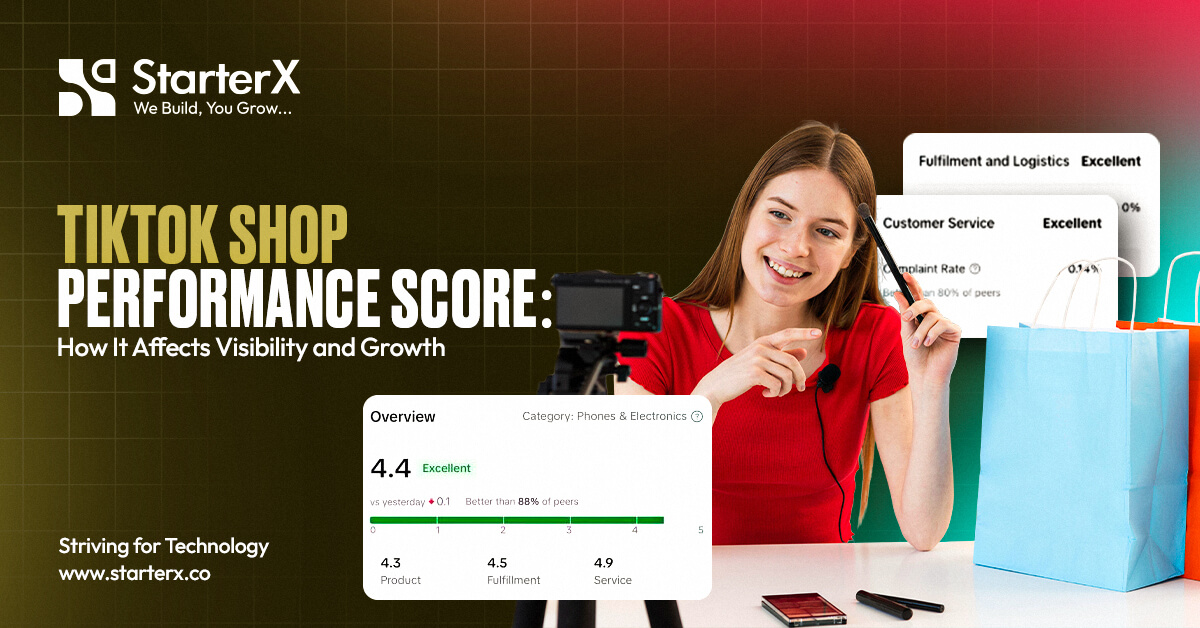
TikTok Shop Performance Score (SPS) is a seller performance rating that measures how consistently your shop delivers a positive buying experience. It evaluates key areas such as product satisfaction, fulfillment and logistics, and customer service to help sellers understand how well they are meeting TikTok Shop’s performance standards. A strong Shop Performance Score not only reflects reliable operations but can also unlock additional seller programs and tools that support business growth.
For sellers, Shop Performance Score is more than just a number in Seller Center. It shows where your shop is performing well and where improvements are needed before small operational issues start affecting your business. By regularly monitoring your score and improving the metrics behind it, you can build stronger customer trust, maintain consistent service quality, and increase your eligibility for valuable TikTok Shop opportunities.
One important fact is that TikTok Shop updates the Shop Performance Score daily. The platform also uses it to determine eligibility for programs and features such as Affiliate Marketing, Campaigns, Flash Deals, Shop Ads, TikTok-Funded Promotions, and seller badges. This means that improving your shop’s day-to-day performance can directly expand the opportunities available to your business over time.
In this guide, you’ll learn what the TikTok Shop Performance Score is, how it works, which seller metrics influence it, how it can affect your shop’s visibility and growth opportunities, and the practical steps you can take to improve it while maintaining a healthy seller account.
Key Takeaways
- Shop Performance Score measures your shop’s overall performance based on product satisfaction, fulfillment and logistics, and customer service.
- TikTok Shop updates the score daily, allowing sellers to monitor performance changes and identify areas that need attention.
- A stronger Shop Performance Score can increase your eligibility for seller programs and growth opportunities available on TikTok Shop.
- Operational metrics such as on-time delivery, seller fault cancellations, customer satisfaction, and after-sales service play an important role in your score.
- Regularly reviewing your Seller Center dashboard and fixing performance issues early helps maintain a healthy shop and supports long-term business growth.
TikTok Shop Performance Score Measures How Well Your Shop Meets TikTok’s Seller Standards
TikTok Shop Performance Score measures how well your shop performs in product satisfaction, fulfillment and logistics, and customer service. It gives sellers one overall score from 0 to 5 based on their recent performance.
A shop normally receives an SPS after completing at least 30 delivered orders within the previous 90 days. TikTok gives more weight to recent orders, so current performance can have a stronger effect than older order history. Sellers can find the score in Seller Center under Account Health and Shop Performance.
What the Shop Performance Score Shows
The score helps you understand how customers experience your shop from the time they view a product to the time an order or after-sales request is completed.
TikTok groups SPS performance into three main areas:
- Product satisfaction: Shows how well products meet buyer expectations.
- Fulfillment and logistics: Shows how reliably orders are confirmed, shipped, delivered, and completed.
- Customer service: Shows how well the shop handles messages, returns, refunds, replacements, and other buyer requests.
A higher SPS means your shop is meeting more of TikTok Shop’s performance expectations and may qualify for more seller benefits.
Shop Performance Score Is Different From Account Health Rating
Shop Performance Score and Account Health Rating are not the same.
SPS measures customer experience and operational performance over the last 90 days. Account Health Rating measures policy compliance over the last 180 days.
A low SPS may reduce access to rewards and seller benefits, but TikTok describes SPS as a rewards-based system. A low Account Health Rating can lead to enforcement actions because AHR tracks policy violations and compliance issues.
| Measurement | Shop Performance Score | Account Health Rating |
| Main purpose | Measures shop performance | Measures policy compliance |
| Score range | 0 to 5 | 0 to 1,000 |
| Review period | Last 90 days | Last 180 days |
| Main areas | Product satisfaction, fulfillment, customer service | Policy violations and enforcement points |
| Main result | Access to benefits may increase or decrease | Low rating may lead to enforcement |
Sellers should monitor both systems. A healthy shop needs strong customer service and fulfillment as well as full policy compliance.
TikTok Shop Performance Score Can Influence Visibility and Long-Term Growth
TikTok Shop Performance Score can affect shop visibility, buyer trust, settlement speed, and access to growth tools. A stronger score can unlock seller programs that help products reach more buyers, while a lower score can pause or remove some benefits.
TikTok states that SPS determines seller visibility and access to tools such as Affiliate Marketing and Campaigns. It can also affect settlement periods, promotional eligibility, badges, and other seller rewards.
A Strong Score Can Unlock Growth Opportunities
TikTok currently uses SPS thresholds for several seller benefits in the United States. These thresholds may change, so sellers should always confirm the latest requirements in Seller Center.
According to TikTok’s current SPS guide:
- An SPS of 2.5 can unlock Flash Deals.
- An SPS of 3.5 can unlock Affiliate Marketing and Campaign eligibility, along with a five-day settlement period.
- An SPS of 4.0 can unlock one-day settlement and Star Seller eligibility.
- Some benefits may pause or be removed when SPS falls below the required level.
Affiliate Marketing can help sellers work with creators who promote their products. Campaigns and Flash Deals can place eligible products in high-traffic promotional areas. Faster settlements can also improve cash flow by reducing the time sellers wait for eligible order funds.
Performance Can Affect Product Visibility
TikTok confirms that SPS plays a role in shop visibility. It also states that a high Non-Buyer Fault Return and Refund Rate can lower SPS and may reduce product visibility.
This does not mean SPS is the only factor that controls search ranking or recommendation placement. TikTok does not publicly disclose the full ranking formula for every product surface.
However, poor product satisfaction, frequent seller-fault issues, weak fulfillment, and poor customer support can reduce the shop’s ability to access programs that provide added exposure.
Strong Performance Builds Buyer Trust
Buyers are more likely to feel confident purchasing from a shop that:
- Delivers orders on time
- Provides products that match the listing
- Responds clearly to questions
- Handles returns and refunds quickly
- Maintains positive customer feedback
- Resolves problems fairly
A strong SPS supports growth because it reflects a more reliable customer experience, not simply a higher sales volume.
TikTok Shop Evaluates Multiple Seller Performance Metrics
TikTok Shop calculates SPS using selected metrics across product satisfaction, fulfillment and logistics, and customer service. Each metric shows a different part of the buyer experience.
The exact metrics displayed or weighted for a shop can depend on its category, order volume, market, and available performance data. TikTok also updates SPS rules over time, so sellers should use the Shop Performance page in Seller Center as the main source for their current metric list.
Product Satisfaction Metrics
Product satisfaction measures how often buyers report problems with the item they received.
One important metric is the Non-Buyer Fault Return and Refund Rate, also called NBFR. It measures the percentage of delivered orders that received a return or refund request because of a seller-related or logistics-related issue.
Common reasons include:
- Product not working
- Missing parts
- Item arriving damaged
- Product not matching its description
- Delayed delivery
- Order marked delivered but not received
NBFR looks at delivered orders from the last 60 days and refreshes daily. A high rate can reduce SPS and may affect visibility or eligibility for SPS benefits.
Customer ratings and product feedback also help sellers identify problems related to product quality, listing accuracy, packaging, and fulfillment.
Fulfillment and Logistics Metrics
Fulfillment metrics show how reliably the shop processes and completes orders.
TikTok identifies four core fulfillment performance metrics:
- Valid Tracking Rate
- Late Dispatch Rate
- On-Time Delivery Rate
- Seller-Fault Cancellation Rate
For SPS, TikTok specifically states that the fulfillment and logistics factor uses On-Time Delivery Rate and Seller-Fault Cancellation Rate.
Seller-Fault Cancellation Rate measures orders cancelled because of issues within the seller’s control, such as:
- Item out of stock
- Pricing error
- Failure to prepare the order
- Failure to dispatch the order
- Seller asking the customer to cancel
TikTok’s current US requirement states that sellers must maintain an SFCR of 2.5% or lower. Failing to meet fulfillment policy requirements can lead to separate enforcement actions, including lower visibility, settlement changes, order limits, or Account Health Rating point deductions.
Customer Service Metrics
Customer service metrics measure how effectively the shop supports buyers before and after a sale.
TikTok currently includes metrics such as:
- Instant Messaging Dissatisfaction Rate
- After-Sales Handling Time
Instant Messaging Dissatisfaction Rate is the percentage of rated customer chats that receive a one-star or two-star rating. It looks at rated chats from the previous 60 days and refreshes daily. A lower rate shows that more customers were satisfied with the support they received.
After-Sales Handling Time measures how long a seller takes to review returns, refunds, customer cancellations, replacements, and returned items. TikTok states that a healthy handling time is 24 hours or less. The metric reviews seller-handled requests from the previous 60 days and updates daily.
Seller Performance Metrics
| Metric | What It Measures | Why It Matters |
| Non-Buyer Fault Return and Refund Rate | Delivered orders returned or refunded because of seller or carrier issues | Shows product and delivery satisfaction |
| On-Time Delivery Rate | Orders delivered within the required delivery period | Shows fulfillment reliability |
| Seller-Fault Cancellation Rate | Orders cancelled for reasons within the seller’s control | Shows inventory and order management quality |
| IM Dissatisfaction Rate | Rated chats receiving one-star or two-star feedback | Shows customer support satisfaction |
| After-Sales Handling Time | Average time taken to process seller-handled after-sales requests | Shows how quickly buyer problems are resolved |
| Product ratings and feedback | Customer opinions about products and order experience | Helps identify listing, quality, and packaging issues |
Sellers should focus on the individual metrics behind SPS, not only the final score. The metric details show which operational problem needs to be fixed.
Poor Seller Performance Can Limit Growth Opportunities
Poor seller performance can reduce access to TikTok Shop benefits and make it harder to grow consistently. The effect often begins with repeated product, fulfillment, or customer service problems.
Growth Tools May Become Unavailable
If SPS drops below the required threshold, sellers may lose or temporarily lose access to certain programs.
Depending on the current SPS level, this may affect:
- Affiliate Marketing eligibility
- Campaign participation
- Flash Deals
- TikTok-funded promotions
- Star Seller eligibility
- Faster settlement periods
- Other SPS-based rewards
TikTok’s current guide states that some benefits can pause or be removed when SPS falls below 3.0 or below the threshold required for a specific benefit.
Losing access to these tools can reduce a seller’s ability to work with creators, join promotional events, improve cash flow, or gain added exposure.
Poor Experience Can Reduce Buyer Confidence
A low score often points to problems customers can directly notice, such as:
- Orders arriving late
- Products not matching descriptions
- Orders being cancelled
- Slow replies
- Damaged products
- Difficult return or refund experiences
These issues can lead to negative feedback, more after-sales requests, and fewer repeat purchases.
The score itself is important, but the customer problems behind the score can cause the greatest long-term damage.
Policy Problems Must Be Managed Separately
A low SPS is not automatically a policy violation. TikTok states that it does not take enforcement action only because a shop has a low SPS.
However, the same operational problem may also break a separate TikTok Shop policy. For example, a Seller-Fault Cancellation Rate above the required limit can affect SPS and may also lead to fulfillment enforcement.
Sellers should check both:
- Shop Performance for SPS metrics
- Account Health for violations, enforcement points, and policy status
Consistent Seller Operations Help Improve Performance Over Time
The best way to improve Shop Performance Score is to fix the daily processes that affect product satisfaction, fulfillment, and customer service. There is no safe shortcut for improving SPS.
Because TikTok gives more weight to recent orders, better current performance can help the score improve over time. The speed of recovery will depend on order volume, the affected metric, and the shop’s recent performance history.
Keep Inventory Accurate
Update inventory before an item runs out. Connect stock systems correctly when selling across several channels.
Accurate inventory helps prevent:
- Seller-fault cancellations
- Overselling
- Delayed order processing
- Customer disappointment
Do not keep a product active when you cannot fulfill new orders.
Improve Product and Listing Accuracy
Listings should match the item the customer will receive.
Check:
- Product title
- Images
- Size and dimensions
- Material
- Color
- Quantity
- Included accessories
- Product condition
- Usage instructions
- Shipping expectations
Clear descriptions reduce returns caused by products being different from what buyers expected.
Prepare and Dispatch Orders on Time
Create a daily order-processing routine. Assign clear responsibility for picking, packing, label creation, tracking uploads, and carrier handoff.
Sellers should also monitor On-Time Delivery Rate and Seller-Fault Cancellation Rate in Seller Center. An order should not remain unattended until the fulfillment deadline is close.
Reduce Product and Packaging Problems
Inspect products before packing them. Use packaging suited to the size, weight, and fragility of the item.
Check that:
- All parts are included
- The correct variation is packed
- The product is not damaged
- The parcel is properly sealed
- The shipping label is readable
- Fragile products have enough protection
This can reduce seller-related return and refund requests.
Improve Customer Support
Answer questions clearly and focus on resolving the buyer’s issue.
Support teams should have approved replies for:
- Order status
- Product details
- Delivery concerns
- Return steps
- Refund timing
- Missing or damaged items
- Replacement requests
TikTok states that IM Dissatisfaction Rate is based on low chat ratings and can contribute to SPS. Sellers should use Service Analytics and chat feedback to identify common support problems.
Handle After-Sales Requests Promptly
Review returns, refunds, cancellations, replacements, and returned products every day.
TikTok considers an After-Sales Handling Time of 24 hours or less healthy. Sellers can also set suitable auto-approval rules for eligible requests to reduce delays.
Best Practices to Improve Seller Performance
| Best Practice | Performance Area | Business Benefit |
| Sync inventory across selling channels | Fulfillment | Reduces seller-fault cancellations |
| Audit listings before publishing | Product satisfaction | Reduces “not as described” complaints |
| Process orders every business day | Fulfillment | Supports timely dispatch and delivery |
| Inspect items before packing | Product satisfaction | Reduces damaged, incorrect, or incomplete orders |
| Use protective packaging | Product satisfaction and logistics | Reduces carrier and product damage |
| Answer customer messages clearly | Customer service | Reduces chat dissatisfaction |
| Review after-sales requests daily | Customer service | Shortens handling time |
| Track SPS metric details weekly | All areas | Helps identify problems early |
| Train staff using real order issues | All areas | Reduces repeated operational errors |
Common Seller Mistakes That Hurt Performance
The most common mistakes that hurt seller performance are overselling inventory, cancelling orders, sending inaccurate products, missing delivery expectations, and responding poorly to customers.
These problems are usually caused by weak store operations rather than a single bad order.
Accepting Orders Without Available Stock
Keeping incorrect inventory in Seller Center can lead to seller-fault cancellations.
Before launching a promotion, sellers should confirm:
- Available stock
- Warehouse capacity
- Packaging supplies
- Staff availability
- Carrier pickup capacity
A large sales increase is not helpful when the shop cannot fulfill the orders.
Using Inaccurate Product Listings
A product listing creates the buyer’s expectations. Missing details, edited images, unclear sizing, or incorrect product claims can lead to returns and negative feedback.
The listing should describe the exact product being shipped.
Waiting Too Long to Process Orders
Delays during picking, packing, tracking updates, or carrier handoff can affect fulfillment performance.
Sellers should not rely on last-minute processing. A carrier delay is harder to manage when the parcel was already prepared late.
Cancelling Orders for Avoidable Reasons
Seller-fault cancellations can happen because of:
- Out-of-stock items
- Incorrect prices
- Duplicate listings
- Product sourcing problems
- Warehouse errors
- Missed fulfillment deadlines
TikTok states that SFCR directly affects SPS, and sellers must meet the separate SFCR requirements in the Fulfillment Policy.
Ignoring Return and Refund Reasons
A return is not only an after-sales task. It can reveal a repeat problem with product quality, packaging, listing accuracy, or delivery.
Sellers should group return reasons by product and check for patterns.
For example:
- “Not as described” may point to listing problems.
- “Damaged” may point to packaging or product quality.
- “Missing parts” may point to packing checks.
- “Late delivery” may point to dispatch or carrier performance.
Giving Fast but Unhelpful Replies
A quick reply does not solve the problem if it is unclear, copied without context, or does not answer the buyer’s question.
TikTok’s IM Dissatisfaction Rate focuses on the buyer’s rating of the conversation. Support quality depends on resolution, not only reply speed.
Missing After-Sales Requests
Failing to review a return, refund, cancellation, or replacement request can increase After-Sales Handling Time and may trigger automatic processing under platform rules.
Check the Awaiting Your Action area every day and assign a team member to handle each open request.
Ignoring Incorrect Metric Data
A seller should not ignore an SPS issue caused by a buyer mistake, carrier issue, system error, or incorrectly assigned responsibility.
TikTok allows eligible SPS metric appeals through Seller Center. Sellers can select the affected metric, identify the order, provide a reason, and upload supporting evidence.
Regular Performance Monitoring Supports Sustainable Growth
Regular monitoring helps sellers find the exact orders and processes reducing their Shop Performance Score before the issue spreads across more orders.
Checking only the final SPS number is not enough. Sellers should review the category scores, individual metrics, problem orders, buyer feedback, and current eligibility status.
Check Seller Center Every Day
Daily checks should focus on urgent operational tasks:
- New orders
- Orders close to a fulfillment deadline
- Inventory warnings
- Customer messages
- Returns and refunds
- Replacement requests
- Seller-fault cancellations
- Orders with tracking or delivery problems
SPS and several of its contributing metrics refresh daily, but each metric may use a different review period. For example, SPS looks at shop performance over 90 days, while NBFR, IM Dissatisfaction Rate, and After-Sales Handling Time use recent 60-day data.
Review Performance Trends Every Week
A weekly review should compare:
- Current SPS
- Previous SPS
- Product satisfaction score
- Fulfillment and logistics score
- Customer service score
- Orders affecting each metric
- Products receiving repeated complaints
- Benefits currently available or at risk
Do not wait for the overall SPS to fall before taking action. An individual metric can show an early warning.
Assign Every Problem to an Owner
Each problem should have one person responsible for fixing it.
Examples:
- Warehouse manager for packing errors
- Inventory manager for stock mismatches
- Customer service lead for low chat ratings
- Marketplace manager for SPS appeals
- Logistics manager for delivery problems
- Product team for listing inaccuracies
A metric improves only when the process behind it improves.
Track Internal Performance Measures
TikTok Shop metrics should be supported by internal reporting.
Useful internal measures include:
- Number of daily seller-fault cancellations
- Orders dispatched late
- Product complaint reasons
- Damaged order reports
- Average support response time
- One-star and two-star chat feedback
- Average after-sales handling time
- Return and refund reasons by product
- Repeated issues by warehouse or carrier
These internal measures help teams act before a problem becomes large enough to affect the overall score.
Healthy vs At-Risk Seller Performance Indicators
| Area | Healthy Practice | Needs Attention |
| Inventory | Available stock matches Seller Center | Frequent stock shortages or manual corrections |
| Fulfillment | Orders are processed before deadlines | Orders are handled close to or after deadlines |
| Cancellations | Seller-fault cancellations are rare | Orders are cancelled because of stock or processing errors |
| Product quality | Low rate of product-related returns | Repeated damaged, incorrect, or incomplete orders |
| Listings | Product details match the delivered item | Frequent “not as described” complaints |
| Customer support | Questions are answered clearly and resolved | Low chat ratings or repeated unresolved questions |
| After-sales service | Requests are reviewed daily | Requests remain open or time out |
| Performance monitoring | Metrics and problem orders are reviewed weekly | Seller checks only the overall score |
| Appeals | Incorrect metric responsibility is challenged with evidence | Valid appeal issues are ignored |
TikTok Shop Performance Score Checklist
Use this checklist to protect your SPS by improving the daily tasks that affect customer satisfaction, fulfillment, and service quality.
Product and Listing Checklist
- Confirm that product images match the actual item.
- Check titles, descriptions, sizes, colors, materials, and quantities.
- Remove unsupported claims from product listings.
- Inspect products for damage or missing parts.
- Review return reasons for repeat product problems.
- Update listings when the product or packaging changes.
Inventory Checklist
- Match Seller Center inventory with available warehouse stock.
- Update stock after offline or cross-channel sales.
- Pause products that cannot be fulfilled.
- Check inventory before Campaigns, Flash Deals, or creator promotions.
- Set low-stock alerts for fast-selling products.
- Remove inactive or duplicated listings.
Fulfillment Checklist
- Review new orders every business day.
- Pick and pack orders before the fulfillment deadline.
- Upload valid tracking information.
- Hand parcels to the correct carrier on time.
- Monitor delivery exceptions.
- Keep Seller-Fault Cancellation Rate within TikTok’s current requirement.
- Record the reason for every seller-fault cancellation.
Packaging Checklist
- Pack the correct product and variation.
- Include all parts and accessories.
- Use enough protection for fragile items.
- Seal parcels securely.
- Make shipping labels clear and readable.
- Test packaging for products with frequent damage reports.
Customer Service Checklist
- Check customer messages throughout the day.
- Answer the buyer’s actual question.
- Use simple and clear language.
- Train support agents on product details and shop policies.
- Review one-star and two-star chat ratings.
- Update saved replies when customers find them unclear.
- Use Service Analytics to identify repeated support issues.
Returns and Refunds Checklist
- Check the Awaiting Your Action area daily.
- Review eligible requests as soon as possible.
- Aim to keep After-Sales Handling Time at 24 hours or less.
- Inspect returned items promptly.
- Use suitable auto-approval rules where appropriate.
- Group return reasons by product and fault type.
- Fix the source of repeated refunds instead of only processing them.
Performance Monitoring Checklist
- Review SPS in Seller Center every week.
- Check product satisfaction, fulfillment, and customer service separately.
- Open the metric details and review affected orders.
- Compare current results with the previous week.
- Track which SPS benefits are available or at risk.
- Assign every performance issue to a team member.
- Keep evidence for orders affected by buyer, carrier, or system errors.
- Submit an SPS appeal when a metric appears incorrect.
- Continue monitoring after a fix to confirm that the metric improves.
A strong TikTok Shop Performance Score is built through accurate listings, dependable fulfillment, useful customer support, and fast issue resolution. Sellers who manage these areas consistently are better placed to protect visibility, maintain buyer trust, and qualify for more TikTok Shop growth opportunities.
Grow Your TikTok Shop with Expert Management
Need help improving your TikTok Shop performance, fixing operational issues, and building steady growth? Our TikTok Shop agency helps sellers manage listings, fulfillment, customer service, account health, and day-to-day shop performance.
Work with our TikTok Shop agency to strengthen your store, protect visibility, and create a better buying experience. Book a free strategy call today.
👉 Book a free consultation with StarterX: https://starterx.co/appointment/

The StarterX Team is a group of e-commerce experts with years of hands-on experience in launching, managing, and scaling online businesses. As trusted authorities in the e-commerce space, we’ve helped entrepreneurs grow successful stores on Amazon, Shopify, TikTok, and Walmart. Backed by real-world results and a data-driven approach, we deliver proven strategies and insights you can trust to succeed in the digital marketplace.