
Shopify SEO helps your store get found by the right buyers at the right time. It improves your visibility on Google, brings in high-intent traffic, and drives sales without relying entirely on paid ads.
Shopify is bigger and more competitive than ever. In 2025, Shopify merchants processed $378.4 billion in global GMV, and Shopify’s U.S. ecommerce market share climbed to more than 14%. That means the opportunity is massive, but so is the competition. To rank in 2026, stores need more than basic keyword placement. They need strong technical SEO, structured content, topical relevance, and clear trust signals. (Source: Shopify Q4 2025 Investor Press Release)
Google’s guidance also supports this shift. Its systems reward helpful, reliable, people-first content, and it confirms that Core Web Vitals are used by ranking systems. For e-commerce stores, Product structured data can also improve how listings appear in search by surfacing details like price, availability, ratings, and shipping information. (Source: Google Search Central)
In other words, Shopify SEO in 2026 is about building a store that is fast, useful, easy to understand, and trusted by both search engines and shoppers. When your pages match buyer intent and your site performs well technically, SEO becomes one of the most sustainable ways to grow your e-commerce brand.
For businesses that need expert support, professional Shopify SEO services can help improve technical performance, strengthen content strategy, and increase your store’s visibility in organic search.
Key Takeaways
- Shopify SEO drives qualified traffic by helping your store rank for high-intent searches from users who are already looking for the products you sell.
- Technical performance directly affects visibility because Google uses signals like Core Web Vitals, crawlability, and page experience when evaluating pages.
- Structured data improves search presence by helping Google understand your products and potentially show pricing, availability, ratings, and shipping details in search results.
- Collection pages, product pages, and blog content must work together to build topical authority, improve internal linking, and capture both transactional and informational search intent.
- Helpful, experience-based content performs better because Google prioritizes content created for people, not pages built only to manipulate rankings.
- Shopify SEO is more competitive than before because Shopify merchants generated $378.4 billion in GMV in 2025, and Shopify now holds more than 14% of the U.S. ecommerce market share.
- SEO becomes more valuable as ad costs rise and competition increases, making organic visibility one of the strongest long-term channels for profitable e-commerce growth.
What Is Shopify SEO and Why Is It Critical in 2026?
=Shopify SEO is the process of improving your store’s visibility in search engine results by optimizing technical structure, content, and authority signals. It starts with setting up a Shopify store, so your products and collections can rank for the exact terms people search on Google.
In 2026, SEO is not just about traffic; it’s about getting high-intent users who are ready to buy. The cost of paid advertising keeps rising, while organic search traffic remains consistent, profitable, and scalable.
What does Shopify SEO include in 2026?
Modern Shopify SEO focuses on five core areas:
- Technical SEO
Optimizing site speed, mobile usability, structured data, and crawlability - On-Page SEO
Writing unique product descriptions, using relevant keywords, and optimizing headings and metadata - Content SEO
Publishing blog posts, FAQs, and guides that match informational and commercial search intent - Internal Linking
Building a logical, crawlable structure that connects related pages using keyword-rich anchor text - Off-Page SEO
Earning backlinks, building topical authority, and getting featured on trusted domains
Why is Shopify SEO more important in 2026 than before?
Three key changes make SEO critical now:
- Google’s Helpful Content Updates penalize low-value or thin product pages
Pages that don’t answer real user needs drop in rankings - Search Generative Experience (SGE) favors pages with semantic relevance and strong topical structure
Stores that explain their products well and use structured content are featured in AI-driven summaries - Trust and authority signals directly affect visibility
Google now prioritizes content written from real experience, supported by user reviews, and hosted on well-maintained domains
What happens if you ignore SEO on your Shopify store?
If your store isn’t optimized for search:
- Your products won’t show up for buyers searching on Google
- Your ad costs will rise due to low organic performance
- Your competitors will earn trust, traffic, and backlinks while your site stays invisible
Ranking on Google in 2026 means creating a store that helps users solve problems, compare options, and feel confident buying.
What Are the Latest Google SEO Changes That Affect Shopify Stores in 2026?
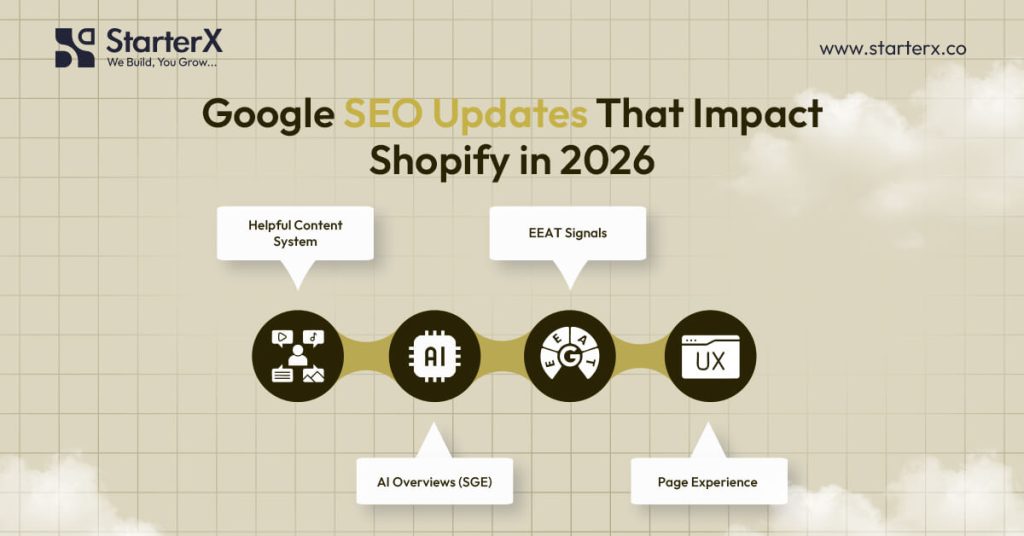
In 2026, Google rewards Shopify stores that are fast, helpful, and trustworthy. Several core updates between 2024 and 2026 have changed how product and collection pages are ranked.
These updates focus on content quality, user experience, topical depth, and structured information. If your store ignores these signals, rankings will fall, no matter how good your products are.
1. Helpful Content System (HCU 2024–2025)
Google now ranks pages that offer real value and experience. It downranks pages that feel written just to game search engines.
What this means for Shopify:
- Generic or copied product descriptions can hurt visibility
- Collection pages need context, not just a grid of products
- Blogs must answer actual user questions, not just repeat keywords
2. EEAT Signals Are Now Core Ranking Factors
Experience, Expertise, Authoritativeness, and Trust are baked into Google’s algorithm. These are no longer suggestions; they directly affect rankings.
What Google looks for in Shopify stores:
- Real product reviews and testimonials
- Clear About and Contact pages
- Transparent shipping, return, and business info
- Author names and real-world experience in blog content
3. Structured Data Drives Visibility and Rich Results
Google favors stores that use structured data to explain their pages. JSON-LD markup helps search engines understand your content.
Key schema types for Shopify in 2026:
- Product with Offer, Review, and AggregateRating
- BreadcrumbList for better navigation
- Organization for brand details
- FAQPage to match featured snippet opportunities
Action: Use schema generators to implement clean, valid markup on every key page.
4. AI Overviews (SGE) Prioritize Clear, Structured, Semantic Content
Search Generative Experience (SGE) pulls answers from content that is well-structured and semantically aligned with the search query.
How SGE affects Shopify SEO:
- Short, helpful content blocks are favored
- Clear headings, bullet points, and answers boost visibility
- Pages must match user intent precisely, using topic clusters and semantic terms
Action: Use natural language, answer questions clearly, and structure content using FAQs, comparison tables, and concise summaries.
5. Page Experience and Web Vitals Still Matter
Performance is still a major ranking factor. Google wants fast, responsive websites that work well on mobile.
Shopify-specific performance tips:
- Compress product images
- Avoid heavy JavaScript apps
- Use fast themes like Dawn or custom-optimized ones
- Keep Largest Contentful Paint (LCP) under 2.5s
- Keep Cumulative Layout Shift (CLS) under 0.1
Action: Regularly test your store using Google PageSpeed Insights and fix technical issues.
How Do You Fix Shopify Technical SEO Issues in 2026?
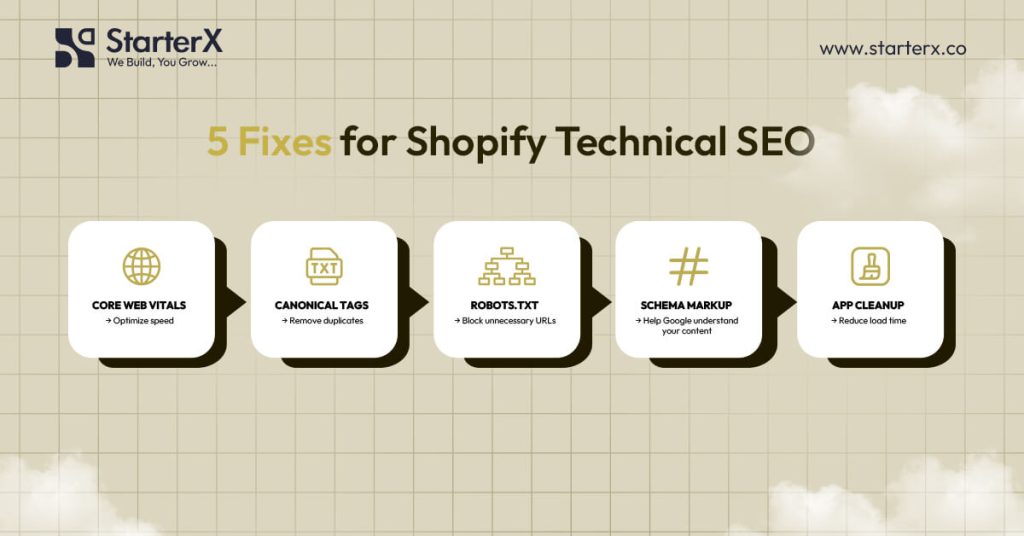
Technical SEO makes your Shopify store crawlable, indexable, and fast, three things Google demands in 2026. If your store has slow load times, duplicate URLs, or missing structured data, your rankings will suffer no matter how good your products are.
Many of these issues come from how Shopify is built by default. The good news is that most of them can be fixed with the right steps or Shopify SEO services. Identifying and fixing common Shopify store mistakes early can also help you avoid these technical issues and improve your overall site performance.
1. Fix Core Web Vitals on Shopify
Google uses Core Web Vitals to measure real user experience. These metrics impact rankings, especially on mobile devices.
Key metrics to fix:
- LCP (Largest Contentful Paint) under 2.5 seconds
- CLS (Cumulative Layout Shift) under 0.1
- INP (Interaction to Next Paint) under 200 ms
How to improve them:
- Use a lightweight theme like Dawn or a custom-optimized version
- Compress and lazy-load images
- Remove unused Shopify apps
- Host videos on external platforms like YouTube or Vimeo
- Minimize third-party scripts
Tool: Use PageSpeed Insights to measure and troubleshoot.
2. Manage Duplicate Content from Default Shopify URLs
Shopify creates duplicate URLs for the same product by default. This happens when products exist in collections.
Example:
- /products/blue-sneakers
- /collections/shoes/products/blue-sneakers
Both URLs load the same product, but only one should be indexed.
Fix:
- Shopify automatically sets canonical tags, but sometimes they’re ignored or overridden
- Manually set canonical URLs in the theme. liquid file or use SEO apps like Smart SEO
Goal: Ensure only one version of each product URL is indexed
3. Optimize Robots.txt and Sitemap.xml
Shopify gives limited control over crawl settings, but some important edits are still possible.
Actions:
Block unnecessary pages in robots.txt.liquid:
Disallow: /cart
Disallow: /checkout
Disallow: /search
Disallow: /orders
- Submit your sitemap.xml to Google Search Console
- Make sure the sitemap includes only indexable pages
Tool: Use Screaming Frog to test crawlability and detect blocked pages.
4. Add Structured Data (Schema Markup)
Google reads structured data to understand your products, reviews, and store structure. Without it, you miss rich results in search.
Required schema types:
- Product
- Offer
- Review
- BreadcrumbList
- Organization
- FAQPage (optional but powerful)
How to implement:
- Use a Shopify SEO app that adds valid JSON-LD
- Or manually insert the schema in the theme files
Tip: Test your schema with the Schema Markup Validator
5. Reduce JavaScript and App Bloat
Too many Shopify apps can slow down your store. Many load external scripts, which delay page speed.
Fix:
- Audit apps using Chrome DevTools
- Remove apps that add scripts to all pages
- Use Shopify-native features when possible
- Load scripts only when needed using defer or async attributes
Goal: Keep your store lightweight and focused on performance.
How Should You Optimize Shopify Collection Pages for SEO?
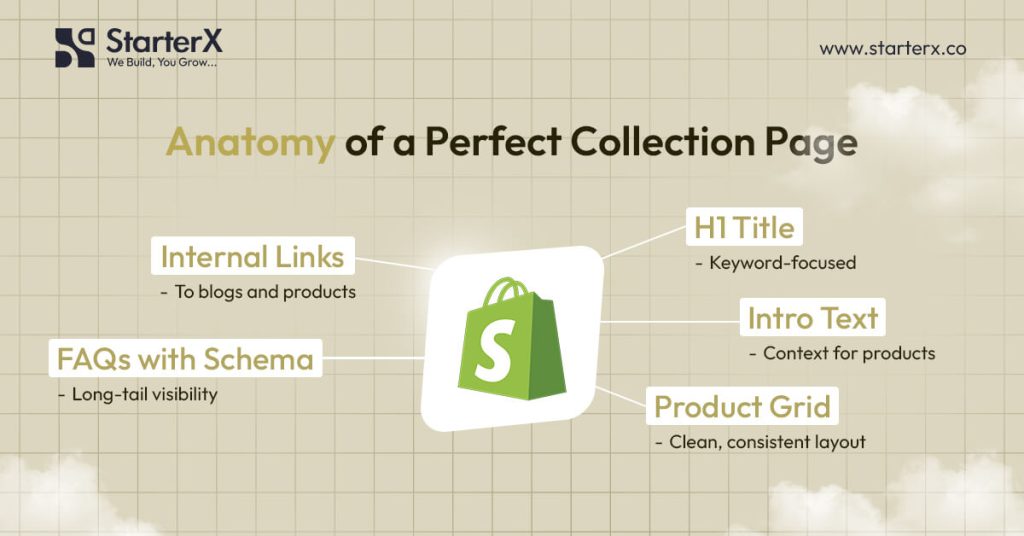
A collection page in Shopify acts as a category-level landing page that groups related products by topic, type, or user intent. In 2026, collection pages play a key role in driving organic visibility, especially for transactional keywords and browsing-intent queries.
To rank well, collection pages must be structured with real content, accurate metadata, and internal signals that match how users and search engines interpret meaning.
1. Use a Clear, Keyword-Rich H1 That Reflects Intent
The H1 is the semantic anchor of your collection page. It must include your core keyword and a relevant modifier that clarifies product type, audience, or use case.
Examples:
- ✅ “Men’s Waterproof Trail Running Shoes”
- ✅ “Organic Baby Skincare Sets”
- ❌ “All Products” or “Our Collection”
Entity tip: Include key attributes like gender, material, feature, price range, or use case.
2. Add Descriptive Text Above the Product Grid
Google now expects collection pages to include structured content, not just faceted navigation and filtered products. A short paragraph of 150–200 words boosts semantic relevance and helps the page rank for long-tail and mid-funnel queries.
Include:
- Key product features (e.g., “breathable mesh upper,” “recycled fabric”)
- Target user or intent (e.g., “designed for trail runners,” “ideal for new moms”)
- Differentiators (e.g., “hypoallergenic,” “machine washable,” “sustainably made”)
- Synonyms and semantically related phrases
Example: “Browse our collection of men’s waterproof trail running shoes, built for comfort, grip, and speed. With breathable mesh uppers and rugged outsoles, these shoes are perfect for wet terrains and rocky paths.”
3. Optimize Meta Title and Meta Description With Keyword Modifiers
Your meta tags are still powerful ranking signals and click-through boosters. Use intent-matching keywords and product attributes in your meta title. Your description should highlight value and include a CTA.
Format:
- Meta Title: Core keyword + feature or modifier + brand (optional)
- Meta Description: Summary + benefit + CTA, under 155 characters
Example:
- Title: “Eco-Friendly Yoga Mats | Non-Slip, Toxin-Free Collection”
- Meta: “Shop high-grip, eco yoga mats made from natural rubber. Free shipping on orders over $50.”
4. Add Internal Links That Support Topic Clusters
Internal linking builds topical authority and spreads link equity. Link to relevant blog posts, high-performing product pages, or adjacent collections using anchor text that reflects semantic meaning.
Good anchor examples:
- “Best yoga mats for beginners”
- “Compare trail running shoes by terrain.”
- “Moisturizers for sensitive skin types”
Strategy tip: Use semantic HTML like <section> and <article> to wrap supporting content areas for better parsing.
5. Use Structured FAQ Sections With Schema Markup
Answering product-related questions improves content depth and matches voice search and zero-click results.
Ideal FAQs:
- “Are your yoga mats safe for hot yoga?”
- “What’s the difference between memory foam and latex pillows?”
- “Do these shirts run true to size?”
- Use the FAQPage schema to enhance your visibility in rich results.
Tip: Wrap FAQs using <details> and <summary> HTML for both UX and crawlability.
6. Manage Pagination and Product Filtering Without Blocking Crawlers
Faceted navigation and filtering can cause crawl inefficiencies. Make sure filters do not create duplicate URLs or unindexed variations.
Best practices:
- Use rel=”next” and rel=”prev” on paginated pages
- Avoid indexation of filter parameters unless uniquely valuable
- Canonicalize to the root collection URL
Note: Use Google Search Console’s URL inspection tool to check how filtered versions are treated.
7. Add Breadcrumbs With Schema Support
Breadcrumbs clarify site structure for both users and crawlers. They show hierarchy and support navigational queries.
Structure:
- Home > Category > Subcategory (if applicable)
Enable the BreadcrumbList schema to qualify for rich snippets in search results.
What Makes a High-Converting, SEO-Friendly Product Page in 2026?
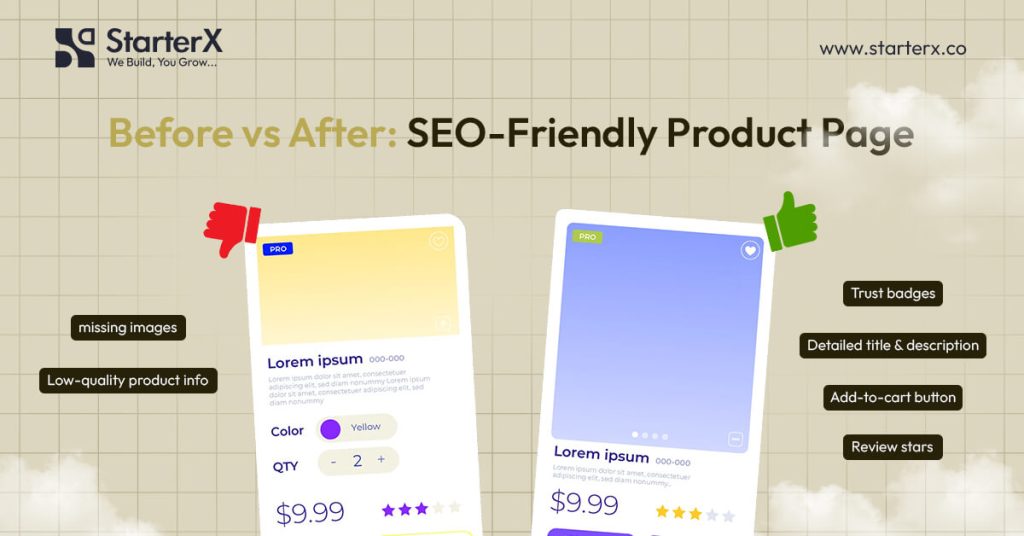
An SEO-optimized Shopify product page in 2026 ranks on Google by matching search intent and converts by removing buyer friction. The page must offer complete information, build trust, and guide users to take action.
As search evolves, product pages must now serve two functions at once:
- Support semantic indexing for better rankings
- Provide persuasive, UX-optimized content for conversions
Stores that do not balance both will either rank but fail to convert, or convert but never get seen.
1. Use a Descriptive, Keyword-Rich Product Title (H1)
The product title is the most important on-page signal. It should reflect actual user search behavior, not internal SKU naming.
Include in your title:
- Product type: “Sneakers,” “Blender,” “Wireless Headphones”
- Attributes: size, color, material, style, gender
- Intent keywords: “eco-friendly,” “durable,” “budget,” “premium”
Example: “Men’s Waterproof Hiking Boots – Insulated Leather, Size 8–13”
This helps you match mid-funnel queries like “best waterproof boots for men size 10” or “leather hiking boots with insulation.”
2. Write Unique, Conversion-Focused Product Descriptions
Your product description must explain value, solve a problem, and match the semantic context. Google no longer rewards thin or generic copy.
A strong product description includes:
- User intent alignment: Who is this product for and why?
- Product specifications: weight, dimensions, materials, battery life, capacity
- Value proposition: durability, ease of use, eco-friendliness, health benefits
- Semantic coverage: include LSI terms naturally (e.g., for “yoga mat,” include “non-slip,” “PVC-free,” “hot yoga”)
- Use cases: home, travel, outdoor, professional use
Avoid manufacturer-provided text. Write original descriptions that reflect real-world usage and benefits.
3. Structure Product Information with Semantic HTML
Use semantic HTML tags to help Google interpret content correctly.
Format your page with:
- <h1> for the product title
- <h2> and <h3> for features, reviews, FAQs
- <ul> or <table> for technical specifications
- <section> for content blocks (e.g., “Customer Reviews,” “Product Features”)
This improves crawlability, indexability, and AI-overview eligibility.
4. Optimize for Product Schema Markup and Rich Snippets
Structured data helps Google display enhanced listings like price, reviews, and availability in search results. This increases CTR and visibility.
Key schema types for product pages:
- Product
- Offer (price, currency, availability)
- Review and AggregateRating
- ImageObject
- BreadcrumbList
Use clean JSON-LD markup, not microdata, to avoid parsing errors. Validate with Schema.org Validator.
5. Add and Optimize Product Media for UX and SEO
High-quality visuals reduce bounce rates and increase user trust. Image SEO also contributes to product visibility in Google Images.
Best practices:
- Upload multiple angles and zoomable views
- Show product in real-life use (lifestyle photography)
- Include videos or 360° views if possible
- Use descriptive, keyword-rich ALT tags
- Compress images using WebP or AVIF formats for speed
Product videos also boost dwell time and are favored in SGE previews.
6. Display Real-Time Product Availability and Urgency Signals
Buyers need clarity on what’s in stock, what’s limited, and how fast it ships.
Add:
- Stock status: “In Stock,” “Low Inventory,” “Only 3 Left”
- Estimated delivery dates
- Shipping cost and speed
- Return and warranty policies
These build trust and reduce hesitation, both critical for mobile-first users.
7. Include Product Reviews and User-Generated Content
Social proof influences buying decisions and supports EEAT signals.
Display:
- Star ratings (visually above-the-fold)
- Verified buyer reviews
- User-uploaded photos and usage tips
- Filterable reviews by rating, feature, or use case
Include structured data (Review + AggregateRating) to appear in rich search snippets.
8. Use Strong, Clear CTAs and Variant Selection
Make it easy to take action. Don’t hide CTAs or force extra steps.
Optimize:
- “Add to Cart” button placement (always visible)
- Clear variant selectors for size, color, bundle
- Show selected variant updates dynamically (price, image, stock)
Use intent-driven CTAs like “Buy Now,” “Get Yours Today,” or “See Size Guide.”
9. Improve Mobile Responsiveness and Load Speed
Most Shopify traffic comes from mobile devices. Slow, cluttered product pages lose both rankings and revenue.
Checklist:
- Prioritize LCP under 2.5s
- Ensure text is legible and buttons are tappable
- Minimize layout shifts (CLS < 0.1)
- Use lazy-loading for media
- Defer unused JavaScript
Test using Google Lighthouse and PageSpeed Insights.
10. Add Internal Links to Support Discovery and Indexation
Internal links help both users and crawlers navigate your store.
Link to:
- Related products or bundles
- Blog posts addressing use cases or buying guides
- Higher-level collection pages
Use anchor text like “shop more wireless headphones” or “compare all travel backpacks.”
How Can Blogging Help Your Shopify SEO in 2026?
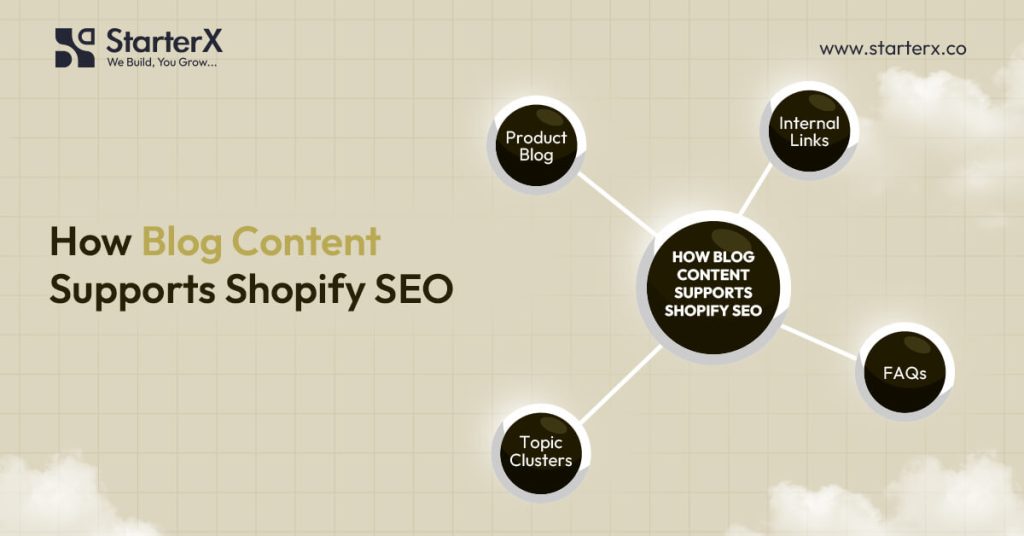
In 2026, blogging is one of the most effective ways to build topical authority and drive targeted organic traffic to your Shopify store. While product and collection pages capture transactional intent, blog content captures informational and comparison-based search intent earlier in the buying journey.
Well-structured blog content helps Shopify stores rank for long-tail, question-based queries that buyers search before they’re ready to purchase. It also improves internal linking, increases time on site, and supports the semantic structure of your entire domain.
1. Capture Informational and Problem-Based Search Intent
Most buyers search for answers before choosing a product. They type queries like:
- “How to choose a mattress for back pain”
- “Best eco-friendly laundry detergents for sensitive skin”
- “Air fryer vs convection oven for small kitchens”
These are high-value, low-competition keywords that Shopify product pages usually can’t rank for. A blog is the only scalable way to target this search behavior.
Blogging allows you to position your brand as an expert, building trust before the purchase.
2. Support Product and Collection Pages with Internal Links
A well-planned blog strategy acts as an internal linking engine. Blog posts should link directly to relevant:
- Product pages using exact-match or partial-match anchor text
- Collection pages to strengthen topical relevance
- Related blog content to form content clusters
This distributes link equity, improves crawl depth, and supports a semantic content graph that Google can easily interpret.
Example: A post titled “5 Best Vegan Skincare Ingredients to Avoid Breakouts” should internally link to your “Vegan Skincare Products” collection and top-selling acne-safe items.
3. Build Topical Authority with Content Clusters
Topical authority is built by covering every sub-topic within a category. This signals to Google that your store is not only selling products, but also deeply understands the niche.
Strategy:
- Identify your core product verticals
- Build content clusters around each
- Use parent pillar posts (e.g., “Ultimate Guide to Winter Hiking”)
- Add support content (e.g., “How to Layer Clothes for Cold Weather Hikes”, “Best Thermal Socks for Long Hikes”)
- Interlink all pieces with structured, keyword-relevant anchors
Over time, this creates semantic depth, which is key to ranking for competitive terms.
4. Target Long-Tail and Zero-Click Keywords
Blogs are ideal for ranking on long-tail queries and featured snippets. These include:
- List posts: “10 Best Running Shoes for Flat Feet in 2026”
- Comparison queries: “Memory Foam vs Latex Mattress: Which Is Better?”
- FAQs: “Are silicone baby bottles safe?”
- How-to guides: “How to Clean a Weighted Blanket Without Ruining It”
Use question-based H2s, semantic headings, and structured lists to increase your chance of appearing in AI Overviews, People Also Ask, and featured snippets.
Answer the query in the first 40 words and expand below for clarity — this is critical for snippet eligibility.
5. Improve Content Freshness and Crawl Frequency
Google’s 2026 algorithm favors sites with recent, updated content. A Shopify store that publishes new blog content weekly is crawled more often and indexed faster.
Maintain a regular blog schedule:
- Publish new articles consistently
- Update older posts with revised product links and fresh data
- Add updated FAQ blocks or schema
This keeps your site active and relevant, which supports crawl frequency, ranking stability, and topic freshness scores.
6. Align Blog Content with Purchase Intent
Not all blog content should be purely educational. Mid-funnel and bottom-funnel content converts readers into customers.
Examples:
- Buying guides: “How to Choose the Right Beard Trimmer for Your Face Shape”
- Product roundups: “Top 7 Beard Trimmers Under $50 in 2026”
- Problem solvers: “Why Your Beard Itches and How to Fix It with the Right Trimmer”
- Product spotlight articles: “Why the [Brand] Beard Trimmer is Our Top Pick for Sensitive Skin”
Use these posts to organically recommend products and include contextual CTAs, like “View all beard trimmers” or “Compare models now.”
7. Use Schema Markup and Semantic HTML
Blog content can be enhanced with structured data to improve visibility.
Add:
- Article schema
- FAQPage schema for in-content FAQs
- BreadcrumbList for site structure
- Author and Organization to support EEAT signals
Use semantic HTML elements like <article>, <header>, <section>, and <aside> to improve content parsing.
Validate your blog schema using Google’s Rich Results Test.
8. Optimize Blog Layout for Readability and UX
Good content must also be easy to read. Avoid large blocks of text and use formatting that encourages scrolling and engagement.
Best practices:
- Use bullet points, short paragraphs, and subheadings
- Add internal CTA banners or product cards
- Include a Table of Contents for long-form content
- Add images or illustrations where helpful
- Optimize blog posts for mobile screens
Google evaluates user signals like time on page and scroll depth; a clean blog design improves both.
How Do You Build Topical Authority and Backlinks to a Shopify Store?
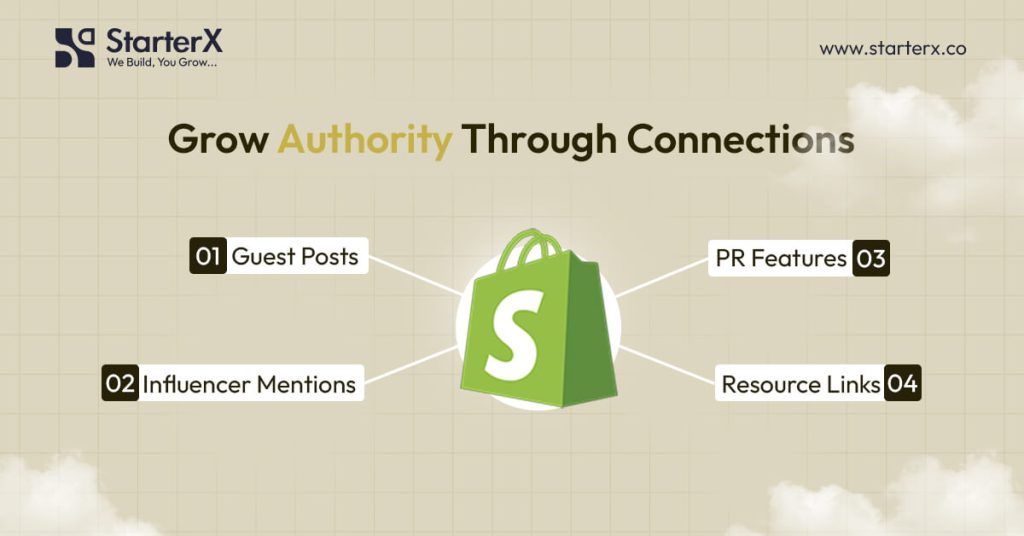
Topical authority and backlinks are two of the most powerful ranking factors for Shopify SEO in 2026. Authority signals tell Google your store is a trusted source in its niche. Without them, even well-optimized product pages may not rank.
Topical authority is built through depth of content. Backlinks are earned through trust and relevance.
Together, they raise your domain’s visibility and help every page perform better in search.
1. Build Topical Authority by Covering Every Subtopic in Your Niche
Topical authority means you cover a subject completely, not partially. Google favors domains that demonstrate deep expertise in a specific category.
Strategy:
- Identify your primary product verticals (e.g., “cold brew coffee gear,” “vegan skincare,” “trail running shoes”)
- Create content clusters around each vertical
- Include: how-to guides, product comparisons, care tips, buyer FAQs, usage scenarios
- Link between cluster pages using keyword-rich contextual anchors
- Use consistent terminology and semantic relationships between terms
Example: If you sell espresso machines, write about grind settings, brewing temperature, descaling routines, and milk frothing.
More coverage = more internal signals = stronger topical relevance.
2. Earn Contextual Backlinks From Niche-Relevant Sources
Not all backlinks help; relevance is now more important than raw quantity. In 2026, Google evaluates link context, placement, and topical alignment.
Focus on backlinks from:
- Industry blogs or review sites in your niche
- Supplier websites or partner brands
- Online magazines, niche forums, and curated directories
- Journalists covering product launches or trends
Avoid:
- Irrelevant guest posts
- Low-quality directories or link exchanges
- Anchor text stuffing and link manipulation
Tool tip: Use Ahrefs or Majestic to analyze your referring domains and trust flow.
3. Use Digital PR and Data-Driven Content to Attract Natural Links
Publishing data-backed or newsworthy content increases the chances of earning high-authority backlinks.
Link-worthy content types:
- Industry trend reports or product usage data
- Interactive tools or calculators (e.g., “Shoe Size Fit Finder”)
- First-party research (e.g,. “We analyzed 5,000 customer reviews and found…”)
- Original infographics
- Behind-the-scenes or founder story articles
Outreach targets:
- Journalists via platforms like HARO or Help a B2B Writer
- Bloggers writing about gift guides, product roundups, or trends
- Newsletter editors in your category
Backlinks earned this way are editorial, contextual, and brand-safe.
4. Leverage Influencer Reviews and Affiliate Partnerships
User-generated content and product reviews by niche influencers can result in strong backlinks and referral traffic.
Best practices:
- Send products to micro-influencers for honest reviews
- Offer affiliate links through Shopify apps like Refersion or UpPromote
- Ask for contextual links, not just raw URLs
- Use influencer-generated content in your blog and product pages with proper attribution
Ensure influencers link from actual content, not only bio sections or discount pages.
5. Submit to Curated Resource Pages and Buyer Guides
Resource pages and “best product” lists still drive quality backlinks. These pages are curated by editors and offer natural linking opportunities.
Target pages like:
- “Best Camping Gear of 2026”
- “Top Sustainable Fashion Brands for Men”
- “Where to Buy Budget Tech Gifts Online”
Outreach strategy:
- Personalize your pitch
- Mention a specific article or reason you’re relevant
- Offer unique value (product sample, discount code, expert quote)
These links often stay live for years and bring both authority and qualified referral traffic.
6. Build Internal Linking to Reinforce Topical Authority
Backlinks alone don’t build authority if your internal architecture is weak. Once you acquire external links, spread their value across your site.
Tips:
- Link from high-authority blog posts to target product or collection pages
- Use consistent internal anchors across content clusters
- Pass equity from older, ranking pages to newer or lower-performing ones
Use semantic grouping: link related products, features, or use cases naturally within blog content.
7. Diversify Anchor Text and Link Sources
Avoid patterns that trigger spam filters. Google now tracks anchor variation and source quality as part of link analysis.
Follow a balanced anchor strategy:
- Branded anchors: “at GreenTrailGear.com”
- Partial match: “trail running shoes for men”
- Long-tail phrases: “best insulated hiking boots for cold weather”
- Generic anchors: “check it out,” “read more”
Keep backlinks natural in context and avoid over-optimized anchors that repeat exact product names.
8. Monitor Backlink Quality and Remove Toxic Links
Toxic backlinks can harm your rankings or cause manual actions.
Use tools like:
- Google Search Console
- Ahrefs (Toxic Score)
- SEMrush Backlink Audit Tool
Disavow domains that:
- Are part of a known link network
- Have irrelevant or spun content
- Show patterns of link manipulation
Backlink hygiene is part of ongoing SEO maintenance in 2026.
How Do You Convert SEO Traffic into Shopify Sales?
Ranking on Google is only the first step. Converting that traffic into sales is where SEO delivers real ROI. In 2026, high-quality traffic alone doesn’t guarantee growth; your Shopify store must be optimized to convert visitors with clear intent into paying customers.
SEO and CRO (Conversion Rate Optimization) must work together. Every page that ranks must also:
- Match buyer expectations
- Build trust immediately
- Remove friction from the purchase process
- Present a clear value proposition
1. Align Page Content With Search Intent
Users coming from a search expect specific answers. If your product page or blog post doesn’t match what the query promised, bounce rates increase.
Fix this by:
- Mapping each ranking keyword to the correct page type (product, collection, blog)
- Using buyer-aligned copy: “fast shipping,” “safe for sensitive skin,” “works with iPhone 15”
- Avoiding generic content that doesn’t solve a specific need
Example: A user searching “best ergonomic office chair under $300” must land on a page with filtered, priced, and reviewed products, not a general category.
2. Use Clear Value Propositions and Above-the-Fold CTAs
Buyers decide in seconds. Your product pages should clearly answer:
- What is this?
- Why should I buy it here?
- How is it better than others?
Include:
- Key benefit in the first 3 lines
- Price, availability, shipping info above the fold
- Primary CTA button always visible (sticky on scroll for mobile)
Use strong CTAs like “Buy Now,” “Add to Cart – Ships Today,” or “Get Yours Before It’s Gone.”
3. Display Trust Signals Where They Matter Most
Trust elements reduce hesitation. Search users don’t know your brand yet. They need visual reassurance to feel safe purchasing.
Include:
- Verified reviews with star ratings
- Product guarantees and return policy links
- Trust badges (SSL, secure checkout, payment icons)
- Social proof (e.g., “Over 10,000 sold,” “As seen on…”)
- Transparent contact and About pages
These signals should be visible without scrolling, especially on mobile.
4. Optimize for Mobile Shopping Behavior
Over 70% of Shopify traffic comes from mobile in 2026. Poor mobile UX kills conversion even if SEO rankings are strong.
Optimize:
- Page speed under 2.5s (Core Web Vitals)
- Tap-friendly buttons and clean layouts
- Sticky Add to Cart bar
- Mobile-friendly navigation and filters
- Autofill-enabled checkout forms
Use Lighthouse and Shopify’s Theme Inspector to test mobile performance regularly.
5. Use Scarcity, Urgency, and Social Proof to Trigger Action
Psychological triggers increase the chance of action. Used ethically, these can reduce indecision and cart abandonment.
Examples:
- Low stock messages: “Only 3 left in stock”
- Countdown timers for flash sales
- Limited-time offers or bundles
- “Others also bought” recommendations
- Real-time order notifications (if used minimally)
Avoid fake urgency. Google can detect manipulative tactics and may reduce visibility if signals seem misleading.
6. Personalize the Experience With Relevant Upsells and Cross-Sells
Upselling and cross-selling increase AOV and improve user engagement.
Use:
- “Complete the Look” bundles
- Variant upgrades (e.g., bigger size, pro version)
- Cross-category suggestions based on product use case
- Personalized blocks like “Recently Viewed” or “You Might Also Like”
Add these without interrupting the main purchase flow.
7. Retarget SEO Visitors With Behavioral Campaigns
Not all organic users convert on the first visit. Retargeting helps bring them back with more focused offers.
Tools and strategies:
- Exit-intent popups for newsletter signups
- Email flows for abandoned carts and viewed products
- Retargeting ads via Meta and Google Ads
- Use UTM tracking to segment SEO visitors
Match email and ad copy to the exact product or blog they viewed to increase relevance.
8. Test and Measure CRO Elements With Data
Ongoing optimization matters. Even minor tweaks to layout, copy, or CTAs can impact sales.
Tools to use:
- A/B testing with Shopify Plus or third-party apps
- Heatmaps and scroll maps with Hotjar or Lucky Orange
- Google Analytics 4 to segment by organic traffic
- Shopify Reports to track conversions by page type
Test one variable at a time to get clean results.
What SEO Tools Are Most Useful for Shopify in 2026?
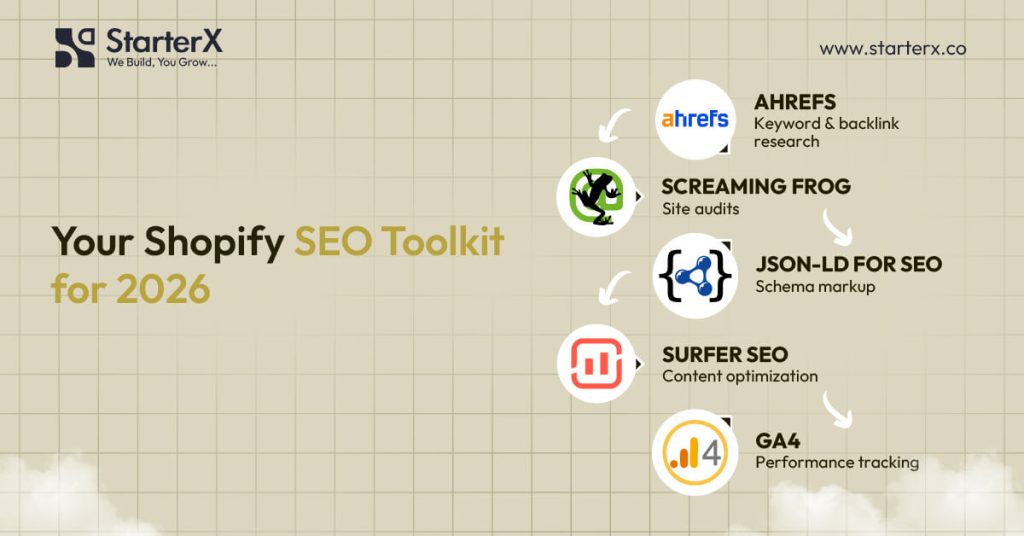
Shopify SEO in 2026 relies on a connected toolset that covers technical audits, content optimization, schema markup, site speed, keyword tracking, and backlink monitoring.
Because Shopify limits direct control over backend elements like server configuration, URL structure, and advanced rendering, store owners need a combination of third-party apps and external SEO platforms to bridge these gaps.
Effective SEO tools help you:
- Identify and fix indexation and crawl issues
- Optimize metadata and on-page elements at scale
- Plan keyword-rich content across the funnel
- Track search performance by device, region, or SERP feature
- Implement structured data for rich results and SGE visibility
- Monitor backlink health and domain authority growth
1. Keyword Research and SERP Intelligence Tools
Ahrefs, LowFruits, Keyword Insights
These tools reveal:
- Search volume, keyword difficulty, and click potential
- Long-tail variations, buyer queries, and zero-click keyword opportunities
- Featured snippet opportunities, People Also Ask placements, and local pack triggers
- Competitive content gaps and URL-level keyword cannibalization
Use keyword mapping tools to align product, collection, and blog pages with transactional, navigational, and informational search intent.
2. Technical SEO and Crawling Tools
Screaming Frog, Sitebulb, Ahrefs Site Audit
These tools crawl your site and uncover:
- Broken links, orphan pages, soft 404s
- Canonical errors, noindex tags, and crawl budget waste
- Duplicate content caused by collection-product routing conflicts
- Heading structure problems and missing alt attributes
- Improper pagination or JavaScript rendering issues
These are essential for auditing Shopify themes, dynamic filters, and layered navigation that can create crawl traps.
3. Structured Data and Schema Markup Tools
Merkle Schema Generator, JSON-LD for SEO (Shopify App)
These tools help implement and validate structured data for:
- Product (name, description, price, availability, SKU)
- Offer (price, discount, currency)
- Review and AggregateRating
- BreadcrumbList for navigational context
- FAQPage, used to win rich results for long-tail queries
Proper schema increases your eligibility for AI Overviews, visual SERP features, and voice search snippets.
4. On-Page SEO Optimization Tools
Smart SEO, Yoast SEO for Shopify, Plug In SEO
These apps allow you to:
- Edit and bulk-manage title tags, meta descriptions, and H1s
- Customize canonical tags for collection/product URL variations
- Add multilingual meta tags for international SEO
- Automate the injection of JSON-LD schema into product and blog templates
They reduce manual theme edits and improve on-page consistency across product catalogs.
5. Site Speed and Core Web Vitals Monitoring Tools
Google PageSpeed Insights, GTmetrix, Lighthouse
These tools audit performance metrics, including:
- Largest Contentful Paint (LCP)
- Cumulative Layout Shift (CLS)
- Interaction to Next Paint (INP)
- Server response times and total blocking time
Identify Shopify-specific bottlenecks like oversized image assets, unoptimized fonts, and app-generated JavaScript bloat.
6. Rank Tracking and SERP Monitoring Tools
SERPWatcher, AccuRanker, ProRankTracker
These tools monitor:
- Keyword rankings by URL, device type, and geo-location
- Featured snippet acquisition and SERP volatility
- Visibility trends by keyword group (product, blog, collection)
- Share of voice compared to competitors
Use this data to evaluate the impact of SEO changes, A/B content tests, and seasonal shifts.
7. Backlink and Authority Monitoring Tools
Ahrefs, Majestic, SEMrush Backlink Audit
These tools help you:
- Audit your referring domains, link types, and anchor text diversity
- Identify lost links, broken backlinks, and toxic domains
- Track domain rating (DR), trust flow, and backlink growth velocity
- Benchmark link profiles against top-ranking competitors
Use backlink data to plan digital PR, influencer partnerships, and guest post outreach with relevance-first targeting.
8. Content Planning and Semantic Optimization Tools
Surfer SEO, Frase, Topic, MarketMuse
These tools support:
- NLP-driven content outline generation
- Topic model scoring based on semantic entities and TF-IDF data
- Internal link opportunity analysis across content clusters
- Intent-based content briefs for writers and editors
Ideal for building supporting blog posts, buying guides, and topical authority pages that rank alongside product content.
9. Search Analytics and Revenue Attribution Tools
Google Search Console, GA4, Shopify Analytics, Triple Whale
These tools provide:
- Clicks, impressions, CTR, and average position by page or keyword
- Indexed vs excluded URL reports
- Search performance trends filtered by device, query, and geography
- Conversion tracking linked to organic traffic and product views
- Attribution modeling by source/medium and UTM campaign
Connect traffic quality to real sales data, not just rankings.
Final Thoughts on Shopify SEO
Shopify SEO in 2026 is about more than keywords. It is about building a store that Google trusts and buyers love. Success depends on aligning technical SEO, structured content, topical authority, and conversion-focused design.
Key takeaways:
- Technical health matters: Fix Core Web Vitals, duplicate URLs, and schema errors.
- Content depth wins: Use unique product descriptions, optimized collection pages, and supporting blogs to build topical authority.
- Authority drives rankings: Earn backlinks through digital PR, influencer reviews, and resource page placements.
- Conversions complete the process: Use trust signals, clear CTAs, and mobile-first design to turn organic visitors into paying customers.
Whether you manage SEO yourself or invest in Shopify SEO services, the goal is the same: create a store that delivers helpful content, transparent value, and an exceptional buying experience.
If you implement these strategies, your Shopify store can rank higher, attract qualified traffic, and convert that visibility into consistent sales growth in 2026.
Ready to Grow Your Shopify Store?
StarterX is a Shopify agency that builds, scales, and manages successful Shopify stores. Our team has helped multiple brands achieve consistent growth with proven SEO strategies, conversion optimization, and data-driven campaigns.
If you are struggling to rank, convert, or want to launch a profitable Shopify store, we can help.
👉 Book your free consultation today and discover how StarterX can turn your Shopify store into a sales engine.
FAQs About Shopify SEO in 2026
How long does it take for a Shopify store to rank on Google?
Most Shopify stores take 3 to 6 months to see meaningful organic rankings, depending on competition, domain strength, and content quality.
New stores may take longer due to limited domain authority, fewer referring domains, and smaller content libraries. Ranking faster depends on how well your site aligns with Google’s latest standards for topical authority, EEAT, and helpful content.
Tip: Publishing original content weekly, optimizing product metadata, and building high-quality backlinks can reduce the timeline.
Is Shopify bad for SEO compared to other platforms?
No, Shopify is SEO-capable, but it requires specific optimizations.
Shopify uses a hosted platform with built-in SEO features like automatic sitemaps, mobile responsiveness, and SSL. However, it also introduces technical limitations such as:
- Duplicate product URLs from collection routing
- Limited access to server-level configurations
- App bloat affecting Core Web Vitals
- Default canonical tags that may need customization
With proper theme setup, structured data, and Shopify SEO apps, it performs competitively with WooCommerce, BigCommerce, or Magento.
What is the most important SEO factor for Shopify stores in 2026?
Content depth, page experience, and trust signals (EEAT) are the most critical ranking factors.
Google’s algorithm now focuses on how well your site helps users, not just how many keywords you use. This includes:
- In-depth product descriptions with real value
- Authoritativeness shown via reviews and social proof
- Structured content using schema markup
- Mobile speed and layout stability
SEO in 2026 rewards semantic relevance and content that aligns with clear buyer intent.
Do I need Shopify SEO apps, or can I optimize manually?
Apps are useful but not mandatory.
You can manually optimize title tags, descriptions, image ALT text, and even structured data within your theme files. However, Shopify SEO apps simplify and automate many tasks:
- Smart SEO: for metadata, schema, and multilingual tags
- Yoast SEO for Shopify: for content optimization and readability
- JSON-LD for SEO: for structured data
- Plug In SEO: for technical audits and suggestions
Choose apps based on your technical skill, store size, and SEO strategy.
Can AI-generated content rank on Shopify in 2026?
Only if it meets Google’s quality and helpfulness standards.
AI-generated product descriptions, blogs, and FAQs can rank if they are accurate, original, and tailored to user needs. However, mass-published, generic AI content with no human oversight is unlikely to perform well.
Combine AI tools with human editing, EEAT-driven inputs, and data-backed information to meet 2026 ranking standards.
How do I fix duplicate content issues on Shopify?
Use canonical tags and URL controls to manage duplicate URLs created by Shopify’s collection-product structure.
Shopify creates multiple paths to the same product:
- /products/product-name
- /collections/collection-name/products/product-name
Make sure the canonical tag always points to the preferred URL (usually the root product URL). You can set this via your product.liquid file or apps that manage canonical logic.
Also, avoid reusing content across multiple products or collections. Create unique descriptions and meta tags.
How often should I update SEO content on my Shopify store?
Update key content every 3 to 6 months and publish new content at least monthly.
Google favors content freshness, especially for seasonal products, fast-changing industries, or competitive niches.
Update:
- Product descriptions with new features or reviews
- Collection page text for seasonal relevance
- Blog posts with updated statistics, trends, and internal links
Use Search Console to identify pages with declining clicks, then refresh content with more value and relevance.
Can blogs really help product rankings in Shopify SEO?
Yes. Blog content builds topical authority and internal link support for product and collection pages.
Well-structured blog posts:
- Answer buyer questions
- Include semantic entities related to your product niche
- Link contextually to collections and individual SKUs
- Rank for long-tail keywords and informational queries
A Shopify blog that targets search intent and supports your product pages can significantly boost your overall SEO performance.
Should I optimize images for SEO on Shopify?
Yes. Image SEO improves page speed, UX, and visibility in Google Image Search.
Best practices:
- Use descriptive, keyword-rich ALT text
- Compress images without losing quality (use WebP or AVIF)
- Use consistent file naming (e.g., men-hiking-boots-waterproof.jpg)
- Add structured data via the ImageObject schema
Optimized product images also support better Core Web Vitals and faster mobile experiences.
Is structured data required for Shopify SEO in 2026?
Structured data is not required, but it is essential for visibility and rich result eligibility.
Without schema markup:
- Your products may not appear with reviews or pricing in search results
- You miss chances to rank in AI overviews and People Also Ask boxes
- Google cannot fully understand your page context
Use JSON-LD format to apply schemas like:
- Product
- Review
- Offer
- BreadcrumbList
- FAQPage
Use tools like Rich Results Test or Schema Markup Validator to test your implementation.

The StarterX Team is a group of e-commerce experts with years of hands-on experience in launching, managing, and scaling online businesses. As trusted authorities in the e-commerce space, we’ve helped entrepreneurs grow successful stores on Amazon, Shopify, TikTok, and Walmart. Backed by real-world results and a data-driven approach, we deliver proven strategies and insights you can trust to succeed in the digital marketplace.