


.svg)
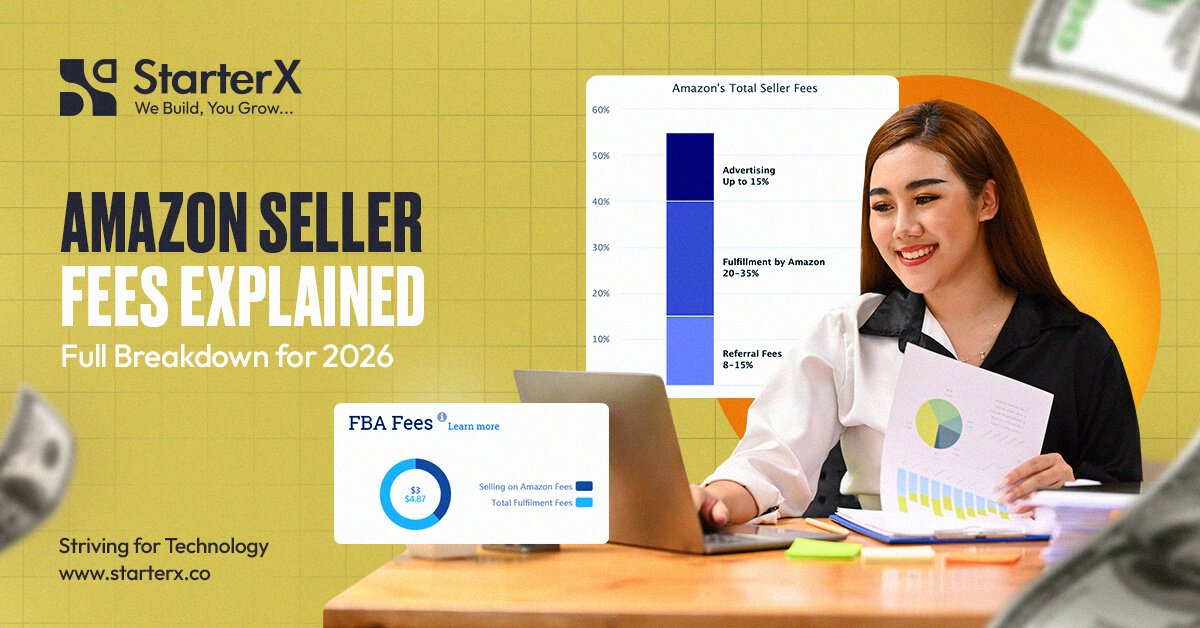
Selling on Amazon in 2026 comes with several fees, and they’re not always obvious. You pay a referral fee on every sale, and if you use FBA, there are extra charges for storage, fulfillment, and returns. These costs can quickly add up, especially if you’re not tracking them closely.
Key Takeaways:
- Amazon charges sellers referral, subscription, fulfillment, storage, and optional service fees
- Referral fees range from 8% to 45%, depending on the product category
- FBA fees depend on item size, weight, and inventory age
- New aged inventory fees now start after 181 days in storage
- Subscription fee for Professional sellers is $39.99 per month
- Returns and advertising fees are often missed in profit calculations
- You can lower fees by improving sell-through and optimizing packaging
Amazon increased its FBA fulfillment fees by 4% to 9% in 2026, depending on size and weight tier. This update was rolled out to manage rising logistics costs and inventory space.
Most sellers don’t realize how much Amazon takes from each sale until they notice their profits shrinking. Hidden fees, like storage surcharges or return processing costs, can eat into your margins without warning. If you’re not careful, your best-selling product might become your least profitable one. This is often where an Amazon agency can help identify profit leaks and optimize your fee structure.
That’s why this guide exists. It breaks down every Amazon seller fee for 2026 in simple terms. You’ll learn what each fee means, how much it costs, and how to keep your costs under control.
Why Trust This Guide?
At StarterX, we’ve built and managed multiple Amazon stores across different product categories. We’ve helped sellers optimize fees, boost margins, and scale with full visibility. We know Amazon’s fee structure inside and out, and we’re sharing everything here with full transparency and accuracy.
Now, let’s go through each Amazon seller fee for 2026 so you can understand exactly what you’re paying and where you can save.
What types of seller fees does Amazon charge in 2026?
Amazon charges sellers five main types of fees in 2026: referral fees, subscription fees, fulfillment fees, storage fees, and optional service fees. The exact costs depend on your account type, product category, and fulfillment method (FBA or FBM).
These fees are automatically deducted from your payout, so understanding each one helps you keep more of your profit.
Here’s a quick breakdown of Amazon’s 2026 seller fees:
| Fee Type | What It Covers |
| Referral Fee | A percentage of each sale, based on the product category |
| Subscription Fee | A monthly charge to maintain a Professional seller account |
| Fulfillment Fee | Fees for picking, packing, and shipping if you use FBA |
| Storage Fee | Monthly or aged inventory fees for items stored in Amazon’s warehouses |
| Optional Fees | Costs for advertising, labeling, returns, prep, and removals |
You may also face penalties if you don’t maintain healthy inventory levels or let products sit too long in FBA warehouses.
These fees apply across all Amazon marketplaces, including the United States, Canada, and Europe, but some charges, like currency conversion fees or VAT services, may apply for international sellers.
If you’re using Fulfillment by Amazon (FBA), your total fees per product often include referral, fulfillment, and storage. For FBM sellers, you usually only pay referral fees, but handle your own shipping and service costs.
Next, let’s look more closely at how referral fees work by product category.
What is the Amazon referral fee per category in 2026?
Amazon referral fees are the most common seller cost. This fee is a percentage of your product’s total sale price, including item cost, shipping, and any gift wrap. The percentage depends on which category your item falls into.
How much is the referral fee?
In 2026, Amazon referral fees typically range from 8% to 15%, but some categories, like jewelry or Amazon device accessories, go as high as 45%. Most sellers fall in the 15% range.
Amazon Referral Fee Rates by Category (2026)
| Product Category | Referral Fee | Minimum Fee Per Item |
| Apparel & Accessories | 17% | $0.30 |
| Electronics | 8% | $0.30 |
| Books | 15% | $0.30 |
| Grocery & Gourmet Food | 8% for items under $15, 15% above | $0.30 |
| Beauty Products | 8% under $10, 15% above | $0.30 |
| Jewelry | 20% up to $250, 5% above $250 | $0.30 |
| Furniture | 10% up to $200, 15% above | $0.30 |
| Pet Supplies | 15% | $0.30 |
| Baby Products | 8% up to $10, 15% above | $0.30 |
| Toys & Games | 15% | $0.30 |
Amazon uses the category-specific referral rate to calculate fees automatically when a product is sold.
For example, if you sell a $50 toy, Amazon deducts 15% of the total price, which is $7.50, as the referral fee. If the product price is low, the minimum fee of $0.30 may apply.
These percentages apply to both FBM and FBA sellers, and they are deducted regardless of your shipping method.
What is the Amazon monthly subscription fee in 2026?
In 2026, Amazon offers two types of seller accounts: Individual and Professional. Only the Professional plan includes a monthly subscription fee, which is $39.99 per month.
If you sell more than 40 products per month, the Professional plan is usually the better choice. It removes per-item charges and unlocks key features like bulk listing tools, advertising access, and Amazon API integrations.
Comparison: Individual vs. Professional Seller Accounts
| Feature | Individual Plan | Professional Plan |
| Monthly Fee | $0 | $39.99 |
| Per-Item Fee | $0.99 per item sold | $0 |
| Ability to Run Ads | No | Yes |
| Access to FBA | Yes | Yes |
| Bulk Listings via Inventory File | No | Yes |
| Promotions and Coupons | No | Yes |
| Buy Box Eligibility | No | Yes |
The subscription fee does not include fulfillment, storage, or referral fees. It’s only the cost of having a Professional account with access to more tools and features.
If you’re just starting out or testing products, the Individual plan may be enough. But once your sales grow, the Professional plan usually pays for itself.
How do Amazon FBA fulfillment fees work in 2026?
If you use Fulfillment by Amazon (FBA), Amazon charges you a fee for picking, packing, shipping, and customer service. This is called the fulfillment fee, and it’s based on the product size tier and weight.
FBA fees are charged per unit, so they can add up quickly if your items are large or heavy. These rates were updated in 2026 to reflect increased logistics and handling costs.
| Size Tier | Weight Range | Fee Per Unit |
| Small Standard (≤12 oz) | Up to 12 oz | $3.22 – $3.77 |
| Large Standard (1–3 lb) | 12 oz to 3 lb | $4.75 – $6.68 |
| Small Oversize | Up to 2 lb | $8.26 – $10.35 |
| Medium Oversize | Up to 5 lb | $11.78 – $16.25 |
| Large Oversize | Over 5 lb | $16.25 and up |
Amazon also introduced a low-inventory-level fee in 2026 for sellers who don’t keep enough stock on hand to meet customer demand. This fee applies if your inventory consistently falls below the recommended coverage threshold.
Fulfillment fees are calculated per unit and apply in addition to referral fees. They include:
- Picking and packing your order
- Shipping to the customer
- Customer service and returns handling
If your product is large or oddly shaped, your cost may fall into a higher size tier due to dimensional weight.
Amazon provides a fee preview tool in Seller Central so you can estimate your exact cost before listing.
What are the Amazon storage fees in 2026?
Amazon charges monthly storage fees to all FBA sellers for keeping inventory in its fulfillment centers. These fees depend on two main factors: product size and time of year.
In 2026, Amazon will also apply an aged inventory surcharge if your products stay in the warehouse too long.
Monthly Storage Fees (FBA) — Per Cubic Foot
| Period | Standard Size Items | Oversize Items |
| January – September | $0.87 | $0.56 |
| October – December | $2.40 | $1.40 |
Peak season rates are higher because warehouse space is in high demand. If you sell seasonal or slower-moving items, it’s important to track how long your inventory stays stored.
Aged Inventory Surcharge (Starting Day 181)
If your FBA inventory stays longer than 180 days, you’ll pay an additional fee on top of monthly storage. This is called the aged inventory surcharge.
| Inventory Age | Fee per Cubic Foot |
| 181 to 270 days | $1.50 |
| 271 to 365 days | $3.60 |
| Over 365 days | $6.90 |
Amazon tracks storage duration using unit-level data, so even a few units can trigger this fee.
To reduce storage costs:
- Improve your sell-through rate
- Send smaller shipments more frequently
- Use automated removal or liquidation options for old stock
Storage fees are billed monthly, and they appear in your Amazon FBA inventory report inside Seller Central.
How do Amazon FBM fees compare to FBA fees?
FBM stands for Fulfilled by Merchant. If you use FBM, you handle your own shipping, storage, packaging, and customer service. Amazon only charges you the referral fee when you sell a product.
This makes FBM a good option for sellers with their own logistics setup or for items that are large, heavy, or slow-moving.
| Fee Type | FBA | FBM |
| Referral Fee | Yes | Yes |
| Fulfillment Fee | Yes | No |
| Storage Fee | Yes | No |
| Returns Fee | Yes (for many categories) | No (seller handles it) |
| Subscription Fee | Depends on account type | Depends on account type |
With FBM, you control how your orders are shipped. That gives you flexibility on carrier choice, shipping speed, and packaging costs. However, you’re also responsible for tracking deliveries, handling customer returns, and meeting Amazon’s performance metrics.
Some sellers use both models. For fast-selling or small items, FBA may be more efficient. For bulky or niche products, FBM can save money and offer more control.
What optional and hidden Amazon fees exist in 2026?
Besides the standard fees, Amazon also charges for extra services that many sellers overlook. These optional and often hidden fees can reduce your profit margin if you don’t factor them in.
Most of these costs come from services linked to FBA, returns, advertising, and inventory prep.
| Fee Type | Description | Typical Range |
| FBA Labeling Fee | Charged if Amazon labels your products | $0.55 per unit |
| FBA Prep Service Fee | For poly bagging, bubble wrap, or taping | $1.00 – $2.20 per unit |
| Removal Fee | For taking unsold items out of Amazon warehouses | $0.97 – $2.90 per unit |
| Returns Processing Fee | Applies to categories with free returns (e.g., apparel) | Equal to the fulfillment fee |
| Advertising Costs | Cost for running Sponsored Products ads | Depends on bids and clicks |
| Stock Disposal Fee | Charged if you ask Amazon to dispose of inventory | Similar to removal fees |
| Low-Inventory Fee | Applies if you don’t maintain enough FBA stock | Variable (based on volume) |
These fees are charged separately from standard referral or fulfillment fees. For example, if you’re using Amazon’s Prep Service instead of doing it yourself, the extra charges can stack up across high-volume SKUs.
You can review these costs in your Transaction Details Report or FBA Fee Preview inside Amazon Seller Central.
To reduce these hidden costs:
- Prep and label inventory before shipping to Amazon
- Monitor ad performance regularly
- Remove unsold items before they reach the 181-day mark
- Keep FBA stock at Amazon’s recommended levels
How does the refund administration fee work?
When you refund a customer, Amazon keeps a portion of the original referral fee. This is called the refund administration fee. It helps cover processing costs on Amazon’s side.
In 2026, Amazon deducts 20% of the original referral fee, up to a maximum of $5 per item.
Example: You sell a product for $100 in a category with a 15% referral fee. The original fee was $15. If the customer gets a full refund, Amazon keeps 20% of $15, which is $3. The remaining $12 is returned to you.
This fee applies to most product categories. It does not apply if the return is Amazon’s fault, such as a delivery issue.
Key things to remember about refund fees:
- It is only a partial deduction, not the full referral fee
- It is capped at $5 per item
- It is not refundable, even if the item is resold later
- It appears in the Refund Report in Seller Central
To lower refund-related costs:
- Use accurate product descriptions
- Avoid misleading images
- Monitor return reasons regularly
- Improve quality checks before fulfillment
These steps help reduce returns and protect your profit on every order.
Are there additional fees for international selling on Amazon?
Yes, if you sell internationally on Amazon, there are extra fees you need to consider. These are added on top of standard referral, fulfillment, and storage fees. They apply when you list products in marketplaces outside your home country, like Amazon UK, Amazon Germany, or Amazon Canada.
These additional costs usually come from currency conversion, cross-border shipping, and tax compliance.
| Fee Type | What It Covers | Typical Cost |
| Currency Conversion Fee | Charged when Amazon converts payments | About 2.5% per transaction |
| Cross-Border Fulfillment Fee | Shipping from one country’s FBA to another marketplace | Varies by size and destination |
| VAT Services Fee | For VAT registration and filing in EU countries | Depends on tax services used |
| International Listing Fee | No direct fee, but higher referral or local compliance costs may apply | Varies by region |
If you’re using FBA Export or Pan-European FBA, Amazon automatically sends your inventory to fulfillment centers in other countries. This saves shipping time for international customers, but also means you’ll deal with regional tax regulations, customs, and additional logistics fees.
To manage these costs:
- Use Amazon’s Build International Listings (BIL) tool to sync listings across marketplaces
- Set product prices to account for conversion fees and import costs
- Review Marketplace Tax Collection (MTC) responsibilities by region
- Track all international fees in your Transaction Reports
International expansion can grow your sales, but it also requires tighter control of costs and compliance.
How can sellers calculate total Amazon fees accurately?
To get a clear picture of your profit, you need to calculate all Amazon seller fees per unit. This includes referral, fulfillment, storage, returns, and any optional service fees. For international sales, you also add conversion and cross-border fees.
Amazon provides tools inside Seller Central to help you estimate these fees before listing your products
| Tool Name | What It Helps With | Available In |
| FBA Revenue Calculator | Estimates referral and fulfillment fees per item | U.S., CA, EU, and more |
| FBA Fee Preview | Shows upcoming charges for existing FBA products | Seller Central |
| Transaction View Report | Lists real-time fees and deductions | Seller Central |
| Profitability Dashboard | Tracks profit after all fees and costs | Seller Central (Pro plan) |
| Third-Party Tools (e.g., Helium 10, Jungle Scout) | Advanced breakdown with profit forecasting | Paid tools |
To calculate total fees manually, you’ll need:
- Item price
- Product category (to determine referral fee)
- Size and weight (to determine fulfillment cost)
- FBA or FBM fulfillment method
- Storage duration and season
- Any advertising or prep services used
Sellers who don’t estimate total cost per SKU often misprice products or overlook fees. Accurate forecasting helps you set prices that protect your margins.
What are the common mistakes sellers make with Amazon fees?
Many sellers lose profit on Amazon because they misunderstand how fees work or ignore smaller charges that add up over time. These mistakes can affect pricing, margins, and overall business performance.
- Underestimating FBA storage costs: Sellers often overlook monthly and aged inventory fees. Items that sit too long in Amazon warehouses cost more the longer they stay.
- Ignoring product size and weight classifications: Products are assigned to a size tier. Even a small increase in dimensions can move an item to a higher fulfillment rate.
- Not checking referral fees by category: Referral fees are not the same for all products. Selling in a high-fee category without adjusting pricing can reduce your profit.
- Forgetting return-related charges: Categories like apparel and shoes often have high return rates. Return processing fees can quietly cut into your margins.
- Overusing Amazon’s prep and labeling services: These services are convenient, but they come at a cost. Labeling, poly bagging, and bubble wrapping add up at scale.
- Relying only on average fee estimates: Fees vary per SKU. Using general estimates can mislead your pricing strategy and lead to underpricing.
- Not reviewing transaction reports: If you don’t audit your Amazon fee reports regularly, you may miss billing errors or unexpected charges.
Avoiding these mistakes starts with awareness. A detailed fee strategy is just as important as sourcing or marketing.
How can sellers reduce Amazon seller fees in 2026?
Reducing Amazon seller fees is about being efficient, proactive, and precise. You don’t need to cut corners; you need to make smarter decisions based on how Amazon charges you.
- Keep inventory lean and moving: The longer products sit in FBA warehouses, the more you pay. Maintain healthy inventory turnover to avoid aged inventory surcharges.
- Prep and label inventory yourself: Doing this before sending stock to Amazon can save you up to $2 per unit, especially for high-volume SKUs.
- Choose the right fulfillment method: Use FBA for smaller, fast-moving items. Use FBM for bulky, slow sellers or seasonal products with uncertain demand.
- Avoid oversized packaging: Packaging affects the size tier. Use exact-fit boxes to stay in a lower fulfillment bracket and reduce per-unit fees.
- Monitor your IPI score: A higher Inventory Performance Index means better storage rates and fewer restrictions. Keep your IPI above Amazon’s threshold.
- Optimize your PPC campaigns: Poorly managed ads create high costs. Monitor your ACOS (Advertising Cost of Sales) and pause underperforming keywords.
- Bundle products: Product bundles can reduce per-unit fulfillment and referral fees by increasing the average selling price.
- Use fee preview tools before listing: Always estimate fees in advance using Amazon’s built-in calculators. This helps set pricing that protects your margin.
Fee control is an ongoing process. Make it part of your regular business review, not just a one-time fix.
Amazon Seller Fees by Entity
Amazon seller fees are not one-size-fits-all. They vary based on different entities like account type, fulfillment method, product category, and item size. Understanding how fees apply to each seller setup helps you plan smarter and price better.
Seller Account Type
| Account Type | Key Fee Impacts |
| Individual Seller | No monthly fee, $0.99 per item sold |
| Professional Seller | $39.99/month, no per-item charge |
Individual sellers pay less upfront, but costs add up with volume. Professional sellers save on fees if they sell more than 40 items per month.
Fulfillment Method
| Method | Fee Types Applied |
| FBA | Referral fee, fulfillment fee, storage, and return fees |
| FBM | Referral fee only, seller handles logistics |
FBA includes services, but also adds storage and handling costs. FBM gives you control but requires your own shipping solution.
Product Category
Each product category has its own referral fee percentage. For example:
- Electronics: 8%
- Apparel: 17%
- Jewelry: 20% up to $250
- Books: 15%
Check your category before pricing. High-referral-fee categories can affect your profit if you don’t adjust margins accordingly.
Product Size and Weight
Amazon groups items into size tiers. These affect fulfillment fees. Even a few extra ounces or inches can move a product to a more expensive tier.
| Size Tier | Fulfillment Fee Range |
| Small Standard (≤12 oz) | $3.22 – $3.77 |
| Large Standard (1–3 lb) | $4.75 – $6.68 |
| Oversize Items | $8.26 and up |
Knowing your item’s size tier before shipping to FBA can help you avoid unexpected costs.
Next Steps: Take Control of Your Amazon Fees
Now that you understand how Amazon seller fees work in 2026, the next step is making sure you’re not overpaying.
Start by reviewing your:
- Product categories and their referral rates
- Size and weight of each SKU for fulfillment cost accuracy
- Storage time and sell-through rate to avoid aged inventory charges
- Use of prep, labeling, and optional services that can be done in-house
- Advertising performance and campaign return on ad spend
A few mistakes are common, but avoidable. With the right tracking and strategy, you can improve your margins without raising prices.
Need Help With Your Amazon Store?
We’re StarterX, a full-service e-commerce agency. We’ve launched and scaled multiple Amazon stores across different categories. We know what drives up your fees, and more importantly, we know how to fix it.
Book a free consultation call with our Amazon experts. We’ll review your store, identify unnecessary costs, and help you build a more profitable strategy, no strings attached.
FAQ: Amazon Seller Fees
Does Amazon change its seller fees every year?
Yes. Amazon updates fees annually, often adjusting storage, fulfillment, and aged inventory surcharges. Always check Amazon Seller Central for the latest updates.
Are there any free or zero-fee categories?
No category is completely free, but books, apparel, and handmade items may qualify for reduced referral rates in some cases. Promotions vary by region.
Can Amazon fees be negotiated?
No. Amazon seller fees are fixed and apply to all sellers equally. However, you can reduce the impact by managing inventory well and avoiding extra service charges.
How do I find out what fees I’m currently paying?
Use the FBA Fee Preview, Transaction Report, and Refund Report inside Seller Central. These tools show your current charges per product and per order.
Do all sellers have to pay the same storage rates?
Storage rates are based on item size and storage time, not seller status. However, your IPI score can affect limits and access to discounted rates.
What happens if I send too much inventory to Amazon?
You may pay extra monthly storage fees, aged inventory surcharges, or even low-inventory-level fees if your stock turns over too slowly or is too high.
Are there different fees for international marketplaces?
Yes. Amazon charges currency conversion, VAT service, and cross-border fulfillment fees if you sell internationally. These are on top of your standard seller fees.
Can I reduce seller fees by changing fulfillment methods?
Yes. Many sellers use FBM for bulky or slow-moving items to avoid high FBA storage and fulfillment costs. Switching methods can help lower your overall spend.

The StarterX Team is a group of e-commerce experts with years of hands-on experience in launching, managing, and scaling online businesses. As trusted authorities in the e-commerce space, we’ve helped entrepreneurs grow successful stores on Amazon, Shopify, TikTok, and Walmart. Backed by real-world results and a data-driven approach, we deliver proven strategies and insights you can trust to succeed in the digital marketplace.