


.svg)
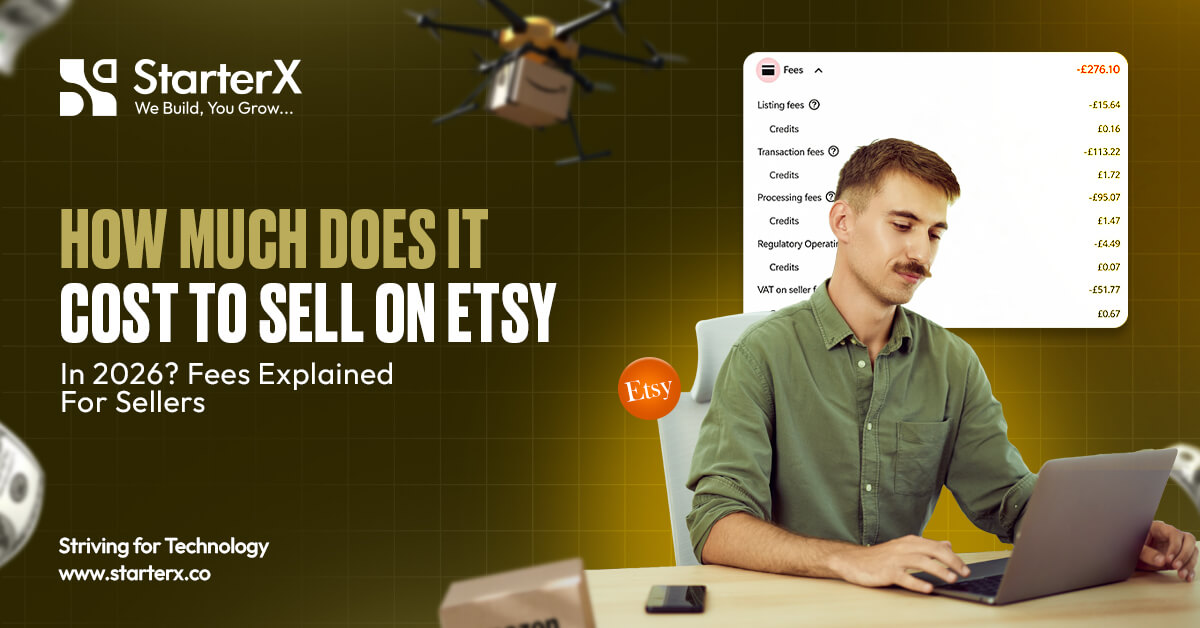
Selling on Etsy in 2026 costs more than the small listing fee most new sellers notice first. At the basic level, Etsy charges $0.20 to publish a listing, and that listing stays active for four months unless it sells or renews. When an item sells, Etsy also charges a 6.5% transaction fee on the listing price plus shipping and gift wrapping.
Sellers using Etsy Payments also pay a payment processing fee. This fee depends on the location of the seller’s bank account. For Etsy Payments in the United States, the current payment processing fee is 3% + $0.25 per order. This is separate from Etsy’s transaction fee, so sellers should include both fees before pricing a product.
The real cost to sell on Etsy can also include renewal fees, Etsy Ads, Offsite Ads, shipping labels, packaging, product materials, refunds, and optional tools like Etsy Plus or Pattern. Not every seller will pay every cost, but every seller should know which fees apply before listing a product.
This guide breaks down Etsy selling costs in simple terms, with clear examples so you can understand what Etsy takes, what costs you still need to cover, and how to price your products with profit in mind. If you are planning to start selling on Etsy, knowing these fees early can help you avoid underpricing and protect your profit from the first listing.
Key Takeaways: Etsy Selling Cost in 2026
| Etsy Cost | Required or Optional | 2026 Cost |
| Shop set-up fee | Conditional | Shown during shop setup if required |
| Listing fee | Required | $0.20 per listing |
| Renewal fee | Required if listing renews | $0.20 |
| Transaction fee | Required after sale | 6.5% |
| Payment processing fee | Required with Etsy Payments | Varies by bank location |
| Etsy Payments example | Required where applicable | 3% + $0.25 |
| Offsite Ads | Conditional | 15% or 12% |
| Etsy Ads | Optional | Cost per click |
| Etsy Plus | Optional | $10/month |
| Pattern | Optional | $15/month after trial |
| Currency conversion | Conditional | 2.5% |
| Shipping labels | Optional | Varies by carrier, package, and destination |
Etsy may require a one-time shop set-up fee when opening a shop, but the exact amount is shown during setup if it applies. Etsy’s official policy also confirms the $0.20 listing fee, $0.20 renewal fee, 6.5% transaction fee, Pattern cost, shipping label cost factors, and currency conversion rules.
Offsite Ads are not charged on every sale. They apply when a buyer purchases after clicking an Etsy Offsite Ad. The fee is 15% for shops under $10,000 in Etsy sales over the past 365 days and 12% for shops at or above that level, with a $100 cap per order.
Why You Can Trust This Guide
This guide is based on Etsy’s official 2026 fee structure, including Etsy’s listing fee, transaction fee, payment processing fees, Etsy Ads, and Offsite Ads rules.
At StarterX, we have helped many Etsy sellers understand their real selling costs, price products correctly, and improve shop performance. That practical experience helps us explain Etsy fees in a clear, seller-focused way.
What Are the Main Etsy Fees Sellers Pay?
The main Etsy fees sellers pay are the listing fee, renewal fee, transaction fee, and payment processing fee. These are the core costs most sellers need to understand before pricing a product.
1. Etsy listing fee
Etsy charges $0.20 to list an item on Etsy.com or the Etsy app. This fee is charged when a seller creates or renews a listing. Etsy also says there is no extra listing fee for editing an existing listing.
A standard Etsy listing lasts for four months. The listing fee applies even if the item does not sell during that time. If a seller lists multiple quantities of the same item, Etsy charges the first $0.20 listing fee upfront, then renews the listing at $0.20 after each item sells.
2. Etsy renewal fee
The Etsy renewal fee is $0.20. It applies when a listing renews after the four-month listing period or when a multi-quantity listing renews after a sale.
This fee may look small, but it matters for shops with many listings. For example, 300 renewed listings would cost $60 in renewal fees. That is why sellers should track slow-moving listings and renewal settings inside Listings Manager.
3. Etsy transaction fee
Etsy charges a 6.5% transaction fee when an item sells. This fee applies to the listing price plus the amount charged for shipping and gift wrapping. If a seller charges extra for personalization, that extra amount is also treated as part of the listing price for transaction fee purposes.
This means Etsy’s transaction fee is not based only on the product price. If a product sells for $30 and the buyer pays $5 for shipping, the transaction fee is based on $35.
4. Etsy payment processing fee
The Etsy payment processing fee is separate from the 6.5% transaction fee. Etsy says payment processing fees are charged on each transaction that uses Etsy Payments, and the rate depends on the location of the seller’s bank account.
For Etsy Payments in the United States, the payment processing fee is 3% + $0.25 per order. This fee is taken from the total sale price, including shipping fees and any applicable sales tax.
Do not calculate Etsy fees using only the $0.20 listing fee or the 6.5% transaction fee. A real fee estimate should include listing, renewal, transaction, and payment processing costs.
What Optional Etsy Costs Should Sellers Know?
Optional Etsy costs include Etsy Ads, Offsite Ads, Etsy Plus, Pattern, and currency conversion fees. Not every seller will pay these costs, but they can change the real profit from each sale.
1. Etsy Ads cost
Etsy Ads are optional paid ads that promote listings on Etsy. Sellers choose a daily maximum budget, and Etsy says sellers will not be charged more than that daily budget. Etsy Ads are charged on a cost-per-click basis, so sellers pay when a shopper clicks the ad, not when the ad is only shown.
Etsy Ads should be included in profit planning if a seller uses them. A listing can look profitable before ads, then lose margin after click costs are added.
2. Etsy Offsite Ads fee
Etsy Offsite Ads are different from Etsy Ads. With Offsite Ads, Etsy may promote listings on outside channels such as search engines and social networks. The seller pays only when the ad click leads to an attributed order from the shop within 30 days.
The standard Offsite Ads fee is 15% for shops under $10,000 in Etsy sales over the prior 365 days. Shops that reach $10,000 or more pay 12% on attributed orders for the lifetime of the shop. Etsy also says the total Offsite Ads fee on a single attributed order will not exceed $100.
3. Etsy Plus cost
Etsy Plus is an optional subscription. Etsy lists Etsy Plus at $10 per month. The subscription fee is deducted from the seller’s current balance and shown in the payment account.
This is not a required fee to sell on Etsy. Sellers should only include Etsy Plus in their monthly cost plan if they actually use the subscription.
4. Pattern website cost
Pattern is Etsy’s optional website tool. Etsy offers a 30-day free trial, then charges $15 per month after the trial. Domain registration or related domain services can add extra cost if the seller buys a domain through Etsy’s partner.
Pattern should not be counted as a basic Etsy selling fee. It only applies if the seller wants a separate website connected to the Etsy shop.
5. Currency conversion fee
Etsy may charge a 2.5% currency conversion fee when a seller lists items in a currency different from the seller’s payment account currency. Etsy recommends listing in the same currency as the payment account to avoid foreign exchange charges on sales.
Optional costs are not always charged, but they should be checked before pricing products, especially Etsy Ads and Offsite Ads.
What Other Costs Should Etsy Sellers Include?
Etsy sellers should include product cost, packaging cost, shipping label cost, labor, refunds, returns, taxes, and ad spend when calculating real selling cost.
These costs are not all Etsy platform fees, but they still affect profit. A product can look profitable after Etsy fees and still lose money after materials, packaging, shipping, and labor are counted.
1. Product and material costs
Product cost includes the money spent to make, source, or produce the item. For handmade products, this may include materials, supplies, tools, and production time. For print-on-demand products, it includes the production partner’s base cost and fulfillment cost.
2. Packaging costs
Packaging includes boxes, mailers, tissue paper, labels, tape, inserts, thank-you cards, and protective material. These costs are often small per order, but they add up across many sales.
3. Shipping label costs
Etsy lets sellers in certain locations buy shipping labels through Etsy. The shipping label cost depends on the carrier, origin, destination, package weight, and package dimensions. Signature confirmation and insurance can increase the total label cost.
If a seller offers free shipping, the shipping cost does not disappear. It should be included in the product price or margin plan.
4. Refunds, returns, and labor
Refunds and returns can reduce profit because the seller may lose shipping, packaging, or production costs. Labor also matters. A product that takes one hour to make should not be priced like a product that takes five minutes.
The real Etsy cost is bigger than Etsy’s fee list. Sellers should count both Etsy fees and business costs before setting a product price.
Etsy Fee Example: How Much Would Etsy Take From a Sale?
On a $35 Etsy order, estimated Etsy fees before ads would be about $3.78 using a $0.20 listing fee, 6.5% transaction fee, and a 3% + $0.25 payment processing fee.
Here is a simple example:
| Order Detail | Amount |
| Product price | $30.00 |
| Shipping is charged to the buyer | $5.00 |
| Total order amount | $35.00 |
1. Example without ads
| Fee | Calculation | Estimated Cost |
| Listing fee | Fixed fee | $0.20 |
| Transaction fee | 6.5% of $35 | $2.28 |
| Payment processing fee | 3% of $35 + $0.25 | $1.30 |
| Estimated Etsy fees before ads | $3.78 |
This example uses Etsy’s $0.20 listing fee, 6.5% transaction fee, and the Etsy Payments fee example of 3% + $0.25 for the United States. Etsy states that transaction fees apply to the listing price plus shipping and gift wrapping, and payment processing fees are separate from the transaction fee.
2. Example with Offsite Ads
| Fee | Estimated Cost |
| Etsy fees before ads | $3.78 |
| Offsite Ads fee at 15% of $35 | $5.25 |
| Estimated total with Offsite Ads | $9.03 |
This does not include product materials, packaging, shipping label cost, taxes, refunds, or labor. If those costs are not included in the product price, the seller’s real profit can be much lower.
How Much Does Etsy Take Per Sale?
Etsy does not take one fixed percentage from every sale because the final cost depends on the order value, payment processing fee, shipping charge, renewal cost, ad source, and optional tools.
For a basic sale with no ads, sellers usually need to calculate:
- $0.20 listing or renewal fee
- 6.5% transaction fee
- Payment processing fee
- Shipping label cost, if the seller buys the label
- Product and packaging cost
For the $35 example above, Etsy fees before ads are about $3.78, which is about 10.8% of the order total. If the same order gets a 15% Offsite Ads fee, the estimated Etsy-related cost becomes $9.03, which is about 25.8% of the order total.
The main point is simple: Etsy’s cost per sale changes based on how the order happens. A sale from organic Etsy traffic may cost less than a sale from Offsite Ads. A low-priced item may also feel the flat $0.20 listing fee and $0.25 payment processing fee more than a higher-priced item.
Etsy does not take the same amount from every order. Sellers should calculate fees by order value, not by a fixed percentage.
How to Calculate Your Real Cost to Sell on Etsy
The best way to calculate your real Etsy selling cost is to add Etsy fees, payment processing, shipping, packaging, product cost, ads, and profit margin before setting the product price.
1. Etsy selling cost formula
Total Etsy Selling Cost = Listing Fee + Renewal Fee + Transaction Fee + Payment Processing Fee + Ad Fees + Shipping Label + Packaging + Product Cost + Taxes + Optional Subscription Costs
Use this formula before listing a product. It helps sellers avoid underpricing and protects profit margin.
2. Etsy profit formula
Etsy Profit = Selling Price – Etsy Fees – Product Cost – Shipping Cost – Packaging Cost – Ad Cost – Other Seller Costs
This formula shows what the seller keeps after the required costs. It is useful for handmade, vintage, digital, and print-on-demand products.
3. Etsy break-even formula
Break-Even Price = Etsy Fees + Product Cost + Packaging Cost + Shipping Cost + Ad Cost + Labor Cost
The break-even price is the minimum price needed to avoid losing money. The final selling price should be higher than the break-even price because the seller still needs a profit.
Quick pricing checklist
Before publishing a listing, check:
- Listing fee and renewal fee
- Transaction fee
- Payment processing fee
- Shipping label cost
- Packaging cost
- Product or production cost
- Etsy Ads or Offsite Ads cost
- Refund and return risk
- Labor time
- Target profit margin
Do not price an Etsy product by product cost alone. A good selling price includes Etsy fees, order costs, and enough margin to make the sale worth it.
How Etsy Costs Change by Product Type
Etsy costs change by product type because handmade, digital, print-on-demand, and vintage products have different product costs, shipping needs, labor time, and profit margins.
The Etsy platform fees may stay similar, but the real selling cost is not the same for every product. A digital download has no shipping label cost, while a handmade product may need materials, packaging, and more labor. A print-on-demand item may look simple to sell, but the production partner’s cost can reduce profit fast.
1. Handmade products
Handmade products often have the most cost layers because the seller usually pays for materials, tools, packaging, labor, and shipping.
Main costs to include:
- Etsy listing fee
- Etsy renewal fee
- Transaction fee
- Payment processing fee
- Materials and supplies
- Packaging
- Shipping label
- Labor time
- Etsy Ads or Offsite Ads if used
A handmade product should never be priced by material cost alone. If a seller spends $8 on supplies and 45 minutes making the item, both material cost and labor time should be included in the final price.
2. Digital products
Digital products usually have fewer delivery costs because there is no physical shipping label, packaging, or handling cost.
Main costs to include:
- Etsy listing fee
- Renewal fee
- Transaction fee
- Payment processing fee
- Design or production time
- Etsy Ads or Offsite Ads if used
- Software or tool costs if used to create the product
Digital products can have strong margins, but sellers still need to account for listing renewals, ad spend, and payment processing fees. A low-priced digital product can lose profit if ads are too expensive.
3. Print-on-demand products
Print-on-demand products need careful pricing because the seller pays both Etsy fees and production partner costs.
Main costs to include:
- Etsy listing fee
- Transaction fee
- Payment processing fee
- Print provider base cost
- Print provider shipping cost
- Packaging or branding cost if offered
- Etsy Ads or Offsite Ads if used
For print-on-demand sellers, the biggest mistake is pricing only against competitors. The seller must include the production partner cost, Etsy fees, and ad cost before deciding the final selling price.
4. Vintage products
Vintage products often have sourcing, storage, cleaning, packaging, and shipping costs. These costs can vary from item to item.
Main costs to include:
- Etsy listing fee
- Renewal fee
- Transaction fee
- Payment processing fee
- Product sourcing cost
- Cleaning or repair cost
- Packaging
- Shipping label
- Storage cost if applicable
Vintage sellers should also watch renewal fees. If an item sits for several months, the $0.20 renewal fee is small, but it still adds to the total cost of that item.
The main Etsy fees are similar across product types, but real profit depends on the full cost behind the product. Sellers should calculate Etsy fees, product cost, shipping cost, packaging, labor, and ad cost before pricing each item.
Common Etsy Cost Mistakes Sellers Make
The most common Etsy cost mistakes are ignoring payment processing fees, forgetting shipping costs, missing Offsite Ads fees, and pricing products without a clear profit margin.
Many new sellers think Etsy only costs $0.20 per listing. That is not correct. Etsy also charges a 6.5% transaction fee, and sellers using Etsy Payments pay a payment processing fee on each order. Etsy confirms that payment processing fees are separate from transaction fees.
Mistake 1: Thinking Etsy only costs $0.20
The $0.20 listing fee only publishes the item. It does not cover transaction fees, payment processing fees, renewal fees, ads, shipping labels, packaging, materials, or labor.
Mistake 2: Forgetting the payment processing fee
The payment processing fee is separate from Etsy’s 6.5% transaction fee. For Etsy Payments in the United States, the fee is 3% + $0.25 per order.
Mistake 3: Not counting shipping label costs
Shipping label costs can change based on package weight, dimensions, carrier, origin, destination, insurance, and signature confirmation. Sellers who offer free shipping still pay the shipping cost. It should be built into the product price or margin plan.
Mistake 4: Forgetting that Etsy charges a transaction fee on shipping
Etsy’s 6.5% transaction fee applies to the listing price plus shipping and gift wrapping. This matters because a seller charging $30 for the item and $5 for shipping pays the transaction fee on $35, not only $30.
Mistake 5: Ignoring Offsite Ads
Offsite Ads can reduce profit if sellers do not plan for them. Etsy charges 15% for shops under $10,000 in Etsy sales over the past 365 days and 12% for shops at or above that level. The fee is capped at $100 per order.
Mistake 6: Running Etsy Ads without knowing the margin
Etsy Ads are charged on a cost-per-click basis. Sellers set a daily budget, but clicks can still reduce profit if the listing has weak margins. Ads should be used only after the seller knows the break-even price.
Mistake 7: Leaving out packaging and labor
Packaging, labels, tape, mailers, inserts, and labor time are real costs. A seller can make sales and still lose money if these costs are not included.
The safest way to avoid Etsy fee mistakes is to calculate every cost before publishing the listing. That includes Etsy fees, payment processing, shipping, packaging, product cost, ads, and profit margin.
Is Selling on Etsy Worth the Cost?
Selling on Etsy can be worth the cost when sellers price products correctly, understand Etsy fees, and protect their profit margin before running ads.
Etsy gives sellers access to a marketplace built for handmade, vintage, craft, digital, and creative products. But Etsy is not free. Sellers need to plan for the listing fee, renewal fee, transaction fee, payment processing fee, shipping costs, ad costs, and product costs.
Etsy may be worth it when:
- The product has enough margin after Etsy fees
- The seller understands the full cost per order
- Shipping, packaging, and labor are included in pricing
- Ads are used only after the break-even price is clear
- The product price can handle Offsite Ads if they apply
- The seller tracks fees inside the Etsy payment account
Etsy may feel expensive when:
- The product price is too low
- The seller offers free shipping without adding the cost to the pricing
- The product has thin margins
- Etsy Ads spend is not tracked
- Offsite Ads fees are not included in profit planning
- The seller renews many listings that do not sell
Etsy is worth it for many sellers, but only when the numbers work. A seller should know the product cost, Etsy fees, shipping label cost, packaging cost, ad cost, and target profit before listing the item.
Final Thoughts
The real cost to sell on Etsy is more than the $0.20 listing fee. Sellers should also plan for transaction fees, payment processing fees, renewal fees, Etsy Ads, Offsite Ads, shipping labels, packaging, product costs, labor, and optional tools.
Etsy’s main required costs are easy to understand once you break them down:
- $0.20 to publish or renew a listing
- 6.5% transaction fee when an item sells
- Payment processing fee based on the seller’s bank location
- Optional ad and subscription costs if used
Before publishing a product, calculate the full cost of the order. Do not price based only on materials or competitor prices. A good Etsy price should cover Etsy fees, product cost, shipping, packaging, ad cost, labor, and profit margin.
The best Etsy sellers do not just make sales. They understand their numbers, protect their margins, and price products with real costs in mind.
If these costs feel hard to track, working with an Etsy seller agency can help you review your fees, pricing, listings, ads, and profit margins before they hurt your shop. The goal is not just to make sales. The goal is to make sales that leave enough profit after Etsy fees, shipping, packaging, product cost, and labor.
Need Help Selling on Etsy?
If you want expert help to sell on Etsy or you are facing problems with Etsy fees, pricing, listings, or shop performance, book a free consultation call with our Etsy experts.
At StarterX, we work as an e-commerce growth agency helping Etsy sellers grow with practical strategies, better shop planning, and clear selling decisions.
🚀 Book a Free Consultation Call: https://starterx.co/appointment/
FAQs About Etsy Selling Costs
Does Etsy charge a fee if my item does not sell?
Yes, Etsy still charges the $0.20 listing fee even if the item does not sell. The only exception is a private listing, where Etsy charges the listing fee only after the private listing sells.
Where can sellers see Etsy fees after a sale?
Sellers can see Etsy fees in their Payment account inside Shop Manager. Etsy Ads costs, listing fees, transaction fees, and other pending fees are shown there after they are charged.
Does Etsy charge transaction fees on sales tax?
For sellers in the United States, Etsy says the transaction fee does not apply to sales tax. For sellers outside the United States, the transaction fee may apply to the listing price, which should include any taxes the seller is responsible for.
Do private listings cost money on Etsy?
Yes, private listings cost $0.20, but Etsy charges the fee only when the private listing is sold. This is different from regular public listings, where the fee is charged when the listing is published.
Are Etsy fees refunded if I cancel an order?
Some Etsy fees may be credited or adjusted after a full refund or cancellation, but sellers should always check their Payment account to confirm the exact fee adjustment. Etsy fee handling can depend on the order status, refund type, and payment details.
Does Etsy charge extra for multiple quantities?
Yes. If a seller lists multiple quantities of the same item, Etsy charges $0.20 upfront for the first listing. After each item sells, Etsy renews the listing and charges another $0.20 until the quantity is sold out or the listing ends.
Are Etsy shipping labels required?
No, Etsy shipping labels are optional. Sellers can buy shipping labels through Etsy, where available, but the label cost depends on the carrier, package weight, package dimensions, origin, and destination.
Can Etsy fees change in the future?
Yes, Etsy can update its seller fees, policies, and payment rules. Sellers should check Etsy’s official Fees & Payments Policy before pricing products or updating shop costs.

The StarterX Team is a group of e-commerce experts with years of hands-on experience in launching, managing, and scaling online businesses. As trusted authorities in the e-commerce space, we’ve helped entrepreneurs grow successful stores on Amazon, Shopify, TikTok, and Walmart. Backed by real-world results and a data-driven approach, we deliver proven strategies and insights you can trust to succeed in the digital marketplace.