

.svg)
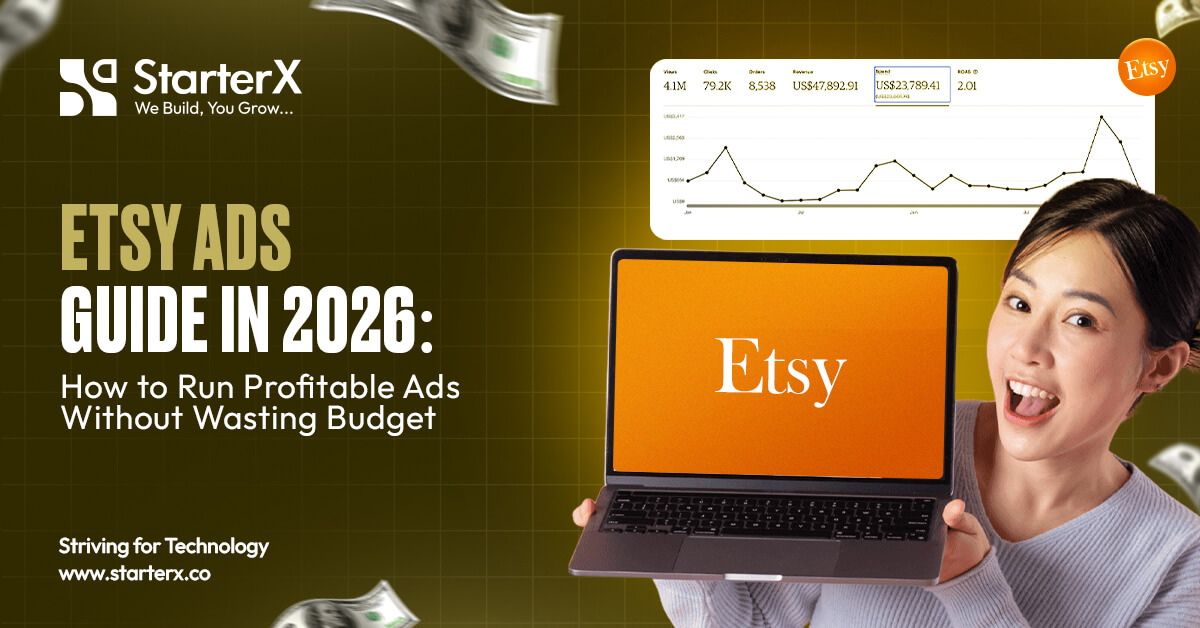
Etsy Ads can help your listings get more visibility in 2026, but they only work when your products are ready to convert. If your photos are weak, your title is unclear, your price is not competitive, or your profit margin is too low, ads can bring clicks without real profit.
Etsy Ads work through a daily budget and a cost-per-click model. This means you set how much you want to spend each day, and you pay when shoppers click your ad. Etsy also says sellers will not be charged more than their daily maximum budget. (etsy.com)
The smart way to use Etsy Ads is not to promote every listing and hope for sales. The better approach is to test strong listings, track clicks, orders, revenue, ROAS, and profit, then keep improving based on real data. Etsy also recommends giving campaigns at least 30 days so the ads tool has enough time to collect performance data and optimize placements. (etsy.com)
In this blog, you will learn how Etsy Ads work, which listings to promote, how much to spend, what metrics to track, and how to reduce wasted ad spend in 2026.
Key Takeaways
- Etsy Ads are paid placements that help your listings appear in front of more shoppers on Etsy.
- Etsy Ads use a daily budget and cost-per-click model, so you pay when someone clicks your ad, not just when the ad appears.
- Etsy Ads are worth it when your listing already has strong photos, clear SEO, good pricing, buyer demand, and enough profit margin.
- Etsy Ads are not a fix for weak listings. If shoppers click but do not buy, the issue is often the listing, product offer, price, shipping cost, or trust signals.
- A small test is better than blind spending. Etsy recommends a daily budget of at least $3 to $5 when testing ads, and it recommends running campaigns for at least 30 days to collect better data.
- ROAS matters, but profit matters more. A listing can get sales from ads and still lose money if product cost, Etsy fees, shipping, and ad spend are too high.
- The best listings to promote are listings with sales, favorites, carts, strong traffic, seasonal demand, gift intent, or high profit margin.
Why You Can Trust This Guide
This guide is based on real experience and current Etsy Ads guidance for 2026. At StarterX, we help Etsy stores grow with expert Etsy Ads services, so we know what works in real shops.
Profitable Etsy Ads do not come from spending more without a plan. They come from strong listings, clear Etsy SEO, controlled budgets, and careful tracking.
This guide gives Etsy sellers practical steps to reduce wasted spend and turn more ad clicks into profitable orders.
What Are Etsy Ads, and Are They Worth It in 2026?
Etsy Ads are paid placements that help your listings get more visibility on Etsy, and they are worth it in 2026 when your listings are already strong enough to turn clicks into orders.
Etsy Ads can help sellers show products in Etsy search results and other high-traffic shopping areas on Etsy. You set a daily budget, choose listings to advertise, and Etsy shows those ads based on factors like listing relevance, ad space, budget, and buyer behavior. Etsy charges when shoppers click your ads, not just when the ad appears.
Etsy Ads are worth it when your listing has:
- A clear first photo
- A product title that matches buyer intent
- Complete tags, attributes, and category
- A strong product description
- Competitive pricing
- Clear shipping details
- Enough profit margin after fees and ad spend
- A product people already want to buy
This matters even more for new sellers because selling on Etsy is not just about getting traffic. Your shop setup, product offer, listing quality, pricing, and customer trust all need to work together before ads can bring real results.
Etsy Ads are not worth it when the listing is weak. If the product photo does not attract clicks, the price feels too high, or the description does not answer buyer questions, ads can spend money without creating profitable sales.
The main point is simple: ads can bring traffic, but your listing has to earn the sale. Etsy Ads should support strong listings. They should not be used as a quick fix for poor Etsy SEO, unclear product pages, or products with low buyer demand.
Also, Etsy Ads do not buy a better organic ranking. Etsy says sellers cannot pay for higher placement in organic search results, and Etsy Ads are shown as separate paid placements.
How Do Etsy Ads Work in 2026?
Etsy Ads work by letting sellers set a daily budget, choose listings to advertise, and pay when shoppers click their ads.
You can start Etsy Ads from the Shop Manager. After you set your daily budget, Etsy uses that budget to show your advertised listings across Etsy search and other high-traffic pages. Etsy says campaigns are optimized over time based on how shoppers interact with ads.
Etsy Ads use a cost-per-click model. This means your ad cost is based on clicks. Each click may not cost the same amount. Etsy says CPC can be affected by factors like listing quality, photos, titles, tags, and competition for the ad space.
Etsy also manages most bidding automatically. Etsy’s advertising policy says its system can automatically determine bids based on budget and other listing signals. This means sellers do not fully control every keyword bid the way they might in Google Ads.
A good Etsy Ads test needs time. Etsy recommends running a campaign for at least 30 days so the ads tool can collect data and optimize based on ad placement performance. Etsy also recommends a minimum daily budget of at least $3 to $5 when testing ads.
The Etsy Ads dashboard can help you review:
- Impressions
- Clicks
- Orders
- Revenue
- Ad spend
- Search terms
- Listing-level performance
Do not judge Etsy Ads after only one or two days. Short tests often lead to poor decisions because Etsy needs enough activity to understand which listings and searches are working.
Etsy Ads vs Offsite Ads: What Is the Difference?
Etsy Ads show your listings on Etsy, while Offsite Ads promote Etsy listings outside Etsy and charge a fee only when an attributed sale happens.
Many sellers confuse Etsy Ads with Offsite Ads, but they work in different ways. Etsy Ads are mainly controlled from your Etsy Ads dashboard. You choose your daily budget and advertised listings. Offsite Ads are run by Etsy across outside channels such as search engines and social media platforms.
| Feature | Etsy Ads | Offsite Ads |
| Where ads show | On Etsy | Outside Etsy |
| Main charge type | Cost per click | Fee after an attributed sale |
| Seller control | You set a budget and choose listings | Etsy controls outside ad placement |
| Upfront cost | Yes, clicks can cost money | No upfront ad spend |
| Best use | More visibility inside Etsy | More reach outside Etsy |
| Attribution window | Etsy tracks ad-related orders | Etsy tracks purchases after an off-site ad click |
Offsite Ads fees depend on your shop’s sales over the past 365 days. Etsy states that shops under $10,000 USD in revenue pay a 15% fee on attributed orders, while shops at or above $10,000 USD receive a 12% rate. Etsy also says the Offsite Ads fee will not exceed $100 for an order.
For this blog, the focus is on Etsy Ads, not Offsite Ads. The key difference is simple: Etsy Ads cost money when shoppers click, while Offsite Ads charge after an attributed sale.
What Should You Fix Before Running Etsy Ads?
Before running Etsy Ads, fix your listing quality, product offer, pricing, shipping clarity, and profit margin because ads only work well when the listing is ready to convert.
Paid traffic does not solve weak product pages. If shoppers click your ad but do not buy, the problem is often not the ad itself. It may be the first photo, title, price, shipping cost, product description, reviews, or trust signals.
1. Improve the First Photo
Your first photo is one of the biggest reasons shoppers click or skip your listing. It should clearly show the product, look clean on mobile, and make the item easy to understand within seconds.
For handmade products, show the material, finish, size, and real use. For digital products, show the final result or template preview. For print-on-demand products, use clear mockups that look real and easy to trust.
2. Fix the Title, Tags, and Attributes
Your listing title, tags, attributes, and category help Etsy understand what you sell and when your product should appear. Etsy also notes that listing quality elements such as great photos, titles, and tags can affect ad click costs.
Keep your Etsy SEO focused on buyer intent. Use terms shoppers would actually type, such as product type, style, occasion, recipient, material, color, size, or use case.
3. Make the Offer Clear
A buyer should not feel confused after clicking your ad. Your listing should clearly explain:
- What the buyer gets
- Size, material, or file format
- Personalization options
- Processing time
- Delivery details
- Care instructions
- What is included and not included
A clear product offer helps reduce wasted clicks because the right shoppers can quickly decide if the item fits their needs.
4. Check Profit Before Spending
Profit matters more than ad revenue. Before turning on Etsy Ads, calculate product cost, packaging, shipping, Etsy fees, payment fees, and expected ad spend.
If your margin is too low, ads can create sales but still reduce profit. A product must have enough room for ad cost before it is a good ad candidate.
Which Listings Should You Promote With Etsy Ads?
You should promote Etsy listings that already show buyer interest, have strong conversion potential, and can stay profitable after ad spend.
The best Etsy Ads strategy is not to advertise every listing forever. Start with listings that have the best chance of turning clicks into orders. Etsy also says sellers with limited budgets or large inventories should avoid spreading the budget too thin across too many listings.
Good listings to promote usually have:
- Past sales
- Strong favorites
- Add-to-cart activity
- Organic traffic
- Clear first photo
- Complete tags and attributes
- Competitive pricing
- Strong reviews or trust signals
- Seasonal demand
- Gift intent
- High profit margin
For handmade products, promote listings with clear product value, strong photos, and a good reason to buy. For digital products, promote listings with clear previews, file details, and instant download clarity. For print-on-demand products, promote listings with strong niche demand, clean mockups, and enough margin after production costs.
Avoid promoting listings that have:
- Poor photos
- Weak titles
- Incomplete tags
- Unclear descriptions
- Low profit margin
- High shipping cost
- No clear use case
- Many clicks but no sales
- Poor reviews or customer issues
The simple rule is this: promote listings that already look ready to win. Etsy Ads can increase visibility, but the product page still needs to convince the shopper to buy.
How Much Should You Spend on Etsy Ads?
You should spend enough on Etsy Ads to collect useful data, but not so much that one weak test hurts your profit.
Etsy recommends a minimum daily budget of at least $3 to $5 when testing Etsy Ads. Etsy also recommends running ads for at least 30 days so the system can gather enough data and optimize performance.
A small budget can work, but only if you use it carefully. Before setting your ad budget, it is also important to understand the real cost to sell on Etsy, including listing fees, transaction fees, payment processing fees, shipping costs, product costs, and ad spend. This helps you know how much room you have for ads without hurting your profit.
If you advertise too many listings with a very small budget, the money may be spread too thin. This makes it harder to learn which listings are actually working.
| Seller Type | Starting Budget | Main Goal |
| New Etsy shop | $1 to $5 per day | Test early traffic and interest |
| Small shop with some sales | $5 to $10 per day | Find listings worth improving |
| Growing Etsy shop | $10 to $25 per day | Scale stronger listings carefully |
| Established shop | $25+ per day | Use listing-level strategies and scale winners |
Etsy says shops with a daily ads budget of $25 or more can choose a strategy for each listing, which gives more control over how the budget is used across the shop.
Your budget should match your:
- Profit margin
- Average order value
- Product cost
- Listing quality
- Shop stage
- Seasonal demand
- Cash flow
Do not raise your budget just because you want more sales. Raise your budget when the data shows the listing can convert and stay profitable.
How to Set Up an Etsy Ads Campaign
You can set up an Etsy Ads campaign by going to Shop Manager, choosing Etsy Ads, setting a daily budget, selecting listings, and tracking performance in the Etsy Ads dashboard.
Here is a simple setup process:
- Go to Shop Manager.
- Open Marketing.
- Select Etsy Ads.
- Set your daily budget.
- Choose the listings you want to advertise.
- Let the campaign collect data.
- Review impressions, clicks, orders, revenue, and ad spend.
- Pause weak listings after enough data.
- Keep or scale listings that bring profitable orders.
Etsy says sellers are charged when an ad is clicked, and daily click costs are usually added to the Payment account the next day. This means you should check your ad spend often, especially during your first test.
During setup, avoid promoting every listing if your budget is too small. A new seller with a few listings may test more broadly, but a shop with many products should be more careful. Choose listings with better photos, stronger buyer intent, and enough profit margin.
After setup, do not make too many changes too fast. Etsy recommends giving ads at least 30 days to collect useful data. If you keep changing listings, budget, photos, or titles too often, it becomes harder to understand what is really working.
The Best Etsy Ads Strategy for 2026
The best Etsy Ads strategy for 2026 is to test strong listings, track real performance, improve weak points, and scale only when the numbers show profit.
A good Etsy Ads strategy is not about spending more every day. It is about spending with control. You want to know which listings get clicks, which listings convert, which search terms bring buyers, and which products still make a profit after ad spend.
1. Start With a Clean Test
Start with listings that are ready to convert. Make sure photos, titles, tags, attributes, descriptions, pricing, and shipping details are clear before running ads.
Run your test long enough to collect useful data. Etsy recommends at least 30 days because the ads tool needs time to optimize based on ad placement performance.
2. Use Data Before Scaling
Track the numbers that matter:
- Impressions show visibility.
- Clicks show interest.
- Orders show conversion.
- Revenue shows sales value.
- ROAS shows return from ad spend.
- Profit shows if ads are actually working.
Do not scale a listing just because it gets clicks. Clicks are only useful when they lead to profitable orders.
3. Improve Before Increasing Budget
If a listing gets clicks but no sales, fix the listing before spending more. Improve the first photo, product title, description, price, shipping clarity, or trust signals.
If the CPC is high, review listing quality and competition. Etsy says listing quality and competition can affect cost per click, so weak listings may cost more to advertise.
4. Scale Winners Slowly
Scale listings that show steady sales, healthy ROAS, and real profit. Increase the budget carefully and keep checking performance.
A simple rule works well: pause what wastes spend, improve what gets clicks, and scale what brings profit.
What Metrics Should You Track in Etsy Ads?
You should track Etsy Ads metrics that show visibility, clicks, sales, revenue, ROAS, and real profit because these numbers tell you if your ads are helping or wasting budget.
Etsy Ads performance should not be judged by one number only. A listing can get many clicks and still bring no orders. Another listing can get fewer clicks but better profit. Etsy’s Ads dashboard lets sellers review listing-level stats, including ad views, ad clicks, click rate, orders from ads, revenue from ads, budget spent, ROAS, and search terms.
| Metric | What It Means | Why It Matters |
| Ad views | How often your ad is shown | Shows ad visibility |
| Ad clicks | How many shoppers clicked your ad | Shows shopper interest |
| Click rate | Clicks compared to ad views | Shows if your photo and title attract buyers |
| CPC | Cost per click | Shows how much each visit costs |
| Orders from ads | Sales linked to ads | Shows if clicks turn into buyers |
| Revenue from ads | Sales value from ad orders | Shows return from ad traffic |
| Budget spent | Money spent on ads | Shows how much the test costs |
| ROAS | Revenue compared to ad spend | Shows ad efficiency |
| Search terms | Searches that triggered ads | Shows buyer intent and keyword match |
| Profit after ads | Money left after costs and fees | Shows real business results |
ROAS is useful, but profit is more important than revenue. Etsy explains ROAS as the revenue generated for every $1 spent on advertising, calculated by dividing revenue by ad budget spent.
Use these metrics together. If ad views are high but clicks are low, your first photo or title may need work. If clicks are high but orders are low, your price, shipping, product details, reviews, or offer may need improvement.
How to Improve Etsy Ads ROAS
You can improve Etsy Ads ROAS by promoting better listings, improving click quality, raising conversion rate, and protecting profit margin.
ROAS improves when the right shoppers click, and more of those clicks turn into orders. Etsy says ads are placed using signals like buyer context, listing tags, title, attributes, click-through rate, price, and the chance that a buyer may purchase after clicking.
1. Improve Click Quality
Click quality starts with the listing shown in search. Your first photo, title, price, star rating, sale details, and shipping message can affect how shoppers react to your ad.
To improve click quality:
- Use a clear first photo
- Show the product without confusion
- Match the title with real buyer intent
- Use accurate tags and attributes
- Avoid broad terms that attract the wrong shoppers
- Make the price feel clear before the click
Etsy notes that tags, titles, and attributes help match ads with the right buyers, and the first photo is important for getting shoppers to click.
2. Improve Conversion Rate
If shoppers click but do not buy, the listing needs work. Do not increase the budget first. Fix the reason buyers leave.
Improve conversion rate by checking:
- Product description
- Size, material, or file details
- Personalization instructions
- Processing time
- Shipping cost
- Product photos
- Reviews and shop trust
- Return and exchange details
- Bundle or offer value
More traffic will not fix a listing that does not answer buyer questions.
3. Improve Profit Margin
A listing can have a good ROAS and still make a weak profit if costs are too high. Check your product cost, Etsy fees, packaging, shipping, and ad spend before scaling.
To protect margin:
- Promote higher-margin products
- Use bundles when they make sense
- Review pricing
- Reduce unnecessary production costs
- Avoid advertising products with very thin profit margins
- Pause listings that spend without orders
The goal is not only to get more sales. The goal is to make sales that still leave profit after ad spend.
Etsy Ads Strategy by Product Type
Etsy Ads strategy should change by product type because handmade, digital, print-on-demand, personalized, and seasonal products convert for different reasons.
A handmade product buyer may care about quality and uniqueness. A digital product buyer may care about preview clarity and file format. A personalized product buyer may care about gift timing and customization details. Your ad strategy should match that buying intent.
1. Etsy Ads for Handmade Products
For handmade products, promote listings that clearly show craftsmanship, material, size, quality, and use case.
Focus on:
- Clear close-up photos
- Lifestyle images
- Material details
- Handmade process signals
- Gift intent
- Custom options
- Strong reviews
- Clear processing time
Handmade listings should make the buyer feel confident that the product is real, well-made, and worth the price.
2. Etsy Ads for Digital Products
For digital products, promote listings that show the final result clearly. Buyers need to understand what they will download and how they can use it.
Focus on:
- Clear preview images
- File type details
- Instant download clarity
- Canva, PDF, PNG, SVG, or template details
- Use cases
- What is included
- What is not included
- Bundle value
Digital product ads often fail when buyers click but cannot understand the file, format, or final result.
3. Etsy Ads for Print-on-Demand Products
For print-on-demand products, promote listings with strong niche demand, clean mockups, and enough profit margin.
Focus on:
- Niche-specific designs
- Strong main mockup
- Clear size chart
- Color options
- Shipping clarity
- Production time
- Seasonal demand
- Profit after production and ad cost
POD sellers need to be careful because product cost can reduce margin. Do not scale ads until the listing proves it can stay profitable.
4. Etsy Ads for Personalized Products
For personalized products, promote listings that explain customization in a simple way.
Focus on:
- Personalization examples
- Name, date, photo, or message options
- Clear instructions
- Processing time
- Gift occasion
- Preview images
- Shipping deadline clarity
Personalized products can do well with ads because they match gift intent, but confusion can hurt conversion.
5. Etsy Ads for Seasonal Products
For seasonal products, run Etsy Ads before demand peaks. Do not wait until shoppers have already finished buying.
Focus on:
- Holiday timing
- Gift deadlines
- Shipping cutoff dates
- Seasonal keywords
- Seasonal photos
- Limited-time demand
Seasonal Etsy Ads work best when the listing is ready before the search demand rises.
Common Etsy Ads Mistakes Sellers Should Avoid
The biggest Etsy Ads mistakes are promoting weak listings, spending without tracking profit, judging results too early, and spreading a small budget across too many products.
Etsy Ads can bring visibility, but a poor setup can waste money fast. Etsy states that your daily budget is the maximum you can spend per day and that Etsy stops showing ads once the budget is used. That control helps, but sellers still need to choose listings carefully.
Avoid these common mistakes:
- Running ads on every listing with a small budget
- Promoting listings with weak photos
- Using incomplete tags, titles, or attributes
- Ignoring product margin
- Looking only at revenue instead of profit
- Judging ads after one or two days
- Increasing the budget before the listing proves itself
- Confusing Etsy Ads with Offsite Ads
- Ignoring search terms
- Not checking listing-level performance
- Running ads too late for seasonal products
- Thinking ads can fix poor product demand
Etsy also explains that ads may show based on factors like search relevance, listing quality, budgeted bids, and likelihood of views or sales. This means weak listing quality can hurt performance even if the seller increases the budget.
A smart seller does not ask, “How much more should I spend?” first. A smart seller asks, “Which listing deserves more budget based on data?”
When Should You Pause, Keep, or Scale Etsy Ads?
You should pause Etsy Ads when they spend without profit, keep them when they bring stable results, and scale them only when listings show strong conversion and a healthy margin.
Do not pause or scale based on emotion. Use Etsy Ads data, Etsy Stats, listing quality, and profit margin to decide what to do next.
| Situation | What It Means | Best Action |
| High clicks, no sales | Shoppers are interested, but the listing is not converting | Improve listing or pause |
| Low clicks, no sales | First photo, title, or product angle may be weak | Improve the photo, title, and offer |
| High ad views, low clicks | The ad is showing, but shoppers are not attracted | Fix thumbnail, price, or title |
| Sales but profit is low | The ad cost or product cost is too high | Review price, bundle, or pause |
| Good ROAS and profit | Listing is working | Keep running |
| Strong seasonal demand | Buyers are actively searching now | Scale carefully |
| Budget spreads too thin | Too many listings share a small budget | Promote fewer listings |
| CPC feels too high | Competition or listing quality may be an issue | Improve listing or test another product |
Etsy says sellers can manually exclude listings from Etsy Ads through the Etsy Ads dashboard. Use that control to stop the budget from going to listings that do not deserve it.
A simple decision rule works well:
- Pause what spends without sales
- Improve what gets clicks but no orders
- Keep what brings steady profit
- Scale what keeps working after enough data
Final Etsy Ads Checklist for 2026
A strong Etsy Ads checklist should confirm that your listing, budget, metrics, and profit margin are ready before you spend more money.
Use this checklist before turning on Etsy Ads or increasing your daily budget.
1. Listing Readiness
- Strong first photo
- Clear product title
- Complete tags
- Relevant attributes
- Correct category
- Clear product description
- Good product photos
- Clear size, material, or file details
- Clear personalization instructions, if needed
- Clear shipping and processing time
2. Budget Readiness
- Daily budget selected
- Test period planned
- Product margin calculated
- Etsy fees considered
- Shipping cost checked
- Ad spend limit understood
3. Performance Tracking
- Ad views checked
- Clicks checked
- Click rate reviewed
- Orders from ads reviewed
- Revenue from ads reviewed
- Budget spent tracked
- ROAS calculated
- Profit after ads checked
- Search terms reviewed
4. Optimization Actions
- Weak listings paused
- Click-heavy listings improved
- Winning listings kept active
- The budget increased only after the profit
- Seasonal products are promoted early
Before scaling, ask one question: Can this listing still make a profit after product cost, Etsy fees, shipping, and ad spend? If the answer is no, fix the listing or pause the ad.
Final Thoughts: Should You Use Etsy Ads in 2026?
You should use Etsy Ads in 2026 if your listings are ready to convert, your budget is controlled, and you are tracking profit instead of only chasing clicks.
Etsy Ads can be useful for getting more visibility inside Etsy, but they are not a shortcut to sales. Etsy charges for clicks, not impressions, and it uses signals like relevance, listing quality, budget, and expected buyer behavior to place ads.
The best Etsy sellers use ads with a clear plan. They choose strong listings, test for enough time, review ad data, improve weak points, and scale only when the numbers support it.
The main lesson is simple: Etsy Ads work best when strong listings meet the right buyers at the right time.
If your listings have poor photos, unclear titles, missing details, weak pricing, or low profit margin, fix those first. If your listings already show buyer interest, Etsy Ads can help you test demand, collect data, and grow sales with more control.
Need Expert Help With Etsy Listing Ads?
Want expert help with Etsy listing ads so you can get more sales from the right shoppers?
Book a free consultation with our team. At StarterX, as an e-commerce seller agency, we help Etsy sellers improve listings, run smarter Etsy Ads, control ad spend, and make better decisions from real performance data.
Our team can guide you on:
- Which listings to promote
- How much budget to start with
- How to improve Etsy Ads ROAS
- How to fix listings that get clicks but no sales
- How to reduce wasted ad spend
- How to increase your Etsy store revenue with a better ad strategy
👉 If you want to grow your Etsy shop with a clear ad plan, book a free consultation with StarterX.
FAQs About Etsy Ads in 2026
Do Etsy Ads help organic ranking?
No. Etsy Ads do not buy a higher organic search ranking. Etsy says sellers cannot pay for higher placement in organic search results, and Etsy Ads are shown as separate paid placements.
Are Etsy Ads worth it for new sellers?
Yes, Etsy Ads can be worth testing for new sellers, but only after the listings are ready. Before running ads, make sure your photos, title, tags, price, shipping details, and description are clear.
How much should beginners spend on Etsy Ads?
Beginners can start small, but Etsy recommends at least $3 to $5 per day for testing. Etsy also says the minimum daily budget is $1.
How long should I run Etsy Ads before judging results?
Run Etsy Ads for at least 30 days before making big decisions. Etsy says this gives the ad tool enough time to collect data and optimize performance.
Can I choose keywords for Etsy Ads?
Not in the same way as Google Ads. Etsy Ads are mostly automated, and Etsy says sellers generally cannot set their own cost-per-click bid amount. Etsy uses budget, listing data, relevance, listing quality, and other signals to place ads.
Why are my Etsy Ads getting clicks but no sales?
This usually means shoppers are interested, but the listing is not converting. Common reasons include weak photos, unclear pricing, high shipping costs, poor descriptions, low trust, or the wrong buyer intent.
What is a good ROAS for Etsy Ads?
A good ROAS depends on your product margin. A higher ROAS is better, but profit matters more. If product cost, Etsy fees, shipping, and ad spend leave little money, the ad is not truly profitable.
Should I advertise all my Etsy listings?
Not always. If your budget is small, promoting too many listings can spread your budget too thin. Focus on listings with strong photos, buyer interest, good pricing, and enough profit margin.
Which listings are best for Etsy Ads?
The best listings for Etsy Ads usually have past sales, favorites, add-to-cart activity, strong photos, clear Etsy SEO, good reviews, seasonal demand, gift intent, and healthy profit margins.
Can Etsy Ads guarantee sales?
No. Etsy Ads can bring more visibility and clicks, but they do not guarantee sales. Your listing still needs to convince the shopper to buy.
Are Etsy Ads good for digital products?
Yes, Etsy Ads can work for digital products when the listing has clear previews, file details, instant download information, strong mockups, and a clear use case.
Are Etsy Ads good for print-on-demand products?
Yes, but only when the design has a clear niche demand, the mockup looks professional, and the profit margin can handle product cost, Etsy fees, shipping, and ad spend.
When should I pause Etsy Ads?
Pause Etsy Ads when a listing spends money without sales, gets many clicks but no orders, or creates sales with little to no profit. Improve the listing before spending more.

The StarterX Team is a group of e-commerce experts with years of hands-on experience in launching, managing, and scaling online businesses. As trusted authorities in the e-commerce space, we’ve helped entrepreneurs grow successful stores on Amazon, Shopify, TikTok, and Walmart. Backed by real-world results and a data-driven approach, we deliver proven strategies and insights you can trust to succeed in the digital marketplace.