.svg)
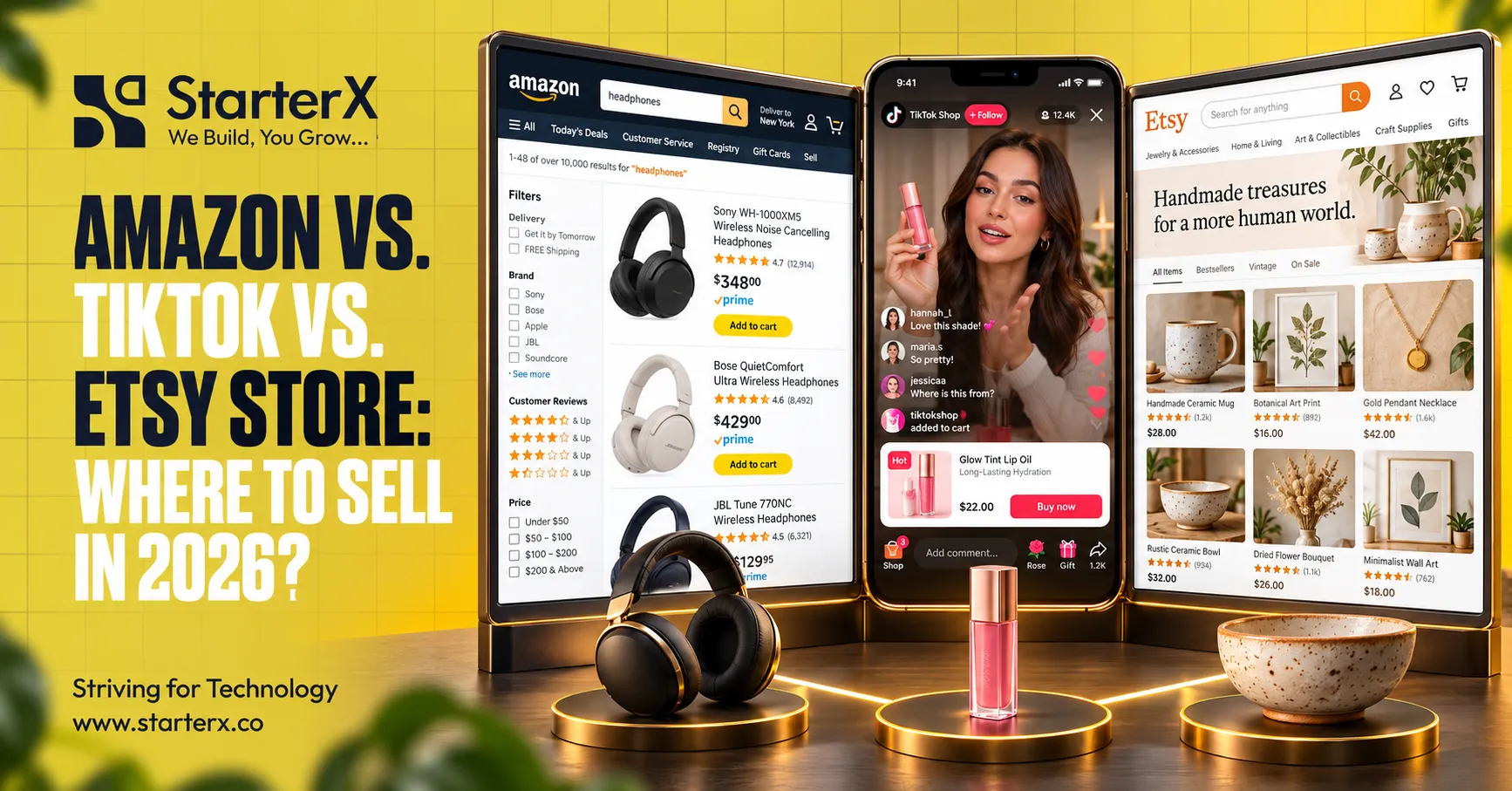
Amazon, TikTok Shop, and Etsy can all generate ecommerce sales, but they do not reward the same products, skills, or business models. Amazon captures shoppers already searching for solutions. TikTok Shop turns entertaining content into product discovery. Etsy attracts buyers looking for originality, personalization, craftsmanship, and niche finds.
Costs also work differently. For example, Etsy’s official Fees & Payments Policy lists a $0.20 listing fee, a 6.5% transaction fee, country-specific payment processing, and possible advertising or regulatory fees. Amazon and TikTok Shop have their own changing combinations of marketplace, fulfillment, advertising, referral, affiliate, and service costs.
The best platform is where your product, margin, content ability, and operations fit the buying behavior.
The Short Answer
Compare the three marketplaces this way:
| Factor | Amazon | TikTok Shop | Etsy |
|---|---|---|---|
| Buyer mindset | Search and purchase | Discover and impulse-buy | Browse and search for something distinctive |
| Strong product fit | Replenishable, standardized, problem-solving | Visual, demonstrable, trend-friendly | Handmade, designed, personalized, vintage, craft supply |
| Main growth engine | Search, ads, reviews, fulfillment | Content, creators, affiliates, live shopping | Search relevance, photography, story, reviews |
| Cost pressure | Marketplace, fulfillment, storage, ads, returns | Marketplace, affiliate, discount, content, ads | Listings, transactions, payments, ads, production time |
| Core difficulty | Competition and operational precision | Creative volume and volatile demand | Differentiation and production capacity |
Amazon: Best for High-Intent, Search-Led Demand
Amazon is powerful because buyers often arrive knowing what they need. A shopper searching for a replacement filter, office chair, or skin-care tool is closer to checkout than someone casually watching entertainment content.
That intent creates opportunity and competition. Sellers need accurate keyword research, persuasive listings, competitive offers, dependable inventory, strong account health, and disciplined advertising. Amazon is particularly suitable for standardized, replenishable products that benefit from fast fulfillment.
An Amazon Store Agency can be valuable when the opportunity is clear but product research, catalog structure, listing optimization, advertising, and inventory management need to operate as one system.
TikTok Shop: Best for Discovery and Demonstration
TikTok Shop changes the order of ecommerce. The customer may not search for a product first. A creator demonstrates it, the problem becomes obvious, and the purchase happens inside the same content experience.
Products tend to fit when their value can be understood quickly. Transformations, satisfying demonstrations, before-and-after moments, giftable products, beauty tools, fashion accessories, and practical household items can all benefit from this environment.
The challenge is consistency. Sustainable growth requires a steady creative pipeline, reliable creators, accurate fulfillment, and enough stock for sudden demand. Include affiliate commissions, samples, discounts, advertising, and returns in the margin.
A TikTok Shop Agency is a logical fit for brands that need creator outreach, shop operations, content strategy, affiliate management, paid campaigns, and performance analysis connected around the same offer.
Etsy: Best for Originality, Personalization, and Niche Intent
Etsy buyers often want something they cannot find in a mass-market catalog. That makes the marketplace well suited to handmade goods, seller-designed products, personalized gifts, wedding items, craft supplies, vintage inventory, and digital downloads that meet Etsy’s creativity standards.
The platform can be easier to enter with a small catalog, but easy entry does not mean easy sales. Sellers still need excellent photography, specific keywords, clear production times, competitive shipping, policy-compliant products, responsive service, and a recognizable identity.
An Etsy Store Agency can help turn creative products into a structured catalog with stronger search positioning, presentation, pricing, and growth planning.
Should You Sell on More Than One Platform?
Yes, but sequence matters. Start where product-market fit is clearest. Validate conversion, contribution margin, fulfillment, and customer feedback before expanding. A second platform should reach a different buyer without breaking inventory control or service quality.
From Marketplace Selection to Sustainable Growth with StarterX
Choosing between Amazon, TikTok Shop, and Etsy is not just about finding the platform with the most buyers. It is about understanding where your product has the strongest potential and whether your business can support the demands of that marketplace.
Once the right platform becomes clearer, the next step is aligning product positioning, store setup, customer experience, and growth activities with how shoppers actually discover and purchase products.
This is where StarterX helps ecommerce businesses turn marketplace decisions into practical strategies. Whether the opportunity lies in Amazon’s search-driven environment, TikTok Shop’s content-led discovery, or Etsy’s focus on originality, the approach begins with understanding the product, audience, costs, and operational requirements.
By connecting these elements, businesses can build a more consistent foundation for growth without spreading resources across platforms that may not suit their products or capabilities.
Final Verdict: Which Marketplace Should You Choose in 2026?
Amazon, TikTok Shop, and Etsy each offer different opportunities, but no single marketplace is the best choice for every seller. Amazon is generally better suited to products with established search demand, TikTok Shop favors products that can generate interest through engaging content, and Etsy works best for distinctive, personalized, or creatively driven products.
The right decision depends on your product type, target audience, profit margins, marketing capabilities, and fulfillment capacity. Before committing, compare the total selling costs, competitive environment, customer expectations, and operational requirements of each platform.
Start with the marketplace that offers the strongest product-market fit rather than the largest potential audience. Validate demand, test profitability, and establish reliable operations before expanding to additional channels. A focused launch with sustainable margins is more valuable than managing multiple stores without a clear strategy.
Frequently Asked Questions
How much does Etsy take from a $100 sale?
For a U.S. seller receiving a $100 item sale through Etsy Payments, a simplified baseline calculation is $0.20 for the listing, $6.50 for the 6.5% transaction fee, and $3.25 for the 3% plus $0.25 payment-processing fee. That totals $9.95, leaving $90.05 before product costs, shipping, taxes, advertising, and other applicable charges. The total can be higher with charged shipping, Offsite Ads, currency conversion, taxes on fees, or other services. Confirm current rates when pricing.
What is the most popular thing on Etsy right now?
There is no permanent number-one product. Personalized gifts, jewelry, wedding products, home decor, craft supplies, digital designs, and vintage items are active areas, but current demand and competition must be validated for each product.
What sells the easiest on Etsy?
Products sell more easily when they serve a specific buyer or occasion, photograph well, use searchable language, and feel distinctive. Personalized gifts, printables, niche craft supplies, original jewelry, and occasion products can fit, but popular categories attract competition.
Do I need an LLC if I sell on Etsy?
Etsy does not generally require every seller to form an LLC. Many begin as sole proprietors, depending on local law. An LLC may provide liability separation but brings tax, reporting, and compliance responsibilities. Ask qualified advisers what fits your location and risk.
Is Etsy still worth it in 2026?
Yes, for sellers with original, permitted products, healthy margins, strong presentation, reliable fulfillment, and clear niche positioning. It is less attractive for generic offers easily compared on price. Judge the opportunity using repeatable demand and net profit.

The StarterX Team is a group of e-commerce experts with years of hands-on experience in launching, managing, and scaling online businesses. As trusted authorities in the e-commerce space, we’ve helped entrepreneurs grow successful stores on Amazon, Shopify, TikTok, and Walmart. Backed by real-world results and a data-driven approach, we deliver proven strategies and insights you can trust to succeed in the digital marketplace.