

.svg)
A Walmart store can generate sales today while quietly moving toward trouble tomorrow. A few canceled orders, late deliveries, missing tracking scans, or unanswered customer messages can quickly damage Walmart account health.
The danger is not always obvious. Performance problems often begin as small operational gaps before becoming listing suppressions, Buy Box losses, or account-level action.
According to Walmart’s official seller performance standards, Marketplace sellers are evaluated over rolling 30-day or 60-day periods. Failure to meet established standards may result in suppression, suspension, or termination.
That is why account health should be checked weekly, not only when Walmart sends a warning.
Why Weekly Walmart Account Monitoring Matters
Walmart wants customers to receive the correct product on time, track its journey, and receive support when something goes wrong. Your performance metrics show whether your operation consistently delivers that experience.
Strong Walmart Account Health can help protect:
- Listing visibility
- Customer trust
- Buy Box competitiveness
- Pro Seller eligibility
- Advertising momentum
- Long-term account stability
Your weekly review should combine two perspectives. First, check the operational metrics that determine compliance. Second, review the catalog, inventory, and listing problems that may eventually damage those metrics.
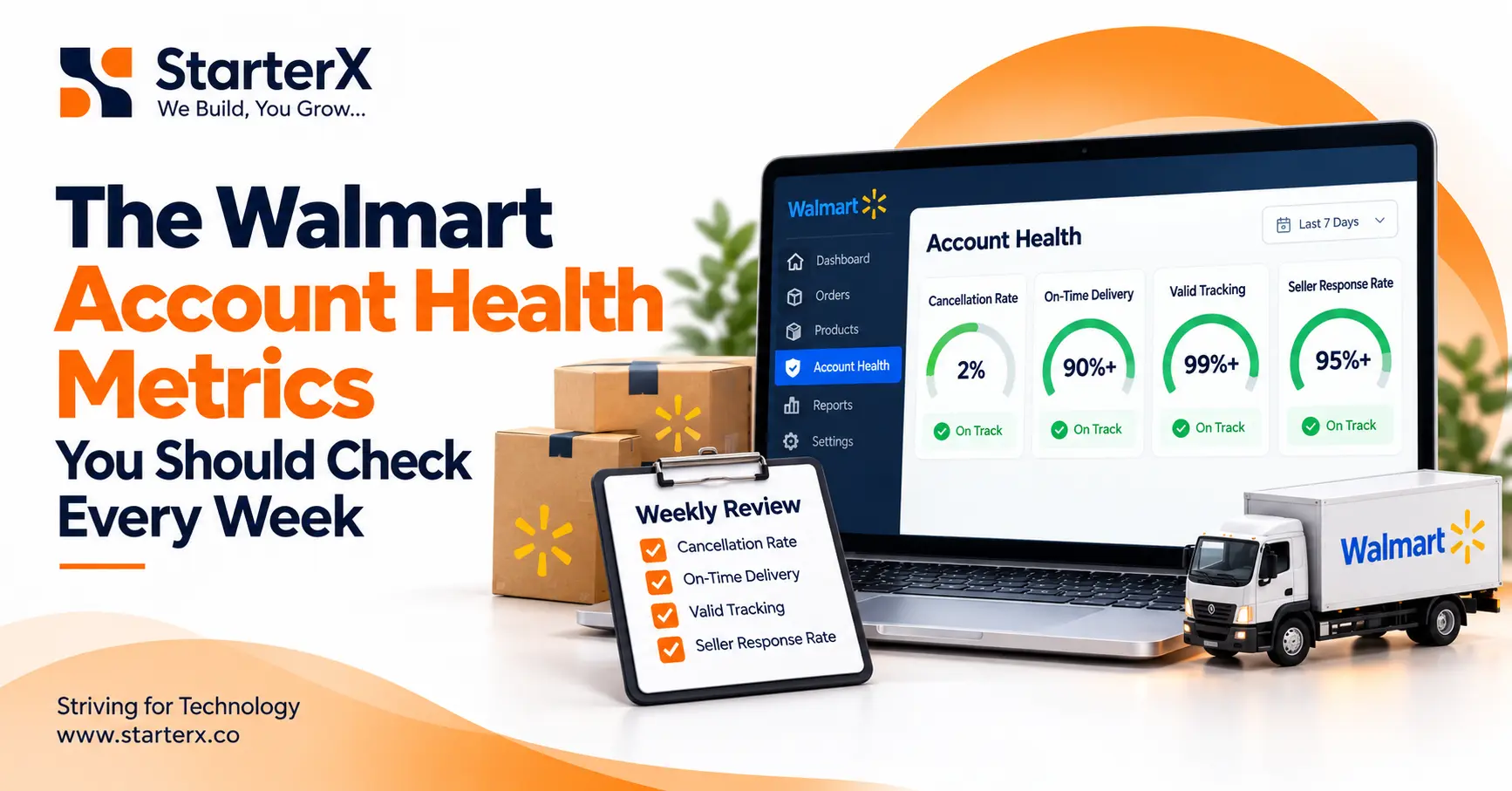
Here are the four numbers that deserve immediate attention:
Cancellation Rate: Keep It at 2% or Below
Cancellation Rate measures orders canceled by the seller after Walmart receives them. Common causes include unavailable inventory, pricing errors, expired shipping windows, and products listed in locations where they cannot be delivered.
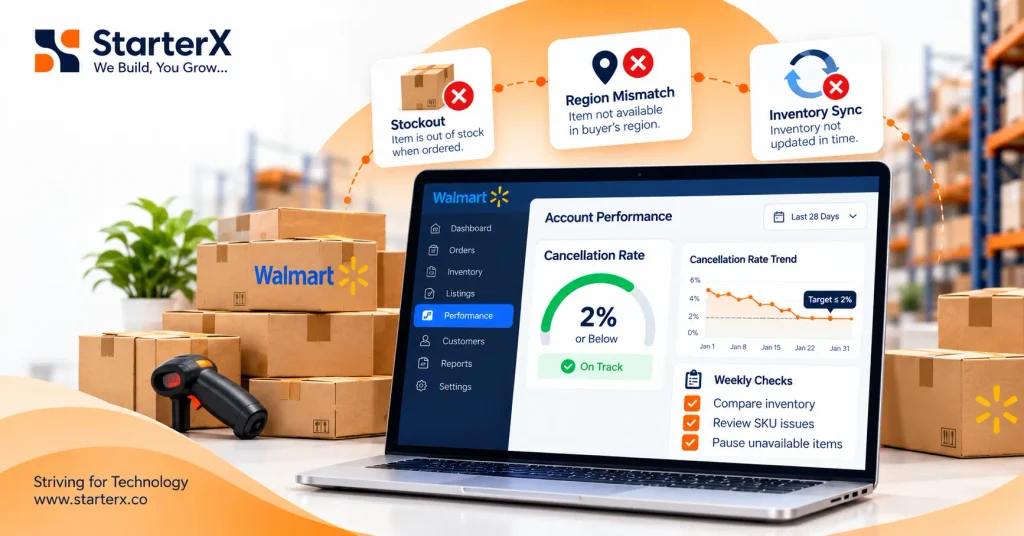
Even a small number of cancellations can create a noticeable percentage when order volume is low.
Weekly checks:
- Compare Seller Center inventory with warehouse quantities.
- Identify SKUs responsible for cancellations.
- Look for delayed inventory synchronization.
- Review pricing and listing errors.
- Confirm that fulfillment locations can serve promised regions.
The fix: Use real-time inventory synchronization, maintain a small stock buffer, and pause unavailable products before customers place orders. If one SKU causes repeated cancellations, correct its inventory workflow instead of treating every cancellation as an isolated event.
On-Time Delivery Rate: Maintain 90% or Above
On-Time Delivery Rate measures the percentage of orders delivered on or before the expected delivery date. Walmart’s current minimum standard is 90%, although sellers should aim considerably higher to protect the customer experience.
Late carrier handovers, unrealistic transit promises, incorrect shipping methods, and warehouse delays can all reduce this rate.
Weekly checks:
- Review orders delivered after their promised dates.
- Compare performance across carriers.
- Identify slow warehouses or fulfillment locations.
- Confirm that configured transit times are realistic.
- Check whether carrier scans occurred promptly.
The fix: Set delivery promises based on actual performance rather than ideal conditions. Adjust lag times, use reliable carrier services, and create backup plans for peak periods. Walmart fulfillment services may also reduce the operational burden for eligible products.
Valid Tracking Rate: Maintain 99% or Above
A customer should be able to follow an order from shipment to delivery. Valid Tracking Rate measures how often Walmart receives accurate, usable tracking information.

Missing numbers, incorrect carrier details, duplicated tracking IDs, and labels created before carrier handover can create tracking failures.
Weekly checks:
- Find orders without a valid first carrier scan.
- Review rejected or incorrect tracking numbers.
- Confirm that each carrier is supported.
- Compare shipment confirmation time with physical handover.
- Test fulfillment integrations for data delays.
The fix: Automate tracking uploads where possible, validate carrier mappings, and only confirm shipment after the package has been tendered to the carrier. A label is not the same as a moving package.
Seller Response Rate: Maintain 95% or Above
Seller Response Rate measures customer inquiries answered within 48 hours. Walmart expects sellers to maintain at least 95%.
A missed message may appear minor, but an unanswered customer can become a cancellation, refund, complaint, or negative rating.
Weekly checks:
- Look for messages approaching the 48-hour limit.
- Review response coverage during weekends.
- Categorize repeated questions.
- Confirm that customer-service alerts reach the right person.
- Use “No response needed” only when appropriate.
The fix: Assign ownership for the inbox, establish response templates, and create daily notifications. Templates can improve speed, but each answer should still address the customer’s actual concern.
Account Health Goes Beyond Four Metrics
The four core metrics provide an essential early-warning system, but sustainable Walmart Account Health requires a wider view.
Review Negative Feedback Rate, Return Rate, Item Not Received Rate, and Late Shipment Rate. Walmart currently expects Negative Feedback and Item Not Received rates to remain at 2% or below, Return Rate at 6% or below for standard inventory, and Late Shipment Rate at 5% or below.
Your weekly account check should also include:
- Inactive or suppressed listings
- Feed and catalog errors
- Listing Quality Scores
- Price competitiveness
- Inventory accuracy
- Shipping promises
- Customer reviews
- Buy Box eligibility
An unpublished listing cannot sell, while incomplete attributes, invalid product identifiers, weak images, or inventory mismatches can quietly reduce growth without immediately triggering an account warning.
Create a 30-Minute Weekly Health Routine
Turn account monitoring into a repeatable operating process:
- Open the Performance dashboard and record current metrics.
- Compare each number with the previous week.
- Download reports for affected orders.
- Identify whether the cause involves inventory, fulfillment, carriers, listings, or customer service.
- Assign corrective actions with owners and deadlines.
- Review suppressed listings and feed errors.
- Confirm that completed fixes have improved the underlying data.
Do not wait until a metric crosses its limit. A downward trend is already a warning.
Healthy operations also begin before your first product goes live. Accurate company information, valid product identifiers, clear fulfillment plans, and a compliant catalog can help speed up your Walmart Marketplace approval process and reduce preventable problems after launch.
The Bottom Line
Healthy seller accounts are built through consistent operations, not last-minute appeals. Monitor cancellations, delivery performance, tracking, messages, customer feedback, returns, inventory, and catalog errors every week.
If you need expert support turning those signals into better listings and more reliable operations, StarterX can help you build a stronger presence on Walmart Marketplace.
If improving your Walmart Account Health is your next priority, let us identify the risks and create a practical growth plan.
Let StarterX Optimize Your Walmart Account
At StarterX, we help ecommerce businesses build and improve their Walmart operations with a focus on compliance, visibility, fulfillment, and profitable growth.
We can review account-performance data, identify the orders or SKUs creating risk, resolve listing issues, improve inventory processes, and establish practical weekly monitoring systems. Our goal is to help your team catch small problems before they become expensive account disruptions.
Frequently Asked Questions
What is a Walmart account used for?
A customer account is used to shop, track orders, manage returns, and save payment information. A Walmart Marketplace seller account provides access to Seller Center, where businesses manage listings, inventory, orders, payments, customer communication, and performance.
How do I get a Walmart account?
Customers can register on Walmart.com. Businesses must apply to Walmart Marketplace using their legal business details, tax information, ecommerce history, product catalog, product identifiers, and fulfillment capabilities. Approval is not automatic.
How much is a Walmart account?
Walmart Marketplace does not generally charge sellers a setup or monthly subscription fee. Sellers pay referral fees when products sell, with the rate depending on the product category. Optional advertising, fulfillment, storage, and technology services can create additional costs.
How to withdraw money from a Walmart account?
Marketplace earnings are processed through Walmart’s supported payout system or payment provider. Sellers should open the Payments or Payouts section in Seller Center, confirm their linked bank details, and follow the transfer options available for their account. Settlement timing may depend on the seller’s payment cycle and account status.
Is there a free Walmart account?
Yes. A standard Walmart customer account is free, and Walmart Marketplace does not generally charge a setup or recurring subscription fee. However, sellers still pay referral fees and any optional fulfillment, advertising, storage, or service costs they use.

The StarterX Team is a group of e-commerce experts with years of hands-on experience in launching, managing, and scaling online businesses. As trusted authorities in the e-commerce space, we’ve helped entrepreneurs grow successful stores on Amazon, Shopify, TikTok, and Walmart. Backed by real-world results and a data-driven approach, we deliver proven strategies and insights you can trust to succeed in the digital marketplace.