

.svg)

Launching an ecommerce business is exciting, but success stories can make it look easier than it is. Amazon FBA is a fulfillment program, not a magic profit button. According to Amazon’s official Fulfillment by Amazon guide, FBA can store products, pick and pack orders, ship purchases, and handle customer service and returns. Sellers still make the decisions that determine profit.
If you are exploring Amazon FBA for beginners, understanding the difference between a helpful system and a complete business strategy can protect your budget. In this blog, we are going to debunk seven common myths before they become expensive lessons for you.
Myth # 1: Amazon FBA Creates Completely Passive Income
FBA outsources fulfillment, not ownership. Sellers still research products, manage cash flow, review advertising, monitor account health, and forecast inventory. Ignoring these responsibilities can cause stockouts, storage costs, or weak rankings.
The fact: Amazon FBA can make operations more efficient, but a profitable store needs regular attention. Build weekly routines for inventory, pricing, advertising, reviews, returns, and profitability. Automation should support informed management, not replace it.
Myth # 2: Any Trending Product Will Become a Bestseller
Viral demand can disappear before inventory arrives. Popular products also attract competition, higher advertising costs, and price wars. A trend is a signal to investigate, not proof to order hundreds of units.
The fact: Validate demand, competition, seasonality, restrictions, customer complaints, supplier reliability, and landed cost before buying. When evaluating Amazon FBA costs, begin with a controlled test order. Reliable data from a smaller launch is more valuable than an impressive purchase order built on guesswork.
Myth # 3: You Need a Huge Budget to Begin
A bigger budget creates buying power and exposure. Beginners often accept large order quantities for lower unit prices, then discover that storage, advertising, returns, or removal costs erase the discount.

The fact: You need sufficient working capital, not unlimited capital. Budget for samples, inventory, freight, duties, packaging, photography, Amazon fees, advertising, returns, and reorders. Keep a reserve instead of committing every dollar to the first shipment. The goal is to learn affordably and scale only after the numbers support it.
Myth # 4: High Revenue Means High Profit
Sales screenshots rarely show the full picture. Strong revenue can still produce a loss after product costs, referral fees, fulfillment, storage, shipping, advertising, refunds, and taxes. Scaling an unprofitable product accelerates the loss.
The fact: Calculate contribution profit per unit before placing an order. Estimate your break-even advertising cost and update the calculation with real results after launch. Revenue measures activity; profit measures whether the business model works.
Myth # 5: FBA Handles the Entire Business
Amazon handles fulfillment after eligible inventory enters its network. It does not select suppliers, inspect manufacturing, create compliant listings, forecast demand, or guarantee quality.
The fact: Treat Amazon FBA as a fulfillment partner. You remain responsible for sourcing, preparation, labeling, listing accuracy, quality control, compliance, positioning, and inventory planning. Clear processes in each area reduce expensive surprises later.
Myth # 6: Advertising Can Fix a Weak Product Listing
Amazon PPC sends shoppers to a listing, but cannot make them trust a confusing offer. Weak images, unclear benefits, poor reviews, or an uncompetitive price can waste paid traffic.
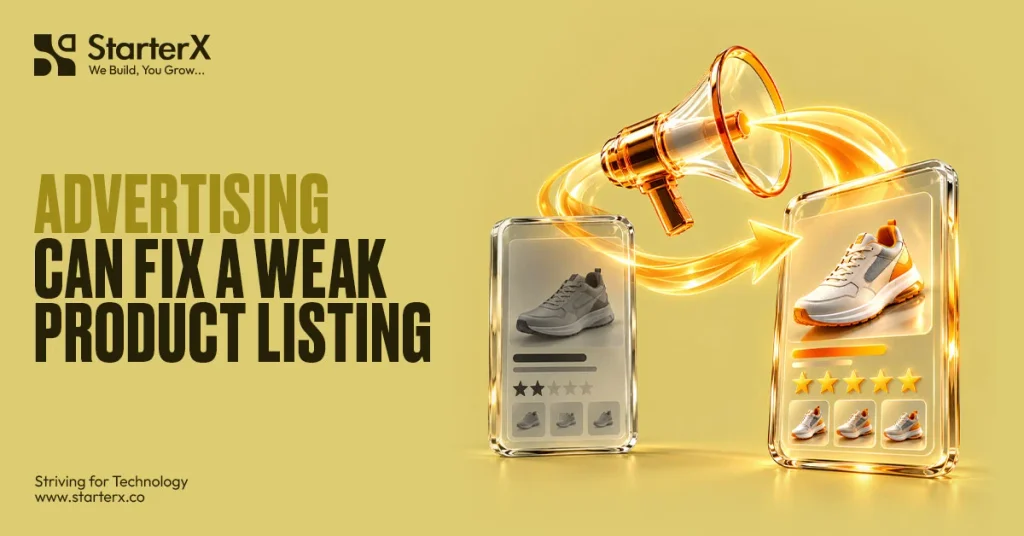
The fact: Strengthen conversion before increasing advertising. Use a clear main image, benefit-led copy, relevant keywords, complete product information, and visuals that answer common objections. Then use campaign data to improve targeting. Good advertising amplifies a strong offer; it does not repair a broken one.
Myth # 7: The Work Ends Once the Store Goes Live
Launch day is the beginning. Prices, search behavior, advertising costs, and customer concerns change. Fast inventory can run out, while slow stock continues generating costs.
The fact: After your first Amazon FBA launch, track sessions, conversion rate, advertising efficiency, organic ranking, return reasons, inventory age, and unit economics. Test meaningful improvements one at a time and keep the changes that produce measurable results.
Build Your Store on Facts, Not Hype
The most expensive FBA myth is the belief that success comes automatically after inventory is shipped to Amazon. Sustainable growth comes from disciplined research, realistic financial planning, controlled inventory, persuasive listings, and continuous optimization.
Why Choose StarterX for Amazon FBA Support?
StarterX is a B2B ecommerce partner that helps sellers turn Amazon FBA decisions into practical action. Its support covers product research, sourcing, profitability planning, listing optimization, advertising, inventory, and scalable growth. Instead of relying on generic advice, StarterX builds strategies around your goals, budget, market, and operating numbers. We help entrepreneurs avoid common mistakes, improve existing ecommerce operations, and make clearer decisions across research, sourcing, listings, advertising, inventory, and growth.
The Bottom Line
The costly myths share one flaw: they treat Amazon FBA as a shortcut instead of a business system. Sustainable growth comes from validated demand, complete cost control, disciplined inventory, persuasive listings, and continuous optimization.
The costly myths share one flaw: they treat Amazon FBA as a shortcut instead of a business system. Sustainable growth comes from validated demand, complete cost control, disciplined inventory, persuasive listings, and continuous optimization.
StarterX helps entrepreneurs avoid Amazon FBA mistakes, improve existing ecommerce operations, and make clearer decisions across research, sourcing, listings, advertising, inventory, and growth. When you are ready to replace assumptions with a plan built around your goals and numbers, an Amazon consultation can help you identify the right next step and move forward with greater confidence.
Frequently Asked Questions
Is Amazon FBA a good option for beginners?
Yes, Amazon FBA can be suitable for beginners because it simplifies storage, shipping, customer service, and returns. However, beginners must still understand product selection, costs, compliance, inventory, and marketing. Start with a controlled test and realistic expectations rather than treating FBA as guaranteed income.
What are the biggest FBA mistakes to avoid?
The biggest mistakes include choosing products without reliable research, ordering too much inventory, ignoring total costs, launching weak listings, overspending on PPC, violating marketplace policies, and failing to monitor stock. Each mistake becomes more expensive when a seller scales before validating demand and margin.
How much money is needed to start Amazon FBA?
There is no universal starting amount. Required capital depends on the product, order quantity, freight, packaging, fees, advertising, and reserve cash. Your business model also changes the investment profile, so compare the costs and risks in this live guide to Amazon FBA Wholesale vs. Private Label before setting your budget.
What percentage of Amazon FBA sellers fail?
Amazon does not publish an official FBA seller failure rate, so widely repeated claims such as “80%” or “90%” should not be presented as verified facts. Results also depend on how failure is defined: closing a store, earning no profit, or missing a personal income goal are different outcomes. Focus on controllable indicators such as margin, cash flow, inventory turnover, conversion, and account health.
Is FBA still profitable in 2026?
Yes, FBA can still be profitable in 2026, but profitability depends on product economics and execution. Sellers must account for current fees, advertising, competition, sourcing, returns, and inventory efficiency. Use Amazon’s current fee tools and calculate the expected contribution margin before investing; no fulfillment method can make an unprofitable product profitable by itself.

The StarterX Team is a group of e-commerce experts with years of hands-on experience in launching, managing, and scaling online businesses. As trusted authorities in the e-commerce space, we’ve helped entrepreneurs grow successful stores on Amazon, Shopify, TikTok, and Walmart. Backed by real-world results and a data-driven approach, we deliver proven strategies and insights you can trust to succeed in the digital marketplace.