
.svg)
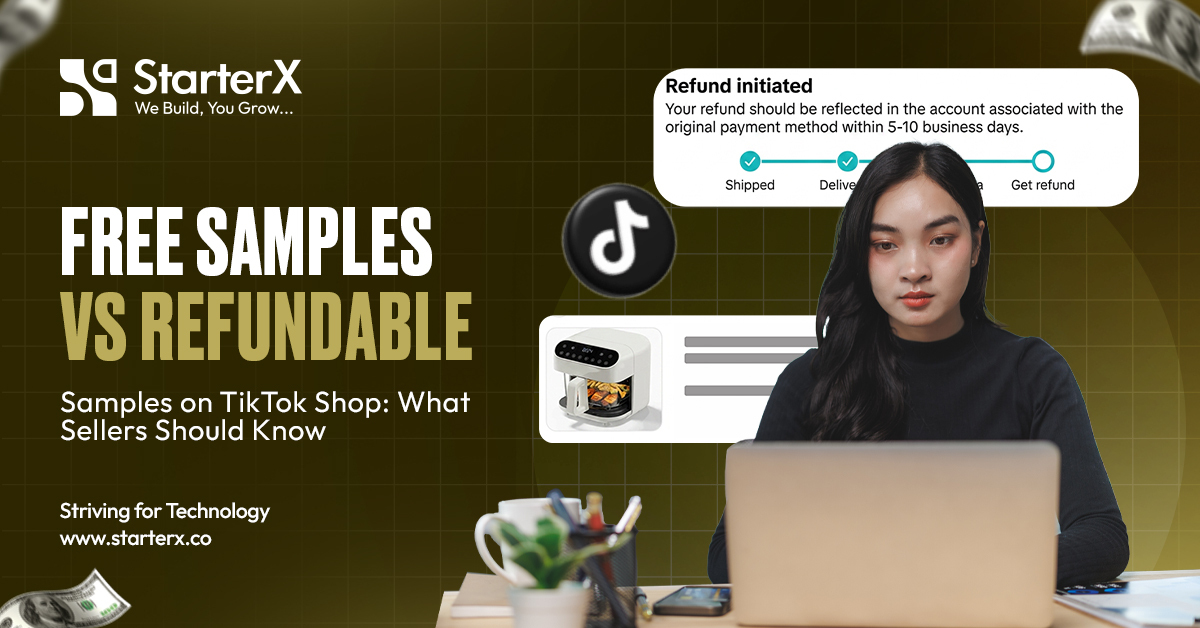
Free Samples and Refundable Samples on TikTok Shop help sellers work with creators, but they work in different ways. Free Samples are better when you want more creators to try your product and create content. Refundable Samples are better when you want to control sample costs and connect refunds with real sales. The right choice depends on your product cost, profit margin, creator quality, and sales goal.
TikTok Shop allows sellers to offer Free Samples and Refundable Samples, and in most cases, both sample types can be offered for the same product. TikTok also states that starting April 3, 2025, Refundable Sample refunds are tied to sales performance, not only content creation. This is important for sellers because it changes samples from a simple product giveaway into a more sales-focused creator strategy.
For sellers, the goal is not just to send products to creators. The goal is to get the right creators, protect your sample budget, and turn creator content into TikTok Shop sales. A Free Sample may help you build creator relationships faster, while a Refundable Sample may help you filter creators who are more serious about selling.
In this guide, you will learn how Free Samples and Refundable Samples work, the key differences between them, which option is better for sellers, how each one affects cost and margin, and how to build a smarter TikTok Shop sample strategy.
Key Takeaways
- Free Samples are seller-paid samples that help creators try and promote your product without buying it first.
- Refundable Samples are creator-purchased samples that can be refunded after the creator meets the seller’s sales criteria.
- Free Samples can bring more creator interest, but they also carry more upfront cost for sellers.
- Refundable Samples can reduce sample waste because the creator must take action before getting the refund.
- Free Samples work best for product launches, creator seeding, and products that need real use or demonstration.
- Refundable Samples work best for products with proven demand, clear value, and strong TikTok Shop sales potential.
- The best sample strategy is often to use both, but for different creator groups and different campaign goals.
What Are Free Samples on TikTok Shop?
Free Samples are products that TikTok Shop sellers send to creators at no cost so creators can try the product and promote it through TikTok Shop content. They are mainly used to get creator videos, LIVE product features, product reviews, and early product exposure.
For sellers, Free Samples are useful because they remove the first barrier for creators. The creator does not need to buy the product before testing it. This can help sellers get more sample requests, especially when the product is new, visual, easy to explain, or needs real use before buyers trust it.
TikTok says Free Samples can be requested by creators through the Product Marketplace or Collab Invites, and sellers can approve, reject, or ignore sample requests. TikTok also says creators are expected to create content after receiving a free sample.
How Free Samples Work for Sellers
A Free Sample usually works like this:
- The seller selects a product in TikTok Shop Affiliate Center.
- The seller offers samples through Open Collaboration or a creator invite.
- A creator requests the sample.
- The seller checks the creator profile, content quality, niche, and sales history.
- The seller approves or rejects the request.
- The product is shipped to the creator.
- The creator creates shoppable content, a product video, or a TikTok LIVE feature.
- The seller tracks views, clicks, orders, GMV, and creator performance.
TikTok’s sample management guide says sellers can review sample applications, ship samples, and view creator content performance, including content views, likes, comments, and orders generated from the content.
When Free Samples Make Sense
Free Samples work best when the seller wants fast product exposure and stronger creator relationships.
They are a good fit when:
- The product is new on TikTok Shop.
- The product needs a real demo.
- The product looks good in short videos.
- The seller wants to work with selected creators.
- The creator has strong content quality or past TikTok Shop sales.
- The product has enough margin to cover sample and shipping cost.
Free Samples are best when the seller is choosing creators carefully, not sending products to anyone who asks.
Risks of Free Samples
Free Samples can help a product grow, but they can also waste inventory if the seller has no review process.
The main risks are:
- The seller pays upfront.
- Some creators may not post strong content.
- Some creators may not drive orders.
- Product and shipping costs can reduce profit.
- Low-quality sample requests can waste time.
- Too many approvals can drain stock fast.
A Free Sample should never be treated as a simple giveaway. It should be treated like a creator investment that needs tracking.
What Are Refundable Samples on TikTok Shop?
Refundable Samples let creators buy a TikTok Shop product first and receive a refund after they meet the seller’s sales criteria. This makes the sample process more performance-focused because the refund is connected to sales activity.
TikTok says Refundable Samples shifted to sales-based refunds starting April 3, 2025. This means refunds are tied to creator-driven sales instead of content creation alone. TikTok also says creators purchase the product first, create content, and receive a refund if their content drives the seller’s required number of sales.
This is important for sellers because Refundable Samples can reduce sample waste. The creator has to take the first step by buying the product, then they need to create content that can bring valid sales.
How Refundable Samples Work for Sellers
A Refundable Sample usually works like this:
- The seller enables Refundable Samples in TikTok Shop Affiliate Center.
- The seller selects the product and sets the sales criteria.
- A creator buys the product through the eligible sample path.
- The creator promotes the product through short videos, TikTok LIVE, or showcase.
- TikTok tracks sales linked to the creator’s content.
- The sales must meet the seller’s refund criteria.
- The creator gets refunded if the sales criteria are met.
TikTok’s seller terms say sellers can set sales criteria for Refundable Samples, starting from 1 product sale up to the maximum shown in Seller Center. TikTok also states that the default setup is generating 1 sale, which the seller can manually change.
What Counts Toward Refundable Sample Criteria?
Sales can come from:
- Short videos
- TikTok LIVE sessions
- Creator showcases
TikTok’s creator terms say sales must pass the refund or return period before they count as valid. They also say a creator’s own purchase does not count toward the sales criteria.
Refundable Sample Time Window
TikTok’s creator terms say creators must generate the required sales within 120 days of receiving the sample product. TikTok also recommends creators aim to generate qualifying sales within the first 90 days so orders have enough time to clear the return period before the window closes.
For sellers, the simple rule is this: set sales criteria that are realistic enough for good creators to meet, but strong enough to protect your sample budget.
When Refundable Samples Make Sense
Refundable Samples work best when:
- The product already has buyer demand.
- The seller wants to control sample cost.
- The product has tight margins.
- The seller wants creators with stronger sales intent.
- The product can sell through short videos, LIVE, or showcase.
- The seller wants to test more creators with lower risk.
Refundable Samples are best when the seller wants creators who are ready to promote, not just collect products.
Risks of Refundable Samples
Refundable Samples are helpful, but they are not perfect for every product.
The main risks are:
- Some creators may not want to buy first.
- New brands may get fewer creator requests.
- High sales criteria can discourage creators.
- Expensive products may reduce participation.
- Products with weak reviews may be harder to sell.
- A poor listing can still hurt conversion, even with good creator content.
Refundable Samples work better when the product has clear value, strong listing content, and a fair sales goal.
Free Samples vs Refundable Samples: Key Differences
The biggest difference is who pays first. With Free Samples, the seller sends the product at no cost to the creator. With Refundable Samples, the creator buys first and gets refunded after meeting the seller’s sales criteria.
Both sample types can help sellers get creator content and TikTok Shop sales, but they solve different problems. Free Samples help reduce creator friction. Refundable Samples help reduce seller risk.
| Factor | Free Samples | Refundable Samples |
| Who pays first? | Seller | Creator |
| Main purpose | Product seeding and creator access | Sales-based creator testing |
| Seller risk | Higher upfront cost | Lower upfront sample waste |
| Creator barrier | Lower because creator pays nothing | Higher because creator buys first |
| Best use case | Product launches and trusted creators | Cost control and wider creator testing |
| Sales requirement | No refund sales requirement | Sales criteria required |
| Creator quality signal | Based on seller review | Creator shows buying and selling intent |
| Content goal | Product video, LIVE, review, or showcase | Sales-driven content through video, LIVE, or showcase |
| Best product fit | Products that need demo or trust | Products with proven demand and clear benefits |
TikTok’s sample guide states that Refundable Samples require creators to purchase first and earn a refund after meeting the sales goal, while Free Samples cost nothing to creators but need seller approval.
What This Means for Sellers
Free Samples are useful when you want more creators to try your product. They can help with product launch content, early awareness, creator seeding, and relationship building.
Refundable Samples are useful when you want more control over sample cost. They help filter creators because the creator needs to buy first and promote the product to meet the refund criteria.
Free Samples help you get more creator interest. Refundable Samples help you get more creator accountability.
Simple Seller Decision
Use this simple decision rule:
- Choose Free Samples when you want product exposure and creator relationships.
- Choose Refundable Samples when you want lower sample risk and sales-based testing.
- Use both when you want trusted creators to get free samples and new creators to prove performance first.
Which One Is Better for TikTok Shop Sellers?
Refundable Samples are better for sellers who want cost control, while Free Samples are better for sellers who want faster creator access and product exposure. The better choice depends on your product, margin, inventory, and creator goal.
There is no single best option for every seller. A new beauty brand, a gadget seller, and a low-margin product seller may all need different sample strategies.
Free Samples can bring more creators into your product campaign because creators do not need to pay first. Refundable Samples can bring more serious creator interest because creators must buy first and meet sales criteria to get refunded.
Choose Free Samples If
Free Samples are a better choice when:
- You are launching a new product.
- You want creators to try the product with no cost barrier.
- Your product needs real use or demonstration.
- You want product reviews, unboxing videos, or LIVE demos.
- You are targeting trusted creators manually.
- Your product margin can support sample and shipping costs.
Free Samples work best when you already know which creators are worth the product cost.
Choose Refundable Samples If
Refundable Samples are a better choice when:
- You want to reduce sample waste.
- Your product already has some demand.
- You want creators who are serious about selling.
- You have tight margins.
- You receive too many low-quality sample requests.
- You want to test more creators without sending free inventory to everyone.
Refundable Samples work best when you want sales proof before covering the creator’s sample cost.
Use Both If
Many sellers should not choose only one sample type. They should use both with a clear plan.
A smart strategy can look like this:
- Use Free Samples for trusted creators, niche creators, and creators with strong TikTok Shop sales history.
- Use Refundable Samples for broader creator testing.
- Keep Free Samples limited to protect inventory.
- Keep Refundable Sample criteria realistic so creators still want to participate.
- Move strong creators into Target Collaboration or long-term affiliate partnerships.
The best sample strategy is not free vs refundable. It is using each one for the right creator group.
How Sample Type Affects Seller Costs and Margins
Free Samples affect margins because the seller pays upfront, while Refundable Samples can protect margins by connecting the refund to creator-driven sales. Sellers should check product cost, shipping cost, commission, refund risk, and expected GMV before choosing a sample type.
Samples are not free growth. Every sample has a cost, even when the product later brings content or sales. Sellers need to know the break-even point before approving sample requests.
Cost Factors for Free Samples
With Free Samples, sellers should think about:
- Product cost
- Shipping cost
- Tax
- Packaging cost
- Lost inventory
- Time spent reviewing creators
- Affiliate commission on sales
- Discount or promotion cost
- Return risk from orders generated later
Free Samples can still be profitable if the creator creates strong content, drives orders, or becomes a long-term partner. But if the creator does not post or sends weak traffic, the seller carries the cost.
Cost Factors for Refundable Samples
With Refundable Samples, sellers should think about:
- The creator’s purchase price
- Refund amount if criteria are met
- TikTok Shop platform fees
- Affiliate commission
- Valid sales after the return period
- Buyer returns or chargebacks
- Product margin after refund
TikTok’s seller terms say refunds are issued from the seller’s account when the refund criteria are met. The terms also state that sales orders generally must pass the refund or return period to count as valid.
Sample Cost Checklist for Sellers
Before offering samples, sellers should check:
- What is the landed product cost?
- What is the shipping cost?
- What is the product margin?
- What is the TikTok Shop commission or affiliate rate?
- How many samples can the seller afford?
- How many orders are needed to break even?
- What is the expected GMV from each creator?
- What is the return risk?
- Can the product listing convert traffic into sales?
Simple Margin Rule
Use Free Samples when the creator value is worth the upfront cost. Use Refundable Samples when the product needs a stronger sales filter.
For low-cost products, Free Samples can work well because the seller can test more creators. For higher-cost products, Refundable Samples may be safer because the creator must show sales performance before receiving the refund.
How Creator Quality Changes the Sample Strategy
The sample type matters, but creator quality matters more. A strong creator can turn a Free Sample into sales, while a poor-fit creator can waste any sample offer.
Sellers should not approve creators only because they have followers. A creator with a smaller but more active audience can perform better than a large creator with weak product fit. The right creator should understand the product, speak to the right audience, and create content that can lead to TikTok Shop orders.
TikTok’s Creator Sample Score helps sellers review creators for sample collaborations. TikTok says the score is based on areas such as fulfillment, diligence, sales ability, and content quality. Sellers can use it inside Affiliate Center to filter sample requests and find better creator matches.
What Sellers Should Check Before Approving Free Samples
Before approving a Free Sample request, sellers should review:
- Does the creator’s niche match the product?
- Has the creator posted product videos before?
- Does the creator have TikTok Shop sales history?
- Does the creator make clear, useful product content?
- Do their comments show buyer interest?
- Are they consistent with posting?
- Do they create shoppable videos or LIVE content?
- Is their Creator Sample Score strong enough?
- Does their audience match the product’s buyer?
A Free Sample should go to a creator who can explain the product, not just receive it.
What Makes a Creator Better for Refundable Samples
A creator is a better fit for Refundable Samples when:
- They are willing to buy first.
- They already create TikTok Shop content.
- They understand how to drive product sales.
- They can create videos quickly.
- They use shoppable links, LIVE, or showcase features.
- They have an audience that trusts their product picks.
- They are comfortable working with sales criteria.
Refundable Samples can help sellers find creators who believe they can sell the product. That does not guarantee sales, but it gives the seller a stronger intent signal.
The Best Creator Strategy
Sellers should use different sample types for different creator levels:
- Give Free Samples to proven creators.
- Offer Refundable Samples to new or untested creators.
- Watch the first content and sales results.
- Keep a list of creators who post on time and drive orders.
- Build stronger Target Collaboration offers for creators who perform well.
The goal is not to send more samples. The goal is to find better creators.
Best Products for Free Samples
Free Samples work best for products that need real use, visual proof, or creator trust before buyers purchase. These products often perform better when creators can show how they look, feel, work, or solve a simple problem.
Free Samples are a strong fit when the creator experience matters. If a creator needs to test the product before making honest content, a Free Sample can help them create a better video, review, or LIVE demo.
Product Types That Fit Free Samples
Free Samples can work well for:
- Beauty products
- Skincare products
- Haircare products
- Fashion accessories
- Wellness items
- Food and snack products
- Home gadgets
- Fitness products
- Cleaning tools
- Pet products
- Products with before-and-after results
- Products that need a hands-on demo
These products often need more than a product image. The buyer wants to see the product in use, hear a real reaction, or understand the result before buying.
Why These Products Work Well
Free Samples are helpful for these products because creators can show:
- Product texture
- Size and packaging
- Use case
- Before-and-after result
- Real-life demo
- Fit, color, scent, taste, or function
- Common buyer questions
- How the product solves a problem
The more a buyer needs to see the product in action, the stronger the case for Free Samples.
Products Sellers Should Be Careful With
Free Samples may not be the best choice for:
- Expensive products
- Heavy products with high shipping cost
- Low-margin products
- Products with weak demand
- Products with unclear use
- Products with poor reviews
- Products that do not show well in video
- Products with limited inventory
These products can still use Free Samples, but sellers should be stricter with creator approval. For higher-cost products, send Free Samples only to creators with strong product fit, past sales history, and reliable content quality.
Best Seller Approach
For Free Samples, sellers should start small.
A simple approach is:
- Pick a product that looks good in TikTok content.
- Choose creators in the same niche.
- Approve a limited number of sample requests.
- Track who posts and who drives orders.
- Send more samples only to creator types that perform well.
Free Samples work best when sellers use them with control, not as open product giveaways.
Best Products for Refundable Samples
Refundable Samples work best for products that creators can sell quickly through short videos, TikTok LIVE, or showcase placements. These products should already have clear value, strong listing content, and enough buyer demand to help creators meet the sales criteria.
Refundable Samples are not the best fit for every product. Since creators buy first and get refunded only after meeting the seller’s criteria, the product must feel easy enough to sell. If the product looks risky, expensive, hard to explain, or has weak reviews, many creators may skip it.
TikTok says Refundable Samples are tied to sales performance, and sellers can set refund criteria for eligible products inside Seller Center. This makes product selection very important for sellers. A product with clear demand gives creators a better reason to buy, post, and sell.
Product Types That Fit Refundable Samples
Refundable Samples can work well for:
- Trending TikTok Shop products
- Low to mid-ticket products
- Beauty and personal care products with clear results
- Home gadgets that solve a simple problem
- Fashion accessories with strong visual appeal
- Food, snack, or wellness products with repeat-purchase potential
- Products with strong reviews and clear listing images
- Products that can be shown in short product demos
- Products that already get clicks, orders, or creator interest
The best Refundable Sample products are easy for creators to explain and easy for buyers to understand.
Why These Products Work Well
These products fit Refundable Samples because creators can create content around:
- A clear use case
- A simple product benefit
- A demo or result
- A personal review
- A before-and-after moment
- A quick problem and solution
- A LIVE selling angle
- A showcase product recommendation
For example, a skincare tool, kitchen gadget, haircare item, or simple beauty product may work well because the creator can show the product in use. That makes it easier for the audience to understand why they should buy.
Products Sellers Should Be Careful With
Refundable Samples may not work well for:
- Expensive products
- New products with no proof
- Products with weak reviews
- Products with poor listing images
- Products that need long education
- Products with slow buying decisions
- Products with unclear benefits
- Products with low trust signals
- Products with high return risk
If creators do not believe they can sell the product, they may not want to buy it first. Refundable Samples need product confidence from both the seller and the creator.
Best Seller Approach
Before offering Refundable Samples, sellers should check:
- Does the product already have demand?
- Is the price easy for creators to buy first?
- Does the listing explain the product clearly?
- Are reviews strong enough to build trust?
- Can the product be sold through video, LIVE, or showcase?
- Is the sales goal realistic for creators?
Refundable Samples work best when sellers choose products that already have sales potential, not products that still need basic market proof.
Common Mistakes Sellers Make With TikTok Shop Samples
The biggest mistake sellers make with TikTok Shop samples is sending products without a clear creator filter, cost limit, sales goal, or tracking process. Samples can bring content and sales, but only when sellers manage them like a real performance channel.
Many sellers treat samples like a giveaway. That is risky. A sample has product cost, shipping cost, tax, commission impact, and inventory impact. If the wrong creator receives the product, the seller may get no useful content and no orders.
TikTok’s Sample Integrity Policy says it is designed to protect sellers who offer free samples and limit creators who receive free samples but do not post content from requesting more samples. This shows why sample quality and creator behavior matter for sellers.
Approving Too Many Free Sample Requests
Approving too many Free Sample requests can drain inventory fast.
This usually happens when sellers approve creators based only on follower count. Follower count alone does not prove product fit, content quality, or sales ability.
Before approving Free Samples, sellers should check:
- Creator niche
- Past product videos
- TikTok Shop sales history
- Audience match
- Content quality
- Posting consistency
- Creator Sample Score
- Comments that show buyer interest
A Free Sample should go to a creator who can create useful content, not just someone who asks for a product.
Setting Refundable Sample Criteria Too High
Refundable Sample criteria should protect the seller, but they also need to feel realistic for creators.
If the sales goal is too high, creators may avoid the product. If the goal is too low, the seller may not get enough return from the refund. TikTok says sellers can set Refundable Sample sales criteria from 1 sale up to the maximum shown in Seller Center.
The better approach is to set criteria based on:
- Product price
- Product margin
- Creator sales potential
- Average order value
- Product demand
- Return risk
A fair sales goal helps sellers control cost without pushing away good creators.
Ignoring Product Margin
Samples can hurt profit when sellers do not check the numbers first.
Sellers should calculate:
- Product cost
- Shipping cost
- Tax
- Affiliate commission
- TikTok Shop fees
- Refund amount
- Return risk
- Expected orders
- Expected GMV
A product may get a lot of creator interest but still lose money if the margin is too low. Sample strategy should always start with margin, not excitement.
Sending Samples to Poor-Fit Creators
A poor-fit creator can waste a good product.
This happens when the creator’s audience does not match the product. For example, a creator who posts mostly comedy content may not be the best fit for a skincare product unless their audience already responds to product content.
Sellers should match creators based on:
- Product category
- Audience interest
- Content style
- Buyer intent
- Creator sales history
- Niche trust
The right creator is not always the biggest creator. The right creator is the one whose audience can actually buy the product.
Not Tracking Creator Output
Sellers should not stop after shipping the sample.
They should track:
- Did the creator post?
- What type of content did they create?
- Did the video get views?
- Did it bring clicks?
- Did it bring orders?
- Did it create GMV?
- Is the creator worth working with again?
TikTok’s sample tools allow sellers to manage sample applications and review content performance such as views, likes, comments, and orders from creator content.
Offering Samples on Weak Product Listings
Creator content can bring traffic, but the listing still needs to convert.
Before offering samples, sellers should improve:
- Product title
- Main image
- Product images
- Product description
- Reviews
- Price
- Coupons or offers
- Shipping promise
- Product variation clarity
A creator can create interest, but a weak product listing can still lose the sale.
How Sellers Should Track Sample Performance
Sellers should track TikTok Shop sample performance by creator output, content quality, views, clicks, orders, GMV, sample cost, refund cost, and repeat creator potential. This helps sellers know which creators are worth more samples and which ones should be removed from future campaigns.
Sample tracking should be simple. Sellers do not need a complex system at the start. They need a clear view of what was sent, who posted, what content was created, and what sales came from it.
TikTok says Creator Sample Score helps sellers choose reliable creators and is based on areas such as fulfillment ability, diligence, sales ability, and content quality. This score can support seller tracking, but sellers should still review their own sample results.
Metrics Sellers Should Track
Sellers should track these sample metrics:
- Sample type
- Product sent
- Creator name
- Creator niche
- Sample request date
- Approval date
- Shipping status
- Content posted
- Content type
- Views
- Clicks
- Orders
- GMV
- Affiliate commission
- Sample cost
- Refund cost
- Return rate
- Creator response quality
- Next action
The goal is to find creators who can post useful content and drive sales, not just creators who accept samples.
Simple Sample Scorecard for Sellers
Use a simple scorecard like this:
| Creator | Sample Type | Product | Posted? | Views | Orders | GMV | Cost | ROI | Next Step |
| Creator A | Free Sample | Product 1 | Yes | 12,000 | 8 | $240 | $35 | Positive | Keep |
| Creator B | Refundable Sample | Product 2 | Yes | 6,500 | 2 | $80 | $0 until criteria met | Test again | Retest |
| Creator C | Free Sample | Product 3 | No | 0 | 0 | $0 | $28 | Negative | Stop |
This scorecard helps sellers make clear decisions.
How to Use the Data
After each sample campaign, sellers should group creators into three simple groups:
Keep: Creators who posted strong content and brought sales.
Retest: Creators who made good content but need another product, better timing, or a clearer offer.
Stop: Creators who did not post, had poor content, or brought no useful results.
Sellers can then use Free Samples for proven creators and Refundable Samples for new creator testing.
What Good Sample Performance Looks Like
Good sample performance does not only mean high views.
A strong creator may show:
- Clear product explanation
- Good video quality
- Strong audience comments
- Product clicks
- Orders
- GMV
- Low return rate
- Willingness to post again
- Ability to promote through video, LIVE, or showcase
A creator with fewer views but real sales can be more valuable than a creator with many views and no orders.
Recommended Sample Strategy for New TikTok Shop Sellers
New TikTok Shop sellers should start with a small Free Sample test, use strict creator filters, and add Refundable Samples once the product has some proof of demand. This keeps sample costs under control while helping the seller find creators who can create content and drive sales.
New sellers often want fast creator reach, but sending too many samples too early can waste stock. A better plan is to test in small batches, track performance, and increase sample volume only when the data looks strong.
Step 1: Start With a Small Free Sample Test
New sellers can begin with a small number of Free Samples for carefully selected creators.
A simple starting point is:
- Pick one product with strong video potential.
- Choose creators in the same niche.
- Review their TikTok Shop content history.
- Check content quality and audience fit.
- Send a limited number of Free Samples.
- Track posts, views, clicks, orders, and GMV.
Do not approve every request at the start. Start small and learn which creator type works.
Step 2: Use Strict Creator Filters
Before approving Free Samples, sellers should filter creators by:
- Product niche fit
- Content quality
- TikTok Shop sales history
- Creator Sample Score
- Posting consistency
- Engagement quality
- Audience buying intent
- Past sample behavior
TikTok says Creator Sample Score can help sellers find reliable creators and reduce risk by reviewing creator performance signals.
Step 3: Add Refundable Samples After Early Product Proof
Once a product has some proof, sellers can use Refundable Samples for wider creator testing.
Product proof can include:
- Early orders
- Good reviews
- Strong product page conversion
- Positive creator content
- Clear buyer comments
- Good performance from a small Free Sample test
Refundable Samples are useful at this stage because creators have more reason to believe they can sell the product.
Step 4: Move Winning Creators Into Better Offers
When a creator performs well, sellers should not treat them like a one-time sample partner.
Sellers can move strong creators into:
- Target Collaboration
- Higher commission offers
- New product sample access
- LIVE selling plans
- Long-term affiliate relationships
- Seasonal campaigns
The best sample strategy helps sellers build a creator list, not just one-time product posts.
Simple New Seller Plan
A simple plan can look like this:
- Choose one strong product.
- Send a small number of Free Samples to carefully selected creators.
- Track content and sales.
- Keep creators who post and sell.
- Add Refundable Samples for wider testing.
- Move winning creators into Target Collaboration.
- Review sample ROI every week or after each campaign batch.
New sellers should protect inventory first, then scale sample campaigns based on real creator performance.
Final Verdict: Free Samples or Refundable Samples?
Free Samples are better for creator access, product seeding, and relationship building. Refundable Samples are better for cost control, sales-based testing, and reducing sample waste. Most TikTok Shop sellers should use both, but for different creator groups and different campaign goals.
Free Samples work well when sellers want creators to try the product with no cost barrier. This is helpful for launches, demos, reviews, TikTok LIVE content, and products that need real use before buyers trust them.
Refundable Samples work well when sellers want creators to show stronger intent. Since the creator buys first and earns a refund after meeting sales criteria, this sample type can help sellers filter creators who are more serious about selling.
Best Choice by Seller Goal
| Seller Goal | Better Sample Type |
| Get more creators to try the product | Free Samples |
| Control sample costs | Refundable Samples |
| Launch a new product | Free Samples |
| Test more creators with lower risk | Refundable Samples |
| Work with trusted creators | Free Samples |
| Filter serious sellers | Refundable Samples |
| Build long-term creator partnerships | Free Samples first, then Target Collaboration |
| Scale creator testing | Refundable Samples |
Best Practical Strategy
The best strategy is simple:
- Use Free Samples for proven creators.
- Use Refundable Samples for wider creator testing.
- Keep Free Samples limited.
- Set fair Refundable Sample sales criteria.
- Track every creator.
- Move strong creators into better campaigns.
- Stop sending samples to creators who do not post or do not fit the product.
The right sample type is the one that protects your margin, fits your product, and helps you find creators who can create content and drive sales.
Need help building a TikTok Shop sample strategy that brings creators, content, and sales together? StarterX, as a TikTok Shop agency, helps TikTok Shop sellers manage affiliate campaigns, creator outreach, and sample planning with a clear growth plan.
👉 Book a free consultation with StarterX: https://starterx.co/appointment/
FAQs
Can sellers offer Free Samples and Refundable Samples for the same product?
Yes. TikTok says sellers can offer both Free Samples and Refundable Samples, and in most cases, both can be offered for the same product.
Who pays for Free Samples on TikTok Shop?
For Free Samples, the seller covers the sample cost. Sellers should also account for product cost, shipping, tax, and inventory impact when planning Free Sample campaigns.
Who pays first for Refundable Samples?
Creators pay first for Refundable Samples. The creator can receive a refund after meeting the seller’s sales criteria.
Are Refundable Samples based on content creation or sales?
Refundable Samples are based on sales performance. TikTok says that starting April 3, 2025, Refundable Sample refunds are tied to sales performance instead of content creation alone.
How many sales are needed for a Refundable Sample refund?
TikTok’s seller terms say sales criteria start at 1 product sale and go up to the maximum shown in Seller Center. Sellers should always check their current Seller Center settings before setting refund criteria.
How long do creators have to meet the Refundable Sample sales goal?
TikTok’s creator terms say creators must generate the required sales within 120 days of receiving the sample product. Some Seller Academy guidance also mentions a 90-day sample criteria window, so sellers should follow the current terms and Seller Center settings shown in their account.
What sales count toward Refundable Sample criteria?
TikTok’s creator terms say sales can come from short videos, LIVE sessions, or showcases. Sales must also pass the refund or return period before they count as valid.
Does a creator’s own purchase count toward the sales goal?
No. TikTok’s creator terms say a creator’s own purchase does not count toward the Refundable Sample sales criteria.
What happens if a creator does not post after receiving a Free Sample?
TikTok’s Sample Integrity Policy is designed to protect sellers who offer Free Samples and limit creators who receive Free Samples but do not post content from requesting more samples.
Are Refundable Samples better than Free Samples?
Not always. Refundable Samples are better for cost control, but Free Samples are better for creator access, product seeding, and relationship building. The best choice depends on product margin, creator quality, inventory, and campaign goal.

The StarterX Team is a group of e-commerce experts with years of hands-on experience in launching, managing, and scaling online businesses. As trusted authorities in the e-commerce space, we’ve helped entrepreneurs grow successful stores on Amazon, Shopify, TikTok, and Walmart. Backed by real-world results and a data-driven approach, we deliver proven strategies and insights you can trust to succeed in the digital marketplace.