
.svg)
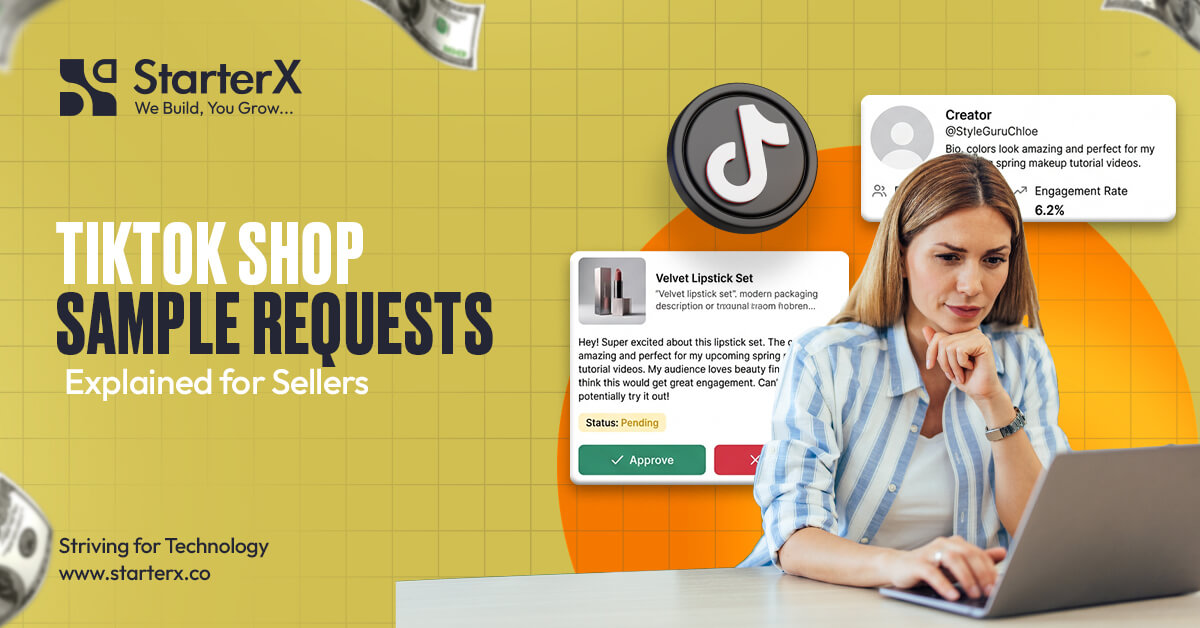
TikTok Shop sample requests let sellers send products to creators so they can test the item and create shoppable content for TikTok Shop. For sellers, sample requests are not just free product giveaways. They are a way to get creator videos, LIVE content, product exposure, and possible affiliate sales when the right creators are approved.
Sellers can manage this process inside TikTok Shop Affiliate Center. They can choose Open Collaboration or Target Collaboration, set free or refundable sample rules, review creator requests, ship approved samples, and track content results after the sample is delivered.
One important timeline sellers should know is this: TikTok Shop says sellers must review free sample requests within 7 days, ship approved samples within another 7 days, and creators are required to create content within 14 days after receiving the free sample. This makes sample request management a time-sensitive process, not something sellers should ignore after turning samples on. Source: TikTok Shop Academy.
Key Takeaways
- TikTok Shop sample requests help sellers connect products with creators who can create shoppable videos or LIVE content.
- Sellers control which products are available for samples, how many samples can be requested, and which creators get approved.
- Free samples and refundable samples are different. Free samples cost the seller upfront, while refundable samples are bought by creators and refunded only if the set criteria are met.
- Open Collaboration is useful for reaching more creators, while Target Collaboration is better for selected creators and higher-control campaigns.
- The best sample strategy is not approving everyone. Sellers should review creator fit, content quality, audience match, past performance, and product category before sending samples.
- Sample performance should be tracked through content views, engagement, LIVE activity, and orders generated from creator content.
- TikTok Shop sample requests work best when sellers treat them as a controlled creator marketing channel, not as random product seeding.
TikTok Shop sample requests let sellers send products to creators for shoppable content
TikTok Shop sample requests help sellers send products to creators who can test the item and create shoppable videos or LIVE content. For sellers, the main purpose is to turn product samples into creator content that can bring views, product clicks, and possible affiliate sales.
A sample request starts when a creator applies for a product sample that a seller has made available. If the seller approves the request, the creator receives the product and is expected to create content connected to that product.
This process is part of TikTok Shop affiliate marketing. Sellers offer samples, creators make content, and shoppers can buy through the product link in the video or LIVE session.
TikTok Shop sample requests are useful because they help sellers:
- Get product content from creators
- Test which creators can sell the product
- Build affiliate relationships
- Increase product exposure inside TikTok Shop
- Support product launches, bestsellers, and seasonal campaigns
A sample request should not be treated as a random free product. It should be treated as a creator marketing cost with a clear goal.
For example, a beauty seller may approve sample requests from creators who already post skincare demos. A home product seller may choose creators who show product use in real-life videos. The stronger the product and creator match, the better the chance of useful content.
TikTok Shop Academy explains that sellers can set up and manage product samples inside Affiliate Center, including free samples, refundable samples, creator approvals, shipping, and content tracking.
Sellers manage TikTok Shop sample requests inside Affiliate Center
Sellers manage TikTok Shop sample requests inside Affiliate Center, where they can set up samples, review creator requests, approve or reject applications, ship approved products, and track sample content results. This is the main place sellers use to control the sample request process.
Inside Affiliate Center, sellers can manage samples through different collaboration types, including:
- Open Collaboration
- Target Collaboration
- Product Marketplace sample requests
- Free sample settings
- Refundable sample settings
- Sample Requests page
- Ready to Ship tab
- Completed sample activity
- Content and performance tracking
The process usually starts when the seller makes a product available for samples. Creators can then request the sample if they meet the product or campaign rules.
Sellers can review those requests inside the Sample Requests area. From there, they can check creator details, approve suitable creators, reject weak matches, and move approved samples into the shipping stage.
TikTok Shop Academy says sellers can enable free samples from Open Collaboration or Target Collaboration and configure sample rules such as sample quantity, creator request period, creator thresholds, and SKU availability.
A good seller workflow should look like this:
- Choose the product that is worth sampling.
- Set the sample rules inside Affiliate Center.
- Review creator requests from the Sample Requests page.
- Approve creators who fit the product.
- Ship approved samples on time.
- Track creator content and orders after posting.
The best sellers do not turn samples on and forget them. They check requests, manage stock, review creators, and track results.
Free samples and refundable samples are not the same
Free samples and refundable samples work differently for TikTok Shop sellers. A free sample costs the seller upfront, while a refundable sample is bought by the creator first and refunded only after the required sales criteria are met.
Free samples
A free sample is sent to a creator at no cost to the creator. The seller covers the product cost, shipping, and tax. This can help sellers get more creators to try the product, but it also creates more risk because the seller is paying before content or sales happen.
Free samples are useful when sellers want:
- More product exposure
- More creator content
- More shoppable videos
- More creator testing
- Faster product seeding
Free samples work best for products with healthy margins, enough inventory, and strong demo value. Sellers should be careful with expensive products, low-stock items, or products that need a very specific creator type.
Refundable samples
A refundable sample is different. The creator buys the sample first. The seller sets refund criteria, usually based on sales generated from the creator’s content. If the creator meets the required criteria, the creator gets refunded.
This gives sellers more cost control because the refund is tied to performance. TikTok Shop Academy describes refundable samples as a way for creators to buy first and earn a refund after driving seller-set sales.
Refundable samples are useful when sellers want:
- More motivated creators
- Lower upfront sample risk
- Performance-based product testing
- Better control over sample spend
- A cleaner way to test creators at scale
Here is the simple difference:
| Sample Type | Who Pays First | Seller Risk | Best Use |
| Free sample | Seller | Higher upfront cost | Product seeding and content volume |
| Refundable sample | Creator | Lower upfront cost | Performance-based creator testing |
Free samples are better for reach and content volume. Refundable samples are better when sellers want stronger cost control.
Open Collaboration sample requests help sellers reach more creators
Open Collaboration sample requests help sellers reach a wider group of TikTok Shop creators. This option is best when sellers want more creators to discover their products, request samples, and create shoppable content.
In Open Collaboration, sellers make products available to a broad creator pool. Creators can find those products, apply for samples, and promote them through shoppable videos or LIVE content if approved.
Open Collaboration is useful for:
- New product launches
- Bestseller promotion
- Product testing with more creators
- Finding new TikTok Shop affiliates
- Building early creator content
- Getting more product exposure in a short time
This option is usually better for products that are easy to show on camera. Examples include beauty products, fashion items, home products, kitchen tools, fitness accessories, pet products, and daily-use items.
However, sellers should not approve every request just because Open Collaboration brings more creators. A wider creator pool can also bring weak matches.
Sellers should still review:
- Product category match
- Creator content quality
- Audience fit
- Past shoppable videos
- Creator GMV
- Engagement quality
- Posting history
TikTok Shop Academy recommends that sellers start with best-selling products, avoid setting creator criteria too high at first, and check pending sample requests regularly.
Open Collaboration works best when sellers want reach, but still keep control over sample quantity, creator quality, and stock.
Target Collaboration sample requests are better for selected creators
Target Collaboration sample requests are better when sellers want to work with selected creators instead of opening samples to a wider creator pool. This option gives sellers more control over who receives the product and how the sample campaign is managed.
With Target Collaboration, sellers can invite specific creators to promote selected products. This is useful when a seller already knows which creators fit the product, audience, or campaign goal.
Target Collaboration is a better option for:
- Higher-priced products
- Limited-stock products
- Niche products
- Proven TikTok Shop creators
- Creators with strong past sales
- Products that need expert explanation
- Campaigns where seller control matters more than reach
For example, a seller with a high-ticket skincare device may not want broad sample requests. A better approach is to target creators who already create skincare routines, product demos, and review-style videos.
TikTok Shop Academy says sellers can turn on free samples while creating a Target Collaboration, and they can choose manual or automatic sample approval for creators in that collaboration.
Target Collaboration is also useful after a seller finds strong creators through Open Collaboration. Once a creator proves they can post quality content or drive orders, the seller can move that creator into a more focused campaign.
Use Open Collaboration to discover creators. Use Target Collaboration to build stronger campaigns with creators who already look like a good fit.
Sellers should set sample rules before accepting requests
Sellers should set sample rules before accepting TikTok Shop sample requests because rules protect inventory, margins, and campaign quality. Without clear sample rules, sellers may send products to creators who are not a good fit or approve more samples than they can afford.
Before turning samples on, sellers should decide:
- Which products are available for samples
- How many samples can be requested
- How long the sample request period should stay open
- Which creators can request samples
- Which SKUs or product variations are available
- How much stock should be reserved for sample activity
- What creator performance signals matter most
TikTok Shop allows sellers to configure sample quantity, creator request period, creator thresholds, and SKU-level sample availability.
Seller rules should match the product. A low-cost product with strong margins can have broader sample access. A high-cost product should have stricter approval rules.
For low-cost products, sellers can use:
- Wider creator access
- More sample quantity
- Lower approval barriers
- Open Collaboration testing
For high-cost products, sellers should use:
- Manual approval
- Lower sample quantity
- Stronger creator review
- Target Collaboration
- SKU-level control
Sellers should also think about product variations. If one SKU is expensive, low stock, or hard to ship, it may not be the best sample option. TikTok Shop supports SKU-level sample controls, so sellers can decide which variations are available.
The right sample rules help sellers avoid wasted product, poor creator matches, and stock problems.
Sellers should approve sample requests based on creator fit, not follower count alone
Sellers should approve TikTok Shop sample requests based on creator fit, not follower count alone. A creator with the right audience, strong content, and past product performance can be more valuable than a creator with a large but unrelated following.
Follower count is only one signal. It can show reach, but it does not prove that the creator can sell the product or create useful shoppable content.
Before approving a sample request, sellers should review:
- Product category match
- Audience fit
- Content quality
- Past shoppable videos
- TikTok LIVE experience
- Creator GMV
- Posting consistency
- Engagement quality
- Comment quality
- Product demo style
- Creator reliability
For example, a creator with 20,000 followers who posts honest kitchen product demos may be a better match for a kitchen tool than a creator with 200,000 followers who only posts comedy content.
TikTok Shop has also introduced Creator Sample Score, which helps sellers review creator reliability. TikTok says this score considers signals such as fulfillment ability, diligence, sales ability, and content quality.
Sellers should look for creators who can:
- Show the product clearly
- Explain how it works
- Add the product link correctly
- Create content that matches buyer intent
- Post within the expected time
- Drive real orders, not only views
The best sample approvals happen when the creator, product, content style, and buyer audience all match.
Sellers can approve, reject, or review sample requests from the Sample Requests page
Sellers can approve, reject, or review TikTok Shop sample requests from the Sample Requests page inside Affiliate Center. This is where sellers decide which creators receive samples and which requests should not move forward.
A simple seller workflow looks like this:
Step 1: Go to Affiliate Center
Start inside TikTok Shop Seller Center and open Affiliate Center. This is where sample settings, creator collaborations, and sample activity are managed.
Step 2: Open the Sample Requests page
Go to the Sample Requests page and check the requests waiting for review. These are creator applications that need seller action.
Step 3: Review creator details
Before approving, check the creator’s profile, content style, audience fit, product category match, and available performance signals.
Look for signs such as:
- Relevant product content
- Shoppable video experience
- Strong engagement quality
- Past sales activity
- Reliable posting behavior
- Good product demo skills
Step 4: Approve or reject the request
Approve creators who fit the product and campaign goal. Reject requests that do not match the product, audience, or seller standards.
TikTok Shop Academy says approved sample requests move to the Ready to Ship tab, where sellers can arrange shipment.
Step 5: Check for approval issues
Some approvals may fail if there is not enough sample quantity or product stock. Sellers should check stock before approving sample requests, especially when running active campaigns.
TikTok Shop Academy also explains that free sample requests must be reviewed within 7 days, and approved samples must be shipped within another 7 days.
Sellers should review sample requests often because delayed approvals can slow down creator content and cause missed sales opportunities.
Approved sample requests must be shipped quickly
Approved TikTok Shop sample requests must be shipped quickly because delayed shipping can slow creator content, reduce campaign momentum, and create a poor sample experience. Once a seller approves a free sample request, TikTok Shop gives the seller another 7 days to ship the product from Seller Center.
After approval, the request moves to the Ready to Ship tab inside the Sample Requests page. From there, sellers can arrange shipment and complete the sample order through Seller Center. TikTok Shop says sellers can click Arrange Shipment, create shipping labels through TikTok, or add tracking information if they bought labels from another provider.
Sellers should treat approved samples like active campaign orders, not side tasks. If the product arrives late, the creator may lose interest, miss a content window, or move on to other products.
A good seller shipping process should include:
- Checking the Ready to Ship tab daily
- Confirming the sample SKU is in stock
- Shipping approved samples within the required time
- Adding tracking details correctly
- Watching for stock or sample quantity errors
- Avoiding approvals when inventory is already low
Fast sample shipping helps creators start content faster and helps sellers keep the sample campaign active.
Sellers should also remember that product stock matters. TikTok Shop says approval can fail if there is not enough sample quantity or product stock. That means sellers should check stock before approving sample requests, especially for fast-selling SKUs or limited product variations.
Creators are expected to post content after receiving free samples
Creators are expected to post content after receiving TikTok Shop free samples. For free sample orders, TikTok Shop says creators must create content within 14 days after receiving the sample.
This content can include shoppable videos or LIVE content where the product is shown, explained, and connected to a TikTok Shop product link. For sellers, the goal is not only to send a product. The goal is to get useful content that can help shoppers understand the product and make a buying decision.
Sellers should monitor creator content after delivery because the sample value depends on follow-through. A creator who receives the product but never posts does not help the seller build product exposure, affiliate sales, or TikTok Shop content.
TikTok also sends automated reminders to creators who need to post content for their samples. TikTok’s Sample Integrity Policy says the policy is designed to protect sellers offering free samples and limit future sample access for creators who receive free samples but do not post content.
Sellers should track:
- Sample delivery status
- Creator posting window
- Shoppable video activity
- LIVE product pinning
- Product link use
- Content quality
- Orders generated from content
The sample process is not complete when the product is shipped. It is complete when the creator posts useful content and the seller reviews the result.
Sellers should track sample content performance after creators post
Sellers should track TikTok Shop sample content performance after creators post because views alone do not show the full value of a sample campaign. The most useful sample results are content quality, buyer engagement, and orders generated from creator content.
TikTok Shop says sellers can go to View Content after a sample request is completed to see how free sample product content performed. For refundable samples, sellers can use the Refund Pending area to view creator content.
TikTok Shop also says sellers can view video and LIVE content performance, including the content itself, publish time, content views, likes, comments, and number of orders generated from the content.
Sellers should review these sample performance signals:
| Metric | What Sellers Should Learn |
| Orders generated | Shows if the creator content drove sales |
| Content views | Shows how many people saw the product |
| Likes and comments | Shows buyer interest and content response |
| Publish time | Shows if the creator posted on time |
| LIVE activity | Shows if the product was promoted during a live session |
| Content quality | Shows if the creator explained the product clearly |
Sellers should not judge a sample campaign only by views. A video can get views and still produce weak sales. A smaller creator can sometimes drive better orders if the content matches buyer intent.
Use performance tracking to decide:
- Which creators deserve future Target Collaboration
- Which products are best for sample campaigns
- Which creators post on time
- Which content styles drive product clicks and orders
- Which sample rules need to be adjusted
The best sample strategy improves over time. Sellers should use real content and sales data to decide who gets future samples.
Common TikTok Shop sample request mistakes sellers should avoid
The biggest TikTok Shop sample request mistake is approving samples without a clear product, creator, and tracking plan. Sellers can waste inventory when they treat samples as free giveaways instead of controlled creator marketing.
Here are the most common mistakes sellers should avoid.
Approving every creator request
More creators do not always mean better results. Sellers should review creator fit, content quality, product category match, and past performance before sending a sample.
Choosing weak products for samples
Not every product is good for creator sampling. Products that are hard to explain, hard to show on camera, low in stock, or weak in demand may not perform well.
Ignoring sample quantity
Sample quantity controls how much inventory sellers make available for creator requests. If sellers do not set it carefully, sample requests can affect stock planning and margin.
Setting creator criteria too high at the start
TikTok Shop recommends that sellers new to samples avoid setting creator criteria too high at first. Broader criteria can help sellers attract more early applicants, then refine later based on results.
Shipping too slowly
TikTok Shop requires sellers to ship approved free samples within 7 days after approval. Slow shipping can delay creator content and reduce campaign speed.
Tracking only views
Views matter, but sellers should also track orders generated, content quality, comments, LIVE activity, and creator follow-through.
Not reviewing pending requests regularly
TikTok Shop recommends checking the Sample Requests page daily because prompt approvals show creators that the seller is active.
A strong seller avoids sample waste by approving the right creators, shipping on time, and tracking what happens after the product is delivered.
Best TikTok Shop sample request strategy for new sellers
The best TikTok Shop sample request strategy for new sellers is to start with proven products, keep sample quantity controlled, approve creators carefully, and track orders after creators post. New sellers should use samples to learn which products and creators can create real sales activity.
A simple starter strategy can look like this.
Start with best-selling products
TikTok Shop recommends starting with products shoppers already like when setting up a first sample plan. This can increase the chance of a useful creator collaboration.
Best-selling products are safer because they already have some proof of demand. They may also be easier for creators to explain, show, and sell.
Keep sample quantity controlled
New sellers should avoid sending too many samples too quickly. Start with a controlled sample quantity, review results, then increase only when the product and creator type perform well.
Use Open Collaboration for early testing
Open Collaboration can help new sellers discover creators, collect early product content, and test which creator styles work best for the product.
Use Target Collaboration for proven creators
Once a creator posts strong content or drives orders, the seller can move that creator into Target Collaboration for more focused product campaigns.
Review requests daily
TikTok Shop recommends checking pending requests regularly. New sellers should make sample review part of their daily TikTok Shop workflow.
Track orders, not only engagement
Likes and comments are useful, but orders generated show stronger commercial value. Sellers should compare views, comments, product clicks, and orders before sending more samples to the same creator.
New sellers should start small, learn from the first sample results, then scale the products and creators that show real performance.
TikTok Shop sample requests are worth using when sellers control product cost and creator quality
TikTok Shop sample requests are worth using when sellers control product cost, sample quantity, creator approval, and performance tracking. Samples can help sellers get creator content and affiliate sales, but only when the process is managed carefully.
Sample requests can work well when:
- The product is easy to show in video
- The product has enough stock
- The margin can support sample cost
- The creator audience matches the product
- The seller reviews requests on time
- The creator has a history of posting useful content
- The seller tracks content and sales after posting
Sample requests can become risky when:
- The product cost is high
- Inventory is limited
- The seller approves too many creators
- The creators do not match the product category
- The seller does not track content results
- The sample rules are too loose
- Shipping is delayed
For free samples, sellers pay upfront, so creator selection matters more. For refundable samples, sellers can tie refunds to sales-based criteria, which gives more control over sample spend. TikTok Shop says refundable sample refunds are tied to sales performance, and creators usually need to generate the seller’s required number of sales to get refunded.
The best way to use TikTok Shop sample requests is to treat them as a measured affiliate channel, not as random product seeding.
A seller should know why each sample is being sent, who is receiving it, what content is expected, and how results will be reviewed.
Need help managing TikTok Shop sample requests?
TikTok Shop sample requests can help sellers get more creator content, but the process needs the right product selection, creator approval, sample rules, and tracking. Without a clear system, sellers may send products without getting useful content or sales back.
A TikTok Shop agency can help sellers manage the sample request process with better structure. This can include:
- Choosing the right products for samples
- Setting sample quantity and creator rules
- Reviewing creator requests
- Checking creator fit and past content
- Managing Open Collaboration and Target Collaboration
- Tracking shoppable videos and LIVE content
- Reviewing orders generated from sample content
- Building a stronger TikTok Shop affiliate strategy
If you want to use TikTok Shop sample requests without wasting inventory, you need a clear creator sample plan.
Book a free strategy call with our TikTok Shop agency and get help building a better sample request and affiliate campaign system.
👉 Book a free consultation with StarterX: https://starterx.co/appointment/
FAQs about TikTok Shop sample requests
What are TikTok Shop sample requests?
TikTok Shop sample requests are product requests from creators who want to receive a seller’s product and create shoppable content for it. For sellers, sample requests are a way to connect products with creators who can make videos or LIVE content that may drive TikTok Shop sales.
Who pays for TikTok Shop free samples?
For free samples, the seller pays for the product, shipping, and tax. That is why sellers should approve creators carefully before sending free samples.
What is the difference between free samples and refundable samples?
Free samples are sent to creators at no cost to the creator. Refundable samples are bought by creators first, then refunded only if the seller’s sales-based criteria are met.
Do sellers have to approve every sample request?
No, sellers do not have to approve every TikTok Shop sample request. Sellers can review creator details and approve or reject requests based on product fit, creator quality, and campaign goals.
How long do sellers have to review free sample requests?
TikTok Shop says sellers must review free sample requests within 7 days, or the system automatically cancels them.
How long do sellers have to ship approved samples?
TikTok Shop says sellers have another 7 days to ship the product after approving a free sample request.
What happens after a creator receives a free sample?
After receiving a free sample, the creator is required to create content within 14 days. TikTok also sends automated reminders to creators about sample posting.
Can sellers track sample content performance?
Yes, sellers can track sample content performance. TikTok Shop says sellers can view video and LIVE content performance, including publish time, content views, likes, comments, and orders generated.
Are TikTok Shop sample requests worth it for new sellers?
Yes, TikTok Shop sample requests can be worth it for new sellers if they start with proven products, control sample quantity, review creators carefully, and track orders after content goes live.
What is the best way to approve TikTok Shop sample requests?
The best way to approve TikTok Shop sample requests is to review creator fit, content quality, product category match, past shoppable content, creator reliability, and sales signals. Follower count should be only one part of the decision, not the full approval rule.

The StarterX Team is a group of e-commerce experts with years of hands-on experience in launching, managing, and scaling online businesses. As trusted authorities in the e-commerce space, we’ve helped entrepreneurs grow successful stores on Amazon, Shopify, TikTok, and Walmart. Backed by real-world results and a data-driven approach, we deliver proven strategies and insights you can trust to succeed in the digital marketplace.