

.svg)
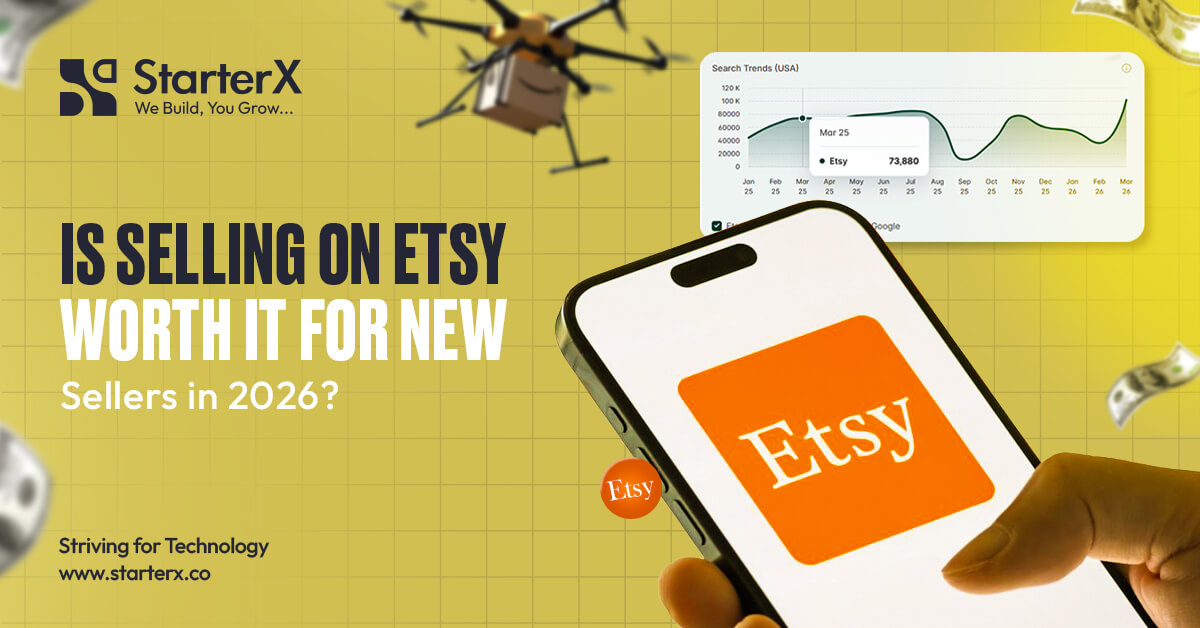
Selling on Etsy is still worth it for new sellers in 2026, but only if you start with the right product, clear pricing, strong photos, and proper Etsy SEO. Etsy is not a shortcut to quick sales. It is a real marketplace where buyers compare products, photos, prices, delivery times, reviews, and shop trust before they place an order.
Etsy still has strong demand, with 86.5 million active buyers and 5.6 million active sellers as of December 31, 2025. This makes Etsy a real opportunity, but also a competitive marketplace.
For beginners, Etsy works well for handmade items, personalized gifts, vintage products, craft supplies, digital downloads, jewelry, home decor, and custom products. The main advantage is that buyers already come to Etsy looking for unique products.
But success depends on more than opening a shop. Etsy uses titles, tags, descriptions, categories, and attributes to match listings with buyer searches. Strong listings, good photos, fair pricing, and reliable service help new sellers get better results. If you are not sure where your shop is losing visibility or sales, working with an experienced Etsy shop agency can help you fix the gaps in SEO, listings, pricing, and conversion.
So, is selling on Etsy worth it for new sellers in 2026?
Yes, Etsy is worth it if your products have demand, your listings are optimized, your photos are strong, and your profit margin works after Etsy fees, shipping, packaging, ads, and time. It may not be worth it if you sell generic products, copy other shops, ignore SEO, use weak images, or price products without checking your real costs.
This guide will help you decide if Etsy is the right marketplace for you, what makes it worth starting, what challenges to expect, and how to give your new Etsy shop a better chance of getting views, clicks, and sales.
Key Takeaways
- Etsy is still worth it in 2026 for the right sellers. It works best for handmade, personalized, vintage, digital, craft, custom, and giftable products with clear buyer demand.
- Competition is high, so listing products is not enough. New sellers need strong Etsy SEO, clear product photos, useful descriptions, fair pricing, reliable shipping, and trust-building shop details.
- Etsy fees must be included before setting prices. Etsy charges a $0.20 listing fee and a 6.5% transaction fee on the order amount, including shipping and gift wrapping when charged to the buyer.
- Etsy SEO matters for new sellers. Titles, tags, descriptions, categories, and attributes help Etsy understand when your product should appear in buyer searches.
- Etsy Ads should not be the first fix. Ads can bring more visibility, but they cannot fix poor photos, weak pricing, unclear product details, or low buyer trust.
- New sellers should start with a testing mindset. Check product demand, review competitors, improve listings, track views and clicks, and keep improving based on real shop performance.
- Etsy is not worth it for every product. Generic, low-margin, copied, hard-to-ship, or unclear products are harder to sell, especially for new shops with no reviews.
Is Selling on Etsy Still Worth It in 2026?
Selling on Etsy is still worth it in 2026 for new sellers who choose products with real demand, clear profit margin, and strong listing quality. It is not worth it for sellers who expect fast sales from generic products without Etsy SEO, good photos, pricing control, or customer trust.
Etsy still has a large buyer base. As of December 31, 2025, the Etsy marketplace had 86.5 million active buyers, 5.6 million active sellers, and more than 100 million items for sale. That means new sellers have access to demand, but they also face strong competition.
For a new Etsy seller, the real question is not only, “Can I sell on Etsy?” The better question is, “Can my product stand out in Etsy search and still make a profit after costs?”
Etsy is worth starting if your shop can meet these conditions:
- Your product fits the Etsy buyer intent
- Your product has clear search demand
- Your listing uses relevant titles, tags, categories, and attributes
- Your first photo can earn clicks
- Your price covers product cost, Etsy fees, shipping, packaging, ads, and time
- Your shop can build trust through clear policies, fast replies, and reliable delivery
A new Etsy shop should be treated like a small e-commerce business. Sales usually come from testing products, improving listings, tracking views and clicks, and making better decisions based on real shop data.
Why Etsy Can Be Worth It for New Sellers
Etsy can be worth it for new sellers because it gives access to buyers who already search for handmade, custom, vintage, digital, craft, and giftable products. This makes Etsy easier to start than building traffic for a new website from zero.
1. Etsy Already Has Buyer Traffic
Etsy’s main advantage is built-in marketplace traffic. Buyers visit Etsy with product intent. They are often looking for something unique, personal, creative, or hard to find in a normal store.
This helps new sellers because they do not need to create demand from the start. They need to match existing buyer searches with the right product and listing.
Common Etsy buyer searches include:
- Personalized gifts
- Handmade jewelry
- Wedding decor
- Printable planners
- Wall art
- Vintage clothing
- Craft supplies
- Custom pet products
- Home decor
- Party supplies
2. Etsy Is Beginner-Friendly to Set Up
Etsy is beginner-friendly because sellers can open a shop, create listings, and test products without building a full e-commerce website. Etsy provides the marketplace structure, checkout process, and buyer trust layer.
This does not mean Etsy is easy to win on. It means the setup is simpler than starting a standalone store. The hard part is getting found, earning clicks, and turning visitors into buyers.
3. Etsy Is Strong for Unique and Giftable Products
Etsy works best when the product has a clear reason to buy beyond price. New sellers have a better chance when their product is custom, personal, handmade, niche, or useful for a specific occasion.
Strong Etsy product fits include:
| Product Type | Why It Can Work on Etsy |
| Personalized gifts | Buyers want names, dates, messages, or custom details |
| Handmade items | Buyers value original work and seller-made products |
| Digital downloads | Easy delivery and lower fulfillment cost |
| Wedding products | Buyers search by event, style, and theme |
| Craft supplies | Etsy supports creative buyers and makers |
| Home decor | Strong visual appeal and gift value |
| Vintage products | Etsy allows vintage items that are 20+ years old and seller-curated |
Etsy’s Creativity Standards state that vintage items must be 20+ years old, and Etsy’s help content explains that seller-made items should be made, hand-altered, hand-assembled, or produced with tools such as a 3D printer, CNC, or Cricut.
What Makes Etsy Difficult for New Sellers?
Etsy is difficult for new sellers because competition is high, Etsy SEO takes time, and new shops start with low trust. A product can be good and still fail if the listing does not earn impressions, clicks, and sales.
1. Competition Is High
New Etsy sellers compete against millions of sellers and more than 100 million active listings. This makes product positioning important. A basic listing with weak photos and broad keywords is unlikely to stand out.
To compete, a new seller needs:
- A clear niche
- A product with demand
- Better photos than similar listings
- Specific Etsy keywords
- Strong title and tags
- Complete attributes
- Clear shipping and processing details
- A reason buyers should choose this product
2. Etsy SEO Takes Time
Etsy SEO takes time because Etsy must understand your listing, and buyers must respond to it. Etsy search works through query matching and ranking. Etsy scans listing details like titles, tags, categories, attributes, and descriptions to match products with buyer searches.
For new sellers, this means keyword stuffing is not enough. Good SEO for an Etsy shop should focus on real buyer intent, clear product details, and search terms shoppers actually use. This is also where working with an experienced Etsy SEO agency can help if you are not sure why your listings are not getting views, clicks, or sales.
A good Etsy listing should answer:
- What is the product?
- Who is it for?
- What style, color, size, material, or use case applies?
- Is it handmade, personalized, digital, vintage, or custom?
- Why should a buyer trust this shop?
3. New Shops Start With Low Trust
New Etsy shops usually start with no reviews, no sales history, and no buyer confidence. That can reduce clicks and conversions, even when the product is good.
New sellers can build trust by adding:
- Complete shop profile
- Clear shop policies
- Honest processing time
- Accurate product photos
- Detailed product description
- Fast message replies
- Clear shipping information
- Professional packaging
Etsy’s ranking disclosures say customer service quality can be considered signals such as reviews, response time, fulfillment ability, shop ratings, case rates, and policy compliance.
4. Weak Listings Can Waste Money
Weak listings waste money because traffic does not help if buyers do not click or buy. Etsy Ads can bring visibility, but ads cannot fix poor photos, unclear pricing, missing product details, weak keywords, or low profit margin.
Before spending on ads, new sellers should improve:
- First photo
- Product title
- Tags
- Attributes
- Description
- Price
- Shipping
- Processing time
- Shop trust signals
How Much Does It Cost to Sell on Etsy in 2026?
Selling on Etsy costs more than the listing fee. New sellers should understand the real Etsy selling cost, including listing fees, transaction fees, payment processing, shipping, packaging, ads, product cost, and time before setting prices.
1. Etsy Listing Fee
Etsy charges a $0.20 listing fee for each item listed. Listings expire after four months, so new sellers should avoid uploading random products without demand research.
2. Etsy Transaction Fee
Etsy charges a 6.5% transaction fee on the order amount. This applies to the listing price plus shipping and gift wrapping when charged to the buyer.
3. Payment Processing and Other Costs
Payment processing fees vary by seller location. New sellers should also include normal business costs, not only Etsy fees.
Include these costs before pricing:
| Cost Area | What to Include |
| Product cost | Materials, production, supplies |
| Packaging | Boxes, mailers, labels, inserts |
| Shipping | Carrier cost, tracking, insurance |
| Etsy fees | Listing fee, transaction fee, payment fee |
| Ads | Etsy Ads or Offsite Ads |
| Time | Making, packing, replies, order handling |
4. Etsy Ads and Offsite Ads
Etsy Ads are optional, but Offsite Ads may apply when a sale comes from Etsy’s offsite advertising. Etsy says Offsite Ads fees are 15% for shops under $10,000 USD in Etsy sales over the past 365 days and 12% for shops that reached at least $10,000 USD. Shops above that sales level must participate for the lifetime of the shop.
Simple Etsy Profit Formula
A new Etsy seller should price products based on real profit, not only competitor prices.
Use this formula:
Selling price minus product cost, packaging, shipping, Etsy fees, ad cost, and time cost equals real profit.
If the final profit is too small, the product may not be worth selling on Etsy, even if it gets orders.
What Products Are Worth Selling on Etsy?
The products most worth selling on Etsy are unique, searchable, giftable, and profitable after fees and shipping. Etsy is strongest for products that match a clear buyer need, occasion, style, or personal use.
1. Best Product Types for Etsy
The best Etsy products usually fit handmade, personalized, vintage, craft, digital, or custom buyer intent. These products give shoppers a reason to choose Etsy instead of a mass-market store.
Good product types include:
- Handmade jewelry
- Personalized gifts
- Wedding items
- Printable planners
- Wall art
- Home decor
- Baby gifts
- Pet accessories
- Craft supplies
- Vintage products
- Custom clothing
- Party supplies
- Digital templates
- Name signs
- Custom mugs or apparel
Etsy’s 2025 annual report listed top GMS categories such as home and living, jewelry and personal accessories, apparel, craft supplies, paper and party supplies, and toys and games.
2. Product Traits That Perform Better
A product has better Etsy potential when buyers can quickly understand its value from the listing. The product should be easy to search, easy to explain, and easy to trust.
Strong Etsy product traits include:
- Clear buyer demand
- Specific target buyer
- Gift potential
- Personalization option
- Strong first photo
- Clear size, color, material, and style
- Good profit margin
- Easy shipping
- Low return risk
- Useful product description
- Real difference from similar listings
3. Products New Sellers Should Avoid
New Etsy sellers should avoid products that are generic, low-margin, copied, risky, or hard to explain. These products are harder to rank, harder to sell, and easier to lose money on.
Avoid:
- Generic resale products
- Very low-margin items
- Copied product designs
- Copyright or trademark-risk items
- Fragile items with high damage risk
- Heavy products with high shipping costs
- Products with unclear demand
- Products that need weak or misleading photos to sell
- Items that do not meet Etsy’s seller policies
Etsy’s policy says drop shipping is not allowed except for limited craft and party supplies, and reselling is only allowed in specific cases, such as craft and party supplies, vintage items, and certain curated gift baskets.
Etsy Pros and Cons for New Sellers
Etsy is worth considering for new sellers because it has buyer traffic, simple shop setup, and strong demand for unique products, but it also has high competition, fees, and ranking challenges.
| Etsy Pros | Etsy Cons |
| Built-in marketplace traffic | High competition in popular niches |
| Easier setup than a full website | Etsy fees reduce profit margin |
| Good for handmade, custom, vintage, and digital products | New shops start with low trust |
| Buyers search with purchase intent | Etsy SEO takes time |
| Works for product testing | Ads can waste money on weak listings |
| Etsy handles checkout structure | Limited brand control compared to your own website |
The biggest Etsy advantage is buyer intent. People come to Etsy to find gifts, custom products, handmade items, digital downloads, craft supplies, and vintage products.
The biggest Etsy challenge is visibility. Etsy search uses listing details like titles, descriptions, tags, categories, and attributes to match listings with buyer searches. Strong listings have a better chance of being found.
Is Etsy Good for Beginners?
Etsy is good for beginners who want to test handmade, personalized, vintage, digital, or niche products without building a full e-commerce website first.
Etsy is beginner-friendly because sellers can create a shop, add listings, set prices, and start testing product demand with less technical work than a custom website.
But beginners should not treat Etsy as easy money. Selling on Etsy in 2026 still requires a clear product plan, strong listing quality, and consistent improvement. A new shop needs:
- A clear product niche
- Strong product photos
- Search-friendly titles
- Relevant tags
- Accurate categories and attributes
- Clear descriptions
- Fair pricing
- Realistic shipping times
- Complete shop policies
- Good customer service
Etsy is a good first platform if you are ready to learn from views, clicks, favorites, orders, and customer messages. It is not a good fit if you only want to upload products and wait for sales.
How New Sellers Can Make Etsy Worth It
New sellers can make Etsy worth it by choosing products with demand, improving listing quality, pricing for profit, and building trust from the start.
Step 1: Research Product Demand First
New sellers should research product demand before creating listings because demand decides if buyers are already searching for the product.
Check:
- Etsy search suggestions
- Competitor listings
- Review count
- Bestseller badges
- Price range
- Product gaps
- Seasonal demand
- Common buyer wording
Do not copy competitors. Study what buyers like, then find a better angle through design, personalization, material, use case, bundle, or photo quality.
Step 2: Choose a Clear Niche
A clear niche helps Etsy understand your shop and helps buyers know what you sell.
A new Etsy shop should not sell random products. Focus on one buyer type, product category, style, or occasion.
Examples:
| Broad Shop | Better Niche |
| Gifts | Personalized wedding gifts |
| Jewelry | Minimalist birthstone necklaces |
| Prints | Nursery wall art prints |
| Pet products | Custom dog memorial gifts |
| Templates | Editable wedding invitation templates |
A clear niche improves product planning, Etsy SEO, branding, photos, and customer trust.
Step 3: Optimize Listings for Etsy SEO
Etsy SEO helps your listings match buyer searches through titles, tags, descriptions, categories, and attributes.
Etsy says keywords across listing titles, descriptions, tags, categories, and attributes are important for query matching, which is the first stage of Etsy search.
For each listing, optimize:
- Main keyword in the title
- All 13 tags
- Accurate category
- Complete attributes
- Clear the first paragraph in the description
- Buyer-focused product details
- Size, color, material, style, occasion, and personalization options
Good Etsy SEO is not keyword stuffing. It is matching the product with the way real buyers search.
Step 4: Improve Product Photos
Product photos help new Etsy sellers earn clicks and build trust before a buyer reads the full listing.
Your first photo should show the product clearly. It should not be dark, crowded, blurry, or confusing.
Use photos that show:
- Full product
- Size and scale
- Material or texture
- Color options
- Personalization example
- Product in use
- Packaging, if it supports trust
For Etsy, the first photo affects click-through rate. If shoppers do not click, your listing will struggle even with good keywords.
Step 5: Price for Profit
New Etsy sellers should price for profit, not only for sales.
Before setting a price, include:
- Product cost
- Packaging
- Shipping
- Etsy listing fee
- Etsy transaction fee
- Payment processing
- Etsy Ads or Offsite Ads
- Refund risk
- Time spent making, packing, and replying
A product can get sales and still be a bad product if the margin is too low.
Step 6: Build Trust Early
New Etsy sellers need trust signals because new shops usually start with no reviews and no sales history.
Build trust with:
- Complete shop profile
- Clear policies
- Honest processing time
- Fast replies
- Accurate product details
- Clear shipping information
- Professional packaging
- Helpful customer service
Etsy says customer service quality can include reviews, message response time, fulfillment ability, shop ratings, case rates, and policy compliance.
Should New Etsy Sellers Use Etsy Ads?
New Etsy sellers should use Etsy Ads only after their listings have strong SEO, clear photos, fair pricing, and enough profit margin.
Ads can bring more visibility, but they do not fix weak listings. If your photo is poor, your price is unclear, or your description does not answer buyer questions, paid traffic may only waste money.
Use Etsy Ads When
Use Etsy Ads when your listing is already ready to convert visitors into buyers.
Good signs include:
- Listing already gets some clicks
- The first photo looks clear and professional
- The product has enough profit margin
- Title and tags match buyer intent
- Description answers common questions
- Price is competitive
- Shipping and processing times are clear
- You can track ad spend and sales
Avoid Etsy Ads When
Avoid Etsy Ads when your listing has weak SEO, poor photos, unclear pricing, or a low profit margin.
Do not start ads if:
- The listing title is unclear
- Tags are too broad
- The photos look unprofessional
- Product details are missing
- The shop has no trust signals
- You do not know your break-even point
- The product margin cannot handle the ad cost
Etsy Ads use a daily budget, while Offsite Ads have separate rules. Etsy says shops under $10,000 USD in sales over the past 365 days can opt out of Offsite Ads, while shops at or above $10,000 USD must participate and receive a discounted 12% fee.
When Is Etsy Not Worth It?
Etsy is not worth it when the product has weak demand, low profit margin, poor listing quality, or no clear reason for buyers to choose it.
Etsy may not be the right platform if:
- You want instant income
- You sell generic products
- You copy other sellers
- Your profit margin is too low
- You ignore Etsy fees
- Your photos are weak
- You cannot ship reliably
- You do not want to answer customer messages
- You rely only on ads
- Your product has copyright or trademark risk
- You do not want to improve listings over time
A new Etsy shop needs testing. If a seller is not ready to improve keywords, photos, descriptions, pricing, shipping, and customer service, Etsy can become frustrating and unprofitable.
The safest way to decide is simple: check demand, calculate real profit, review the competition, and improve the listing before spending on ads.
Etsy Seller Checklist Before Starting in 2026
New sellers should start an Etsy shop only after checking product demand, profit margin, listing quality, shipping, and shop trust.
Use this checklist before opening your shop or publishing new listings:
| Checklist Item | Why It Matters |
| The product has search demand | Buyers must already be looking for it |
| The product has a clear buyer | Helps with niche, photos, and keywords |
| The product has enough margin | Protects profit after fees and costs |
| Main keyword is selected | Helps Etsy understand the product |
| Title is clear and searchable | Improves query matching |
| All 13 tags are planned | Gives Etsy more search context |
| Category is accurate | Helps with listing placement and filters |
| Attributes are complete | Adds color, material, occasion, size, and style details |
| The first photo is strong | Helps earn clicks |
| Description answers questions | Reduces buyer doubt |
| Price includes Etsy costs | Protects profit |
| Shipping cost is clear | Builds buyer trust |
| Processing time is realistic | Supports customer satisfaction |
| Shop policies are complete | Helps buyers feel safe |
| The customer service plan is ready | Supports reviews and repeat buyers |
Final Verdict: Is Etsy Worth It for New Sellers in 2026?
Etsy is worth it for new sellers in 2026 if they treat it like a real e-commerce business, not a quick side project. The sellers who have a better chance are the ones who pick searchable products, calculate profit, improve listing quality, and build trust with buyers.
A new Etsy shop can work well when the seller focuses on:
- Product demand
- Clear buyer intent
- Strong Etsy SEO
- Better product photos
- Fair but profitable pricing
- Reliable shipping
- Fast customer service
- Complete shop details
- Consistent testing and improvement
Etsy may not work well if the seller lists random products, copies other shops, ignores profit margin, or expects Etsy Ads to bring sales before the listings are ready.
The best approach is simple: start with a focused niche, create strong listings, track performance, improve what is not working, and scale the products that get views, clicks, favorites, and sales.
Need Help Starting or Growing Your Etsy Shop?
If you want to start your Etsy shop the right way, StarterX can help you build a stronger foundation from the beginning.
At StarterX, as an e-commerce agency, we have helped many Etsy sellers improve their shop visibility, listing SEO, product positioning, keyword strategy, and overall sales potential. Our team understands what new sellers need before launching and what existing sellers need when their listings are not getting enough views, clicks, or orders.
We can help with:
- Etsy shop setup guidance
- Etsy SEO services
- Etsy listing optimization
- Product keyword research
- Titles, tags, attributes, and descriptions
- Shop audit and improvement plan
- Product visibility and conversion strategy
If you want expert help to start your Etsy shop or improve your current store, book a free consultation call with our experts.
🚀 Book a Free Consultation Call Now: https://starterx.co/appointment/
FAQs: Is Selling on Etsy Worth It for New Sellers in 2026?
How long does it take to get the first sale on Etsy?
A first Etsy sale can take a few days, weeks, or months, depending on product demand, listing quality, photos, pricing, and shop trust. Some sellers get early sales quickly, but many new shops need time to test keywords, improve photos, and build visibility. A new seller should not judge the whole shop from one listing or one week of data. Track views, clicks, favorites, and orders before making changes.
How many listings should a new Etsy seller start with?
A new Etsy seller should start with enough quality listings to test buyer demand, but quality matters more than quantity. Ten strong listings are better than fifty weak listings with poor photos and unclear keywords. Start with a focused product group. Test different styles, keywords, colors, bundles, or personalization options. Then add more listings based on what shoppers view, favorite, and buy.
Should a new Etsy shop focus on one niche?
A new Etsy shop should usually focus on one clear niche because it helps buyers and Etsy understand what the shop sells. A focused shop also makes branding, photos, keywords, and product planning easier. For example, “personalized wedding gifts” is clearer than a shop selling mugs, jewelry, planners, pet items, and wall art with no connection.
Can Etsy become a full-time business?
Etsy can become a full-time business, but it usually takes strong product demand, consistent sales, healthy margins, and reliable operations. Sellers who grow full-time often treat Etsy like a real brand with product planning, SEO, customer service, inventory control, and repeat improvement. New sellers should first aim for stable sales and profit before depending on Etsy as full-time income.
What numbers should new Etsy sellers track?
New Etsy sellers should track views, visits, click rate, favorites, orders, conversion rate, revenue, fees, ad spend, and profit. These numbers show where the problem is. If a listing gets no views, the issue may be demand or SEO. If it gets views but no clicks, the first photo, title, price, or thumbnail may need work. If it gets clicks but no sales, the description, pricing, shipping, trust, or product offer may need improvement.
Should new Etsy sellers offer free shipping?
Free shipping can help buyers feel better about the order, but it only works if the seller includes shipping cost in the pricing plan. Free shipping is not truly free for the seller. Before offering it, check product weight, shipping location, packaging cost, profit margin, and competitor pricing. For low-margin products, free shipping can reduce profit too much.
Can I sell digital and physical products in the same Etsy shop?
You can sell digital and physical products in the same Etsy shop, but the products should still make sense together. A mixed shop can confuse buyers if the items target different audiences. For example, printable wedding invitations and physical wedding signs can fit together. Printable planners and handmade pet collars may feel less connected.
Do Etsy product descriptions still matter?
Yes, Etsy product descriptions matter because they help buyers understand the product and reduce purchase doubt. A good description should explain size, material, color, use, personalization, delivery details, care instructions, and what is included. Descriptions should be written for buyers first, not just search engines.
What is the biggest mistake new Etsy sellers make?
The biggest mistake new Etsy sellers make is publishing listings before checking demand, profit, keywords, photos, and shipping details. This often leads to low views, poor clicks, wasted ad spend, or sales with weak profit. A better approach is to research first, create fewer but stronger listings, and improve based on real shop data.
Should I start Etsy before building my own website?
Most beginners should start with Etsy first if they need marketplace traffic and want to test products. A website can come later when the seller understands the best products, buyers, pricing, and repeat purchase potential. Etsy is useful for testing demand. A website is useful for stronger brand control once the business is ready.

The StarterX Team is a group of e-commerce experts with years of hands-on experience in launching, managing, and scaling online businesses. As trusted authorities in the e-commerce space, we’ve helped entrepreneurs grow successful stores on Amazon, Shopify, TikTok, and Walmart. Backed by real-world results and a data-driven approach, we deliver proven strategies and insights you can trust to succeed in the digital marketplace.